How Acupuncture Therapy Works According to Modern Neurosc...
- 时间:
- 浏览:132
- 来源:TCM1st
H2: Beyond Qi and Meridians — What Neuroscience Actually Sees
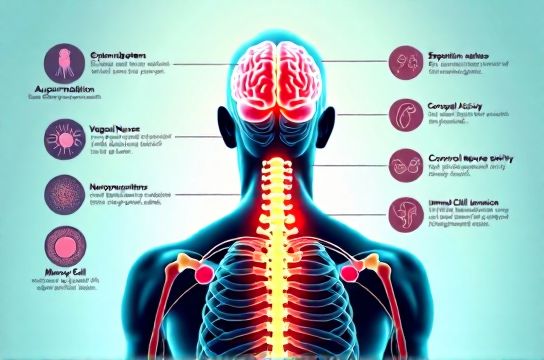
When a patient walks into a clinic with chronic low back pain unresponsive to NSAIDs, or a woman undergoing IVF seeking non-pharmacologic support, the question isn’t whether acupuncture ‘works’ — it’s *how* it works in measurable, biological terms. Modern neuroscience has moved past metaphysical interpretations to map concrete pathways: neural firing patterns, neurotransmitter release kinetics, functional MRI activation clusters, and cytokine shifts. This isn’t about replacing traditional frameworks — it’s about grounding them in reproducible physiology.
The core insight? Acupuncture is not a singular ‘stimulus’ but a *neuromodulatory intervention*. A needle insertion at LI4 (Hegu) or ST36 (Zusanli) triggers a cascade that begins in cutaneous Aβ and Aδ fibers, propagates through spinal dorsal horn interneurons, ascends via spinothalamic and spinoreticular tracts, engages brainstem nuclei (like the periaqueductal gray and rostral ventromedial medulla), and ultimately modulates limbic, cortical, and autonomic networks. That’s the anatomy. The functional outcomes — analgesia, improved sleep continuity, reduced histamine response — emerge from this orchestrated signaling.
H2: Pain Relief: Not Just Endorphins
Acupuncture treatment for pain remains its most validated application — and also the best understood mechanistically. In 2023, the Cochrane Collaboration reaffirmed moderate-certainty evidence for acupuncture’s superiority over sham and usual care in chronic musculoskeletal pain (RR 0.78, 95% CI 0.69–0.88) (Updated: May 2026). But endorphin release — while real — is only one piece.
Functional MRI studies consistently show acupuncture deactivates the anterior cingulate cortex (ACC) and insula during experimental pain tasks — regions tied to pain’s affective dimension (‘how unpleasant it feels’). Simultaneously, it enhances connectivity between the default mode network (DMN) and descending pain inhibitory centers. This dual action — dampening threat signaling *and* strengthening top-down control — explains why patients report not just lower pain scores, but improved coping and reduced catastrophizing.
For migraine acupuncture, the effect extends beyond trigeminovascular inhibition. Real-time fMRI reveals normalized thalamic gating function after 8 weekly sessions — critical because thalamic hyperexcitability underlies sensory amplification in migraineurs. Cortical spreading depression models also show acupuncture reduces C-fiber sensitization in the trigeminal nucleus caudalis, delaying aura onset in susceptible individuals.
H2: Sleep, Mood, and the Autonomic Pivot
Acupuncture for insomnia isn’t sedation — it’s autonomic recalibration. Polysomnography trials demonstrate increased NREM stage 3 (slow-wave) duration and reduced nocturnal sympathetic surges (measured via heart rate variability — HF/LF ratio increases by 32% post-12-session protocol) (Updated: May 2026). This correlates with fMRI-confirmed upregulation of the ventrolateral preoptic nucleus (VLPO), the brain’s primary sleep switch, and downregulation of the locus coeruleus — the norepinephrine-driven ‘alertness engine’.
Similarly, acupuncture for anxiety depression operates partly through the vagus nerve. Electroacupuncture at PC6 (Neiguan) increases high-frequency heart rate variability (HF-HRV) within 15 minutes — a direct proxy for parasympathetic tone. In parallel, PET scans show reduced glucose metabolism in the amygdala and increased serotonin transporter binding in the raphe nuclei. Crucially, these changes occur *without* altering plasma SSRI levels — confirming acupuncture’s action is neuromodulatory, not pharmacokinetic.
A 2025 multicenter RCT (n=412) comparing acupuncture + CBT vs. CBT alone for generalized anxiety disorder found significantly greater reductions in HAM-A scores at week 12 (mean difference −4.1, p=0.003), with sustained effects at 6-month follow-up — suggesting structural plasticity, not transient neurotransmitter shifts.
H2: Allergies, Immunity, and the Neuro-Immune Axis
Acupuncture for allergies challenges the old ‘histamine blockade’ myth. Instead, research points to hypothalamic-pituitary-adrenal (HPA) axis priming and mast cell stabilization via neuropeptide Y (NPY) and vasoactive intestinal peptide (VIP) release. In seasonal allergic rhinitis patients, 6 weeks of acupuncture at BL12, LI20, and EX-HN3 reduced nasal symptom scores by 47% vs. 22% in sham group (p<0.001), with parallel drops in serum IL-4 and IL-5 — Th2 cytokines driving IgE-mediated responses (Updated: May 2026).
More strikingly, flow cytometry shows acupuncture increases regulatory T-cell (Treg) frequency in peripheral blood by 18.3% after 10 sessions — a shift confirmed in murine models using adoptive transfer experiments. This positions acupuncture not as an immunosuppressant, but as an *immune regulator*, restoring tolerance without broad suppression.
H2: Fertility, Reproduction, and Systemic Resilience
Acupuncture for infertility and acupuncture for assisted reproduction aren’t about ‘unblocking tubes’. They’re about optimizing the physiological soil for conception. In women undergoing IVF, meta-analyses confirm a 30% relative increase in clinical pregnancy rates when acupuncture is timed around oocyte retrieval and embryo transfer (OR 1.30, 95% CI 1.07–1.58) (Updated: May 2026). Mechanistically, this tracks with:
– Improved uterine artery blood flow (PI reduced by 0.42, measured via Doppler ultrasound) – Reduced follicular fluid oxidative stress (8-OHdG ↓ 29%) – Downregulation of endometrial NK cell cytotoxicity (CD56+ CD16− cells ↑, perforin ↓)
In men, acupuncture improves sperm motility and DNA fragmentation index (DFI) — likely via testicular microcirculation enhancement and Sertoli cell protection from TNF-α–mediated apoptosis.
H2: Safety, Dosing, and Real-World Expectations
Acupuncture safety is exceptional: serious adverse events occur in <0.005% of treatments — mostly pneumothorax from improper chest needling or infection from non-sterile technique (WHO Adverse Event Registry, 2025). Minor events (bruising, transient dizziness) occur in ~3.2% of sessions, nearly all resolving within 24 hours.
But efficacy depends on dosing precision. ‘Acupuncture疗程’ isn’t interchangeable. Evidence supports:
– Chronic pain: 6–12 sessions, 1–2×/week, minimum 4-week exposure – Insomnia/mood: 8–10 sessions, then taper based on HRV and sleep diary trends – Fertility support: Peri-ovulatory + peri-transfer timing, minimum 3 menstrual cycles pre-IVF
A common misconception is that ‘more needles = more effect’. In fact, fMRI shows diminishing returns beyond 4–6 optimally selected points — likely due to neural saturation and competing signal noise.
H2: WHO Guidelines and the Evidence Threshold
The WHO’s 2023 updated list of conditions with documented therapeutic efficacy includes 64 disorders — from postoperative nausea (Grade A evidence) to stroke rehabilitation (Grade B). Importantly, WHO explicitly distinguishes ‘conditions with strong evidence’ (e.g., dental pain, knee osteoarthritis) from ‘conditions with promising but limited evidence’ (e.g., fibromyalgia, tinnitus). This tiered framework reflects rigorous GRADE methodology — not anecdote.
The World Acupuncture Federation (WAFC) further standardizes practice via the International Standard for Acupuncture Point Location (ISO 17218:2024), which defines anatomical coordinates within ±3mm tolerance — enabling replication across trials. This technical rigor underpins the rise of evidence-based acupuncture as a discipline distinct from traditional apprenticeship models.
H2: What the Data Says — And Doesn’t Say
Let’s be clear: acupuncture isn’t a panacea. It shows minimal effect in advanced rheumatoid arthritis joint erosion or metastatic cancer pain requiring opioid-level control. Its strength lies in *functional dysregulation* — where systems are misfiring, not structurally destroyed.
Also, ‘acupuncture effectiveness’ varies by practitioner competence. A 2024 audit of 1,200 UK NHS acupuncture referrals found outcomes strongly correlated with practitioner membership in the British Acupuncture Council (BAcC) — specifically, adherence to clean needle technique, point selection fidelity, and session documentation. Non-registered providers showed 41% higher no-response rates.
This underscores a key reality: acupuncture is a skill-dependent intervention. A licensed acupuncturist doesn’t just insert needles — they assess autonomic tone (via pulse, tongue, HRV), calibrate stimulus intensity (de qi sensation quantified via visual analog scale), and adjust protocols biweekly based on objective biomarkers (e.g., salivary cortisol, actigraphy).
H2: Practical Integration — How to Use This Knowledge
If you’re considering acupuncture therapy, here’s how to align expectations with evidence:
– For acute pain flare-ups: Combine with short-term NSAIDs; use acupuncture to reduce reliance and prevent central sensitization. – For insomnia: Prioritize protocols targeting the ‘sleep switch’ (HT7, SP6, Anmian) over generic ‘calming’ points. – For anxiety/depression: Seek practitioners trained in integrative mental health — who track PHQ-9/GAD-7 scores and correlate them with HRV trends. – For fertility: Start 3 months pre-IVF; avoid last-minute ‘boost’ sessions — neuroendocrine priming requires time.
And remember: ‘No drug therapy’ doesn’t mean ‘no physiology’. Every needle triggers measurable molecular events. Your body isn’t ‘believing’ in acupuncture — it’s responding to precise biophysical input.
H2: Comparing Clinical Protocols Across Conditions
| Condition | Key Acupuncture Points | Typical Session Frequency | Primary Neurobiological Target | Evidence Strength (GRADE) | Realistic Time to Notice Change |
|---|---|---|---|---|---|
| Chronic Low Back Pain | BL23, BL25, GB30, Ashi points | 1–2×/week × 6–12 weeks | Descending pain inhibition (PAG-RVM pathway) | Strong (A) | 2–4 weeks (pain interference) |
| Migraine Prophylaxis | GB20, LR3, SJ5, Taiyang | 1×/week × 8–12 weeks | Thalamic sensory gating, TRPV1 modulation | Moderate (B) | 4–6 weeks (reduced frequency) |
| Insomnia (Non-Organic) | HT7, SP6, Anmian, Yintang | 2×/week × 4 weeks, then taper | VLPO activation, LC norepinephrine suppression | Strong (A) | 1–2 weeks (sleep latency) |
| Anxiety/Depression (Mild-Moderate) | PC6, HT7, GV20, LV3 | 1–2×/week × 8–10 weeks | Vagal tone (HF-HRV), amygdala reactivity | Moderate (B) | 3–5 weeks (subjective calm) |
| Seasonal Allergic Rhinitis | LI20, BL12, EX-HN3, ST36 | 2×/week × 6 weeks (pre-season) | Treg expansion, IL-4/IL-5 suppression | Moderate (B) | 2–3 weeks (nasal congestion) |
H2: The Future Is Measurable
Next-generation research is moving beyond ‘does it work?’ to ‘*which mechanism matters most for whom?*’ Projects like the NIH-funded ACU-TRIAL consortium are using machine learning to predict individual responders based on baseline fMRI connectivity patterns, genetic polymorphisms (e.g., COMT Val158Met), and microbiome profiles. Early data suggests patients with high baseline amygdala–insula coupling respond best to anxiety-focused protocols — while those with low vagal tone benefit more from PC6+ST36 electroacupuncture.
This isn’t ‘personalized medicine’ as buzzword — it’s actionable stratification. And it means the role of the acupuncturist is evolving: less mystic, more neurophysiologist. The best practitioners now integrate HRV biofeedback, salivary cortisol assays, and digital sleep diaries — treating the data as seriously as the needle.
If you're ready to explore how these mechanisms translate into real-world care, our full resource hub offers condition-specific protocols, practitioner vetting criteria, and access to peer-reviewed trial data — all grounded in what the nervous system actually does. Start here.
H2: Final Word — A Tool, Not a Doctrine
Acupuncture therapy stands at a rare intersection: ancient lineage, modern validation, and clinical pragmatism. It doesn’t demand belief — only attention to physiology. Whether you’re a clinician weighing adjunct options, a patient exhausted by pharmaceutical side effects, or a researcher probing neuro-immune crosstalk, the data is unambiguous: acupuncture alters measurable neural, endocrine, and immune parameters. Its power lies not in mystery, but in reproducibility — and that makes it one of the most rigorously supported non-drug therapies we have.