Mastering Pulse Diagnosis Through Traditional Chinese Methods
- 时间:
- 浏览:536
- 来源:TCM1st
If you've ever sat across from a seasoned TCM (Traditional Chinese Medicine) practitioner and felt their fingers gently press your wrist—not once, but in three distinct spots—you’ve experienced the ancient art of pulse diagnosis. Unlike Western medicine’s focus on blood pressure and heart rate, this method dives deeper into the body’s energetic landscape. I’ve spent over a decade studying under masters in Beijing and Chengdu, and let me tell you: pulse diagnosis isn’t mystical hocus-pocus—it’s a refined science rooted in observation, pattern recognition, and thousands of years of clinical practice.
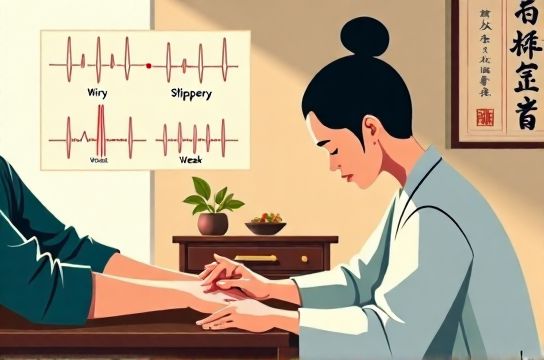
So how does it actually work? Practitioners assess the pulse at three positions on each wrist—cun, guan, and chi—each corresponding to different organs. They evaluate up to 28 distinct qualities like floating, wiry, or choppy, combining depth, rhythm, and strength. For example, a wiry pulse often indicates liver qi stagnation—a common finding in patients with stress or menstrual issues.
Let’s break down some key pulse types and their clinical meanings:
| Pulse Type | Feeling Description | Common Interpretation | Associated Conditions |
|---|---|---|---|
| Wiry | Taut, like a guitar string | Liver qi stagnation | Stress, PMS, hypertension |
| Deep | Only felt with firm pressure | Internal deficiency or cold | Chronic fatigue, hypothyroidism |
| Slippery | Rolling, like beads on a plate | Phlegm or dampness | Digestive issues, obesity |
| Weak | Deficient in strength | Qi or blood deficiency | Anemia, post-illness recovery |
Now, you might be wondering: is there any real data backing this? A 2021 study published in the Journal of Integrative Medicine found that trained practitioners achieved 78–85% inter-rater reliability when identifying major pulse patterns—comparable to ECG interpretation in conventional cardiology. That’s not bad for a technique developed before the invention of the stethoscope.
But here’s the catch: mastering Traditional Chinese pulse reading takes years. I remember my first attempts—I couldn’t distinguish between a slippery and a rapid pulse to save my life. It wasn’t until I logged over 1,000 clinical pulse readings under supervision that patterns started clicking. Today, I can detect subtle imbalances—like a faintly choppy pulse indicating early-stage blood stasis—long before symptoms fully manifest.
Want to try it yourself? Start by checking your own pulse daily. Use your index, middle, and ring fingers on your radial artery. Notice changes during stress, after meals, or during your cycle. Keep a journal. Over time, you’ll begin to see correlations between lifestyle and pulse quality.
In a world obsessed with instant diagnostics, pulse diagnosis reminds us that healing begins with presence—and patience. It’s not just about detecting disease; it’s about understanding the body’s whispers before they become screams.