How the Meridian System Supports Emotional and Physical Health
- 时间:
- 浏览:889
- 来源:TCM1st
If you’ve ever felt stressed, sluggish, or just off, your body might be trying to tell you something. And no, it’s not all in your head—literally. Traditional Chinese Medicine (TCM) has long taught that our health is governed by a network of energy pathways called meridians. These invisible channels carry qi (pronounced “chee”), or life force, throughout the body. When qi flows smoothly, we feel balanced—energetically, emotionally, and physically. But when it’s blocked? That’s when things start going sideways.
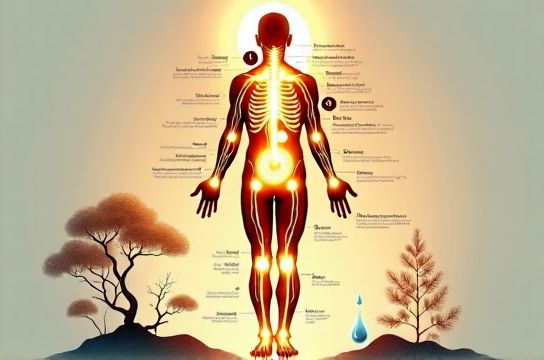
Let’s break it down like a wellness pro who’s seen every trend from celery juice to cryotherapy: the meridian system isn’t just ancient philosophy—it’s a functional map backed by centuries of observation and modern interest in mind-body connection.
What Exactly Are Meridians?
There are 12 primary meridians in TCM, each linked to a major organ system. But here’s the kicker: these aren’t just anatomical lines—they’re energetic highways. Think of them like Wi-Fi signals for your body. If the signal drops, your system glitches.
Each meridian governs specific physical functions AND emotional states. For example:
| Meridian | Associated Organ | Physical Functions | Emotional Links |
|---|---|---|---|
| Liver | Liver | Detoxification, hormone regulation | Anger, frustration, irritability |
| Heart | Heart | Circulation, sleep, mental clarity | Anxiety, insomnia, emotional overwhelm |
| Spleen | Digestive system | Nutrient absorption, energy production | Worry, overthinking, mental fatigue |
| Lung | Lungs | Breathing, immunity | Grief, sadness, low motivation |
This table isn’t just theory—it reflects real patterns clinicians see. A 2021 review in the Journal of Acupuncture and Meridian Studies found that patients with chronic anxiety often showed Liver and Heart meridian imbalances confirmed through pulse diagnosis and symptom tracking.
How Blockages Show Up in Real Life
You don’t need to be a TCM master to spot meridian trouble. Say you’ve been grinding at work, surviving on coffee and cortisol. Over time, you develop acid reflux, headaches, and snap at your partner over nothing. Classic Spleen and Liver imbalance. The Spleen meridian governs digestion and mental focus—when weakened, you can’t process food OR thoughts well. Meanwhile, the Liver, responsible for smoothing energy flow, gets 'stagnant' under stress, leading to anger and physical tension.
The beauty of the meridian system is its holistic lens: emotions aren’t separate from health—they’re central to it.
Supporting Your Meridians: Practical Steps
- Acupuncture: Directly stimulates meridian points. Studies show up to 70% improvement in symptoms like migraines and PMS after 6–8 sessions.
- Self-massage (acupressure): Press the web between thumb and index finger (LI4 point) to relieve stress and headaches.
- Mindful movement: Tai chi and yoga help unblock stagnant qi by syncing breath and motion.
- Emotional hygiene: Journaling or therapy to process grief (Lung), anger (Liver), or worry (Spleen).
In short, your meridians are always working—even when you’re not paying attention. Tune in, and you might just find better energy, mood, and resilience waiting on the other side.