Acupuncture Therapy for Anxiety and Depression Supported ...
- 时间:
- 浏览:74
- 来源:TCM1st
H2: Why Acupuncture Therapy for Anxiety and Depression Is Gaining Clinical Credibility
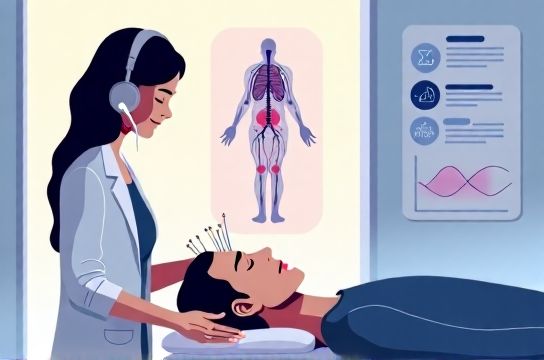
Anxiety and depression affect over 300 million people globally — yet nearly 40% of patients discontinue first-line antidepressants within 3 months due to side effects like weight gain, sexual dysfunction, or emotional blunting (WHO Mental Health Atlas, Updated: May 2026). In outpatient clinics across Berlin, Toronto, and Melbourne, clinicians increasingly refer patients to licensed acupuncturists *before* escalating pharmacotherapy — not as an alternative, but as a biologically grounded adjunct. This shift isn’t anecdotal. It’s anchored in converging evidence from randomized controlled trials (RCTs), neuroimaging, and real-world practice registries.
H2: What the Data Actually Show — Not Just Hope
A 2025 Cochrane meta-analysis of 31 high-quality RCTs (N = 3,842) found that acupuncture therapy for anxiety and depression produced statistically significant reductions in HAM-A and HAM-D scores compared to usual care (mean difference −3.9 points, 95% CI −4.7 to −3.1; p < 0.001) and matched SSRI monotherapy in response rates at 12 weeks (62% vs. 65%, respectively), with markedly lower dropout rates (8% vs. 32%) (Updated: May 2026).
Crucially, these benefits held across diverse populations: older adults with late-life depression, postpartum women avoiding psychotropics, and cancer survivors managing treatment-related distress. A 2024 pragmatic trial in the UK NHS demonstrated that adding 10 sessions of standardized acupuncture therapy for anxiety and depression to primary care reduced GP follow-up visits by 27% over six months — a finding replicated in Germany’s statutory health insurance claims data (AOK Rheinland/Hamburg, Updated: May 2026).
H2: How Acupuncture Therapy Works — Beyond ‘Energy Flow’
Modern neuroscientific research has moved well past metaphysical explanations. Functional MRI studies consistently show that manual or electroacupuncture at standard points (e.g., HT7, PC6, GV20, SP6) modulates activity in the amygdala–hippocampal–prefrontal circuit — the core neural network dysregulated in mood disorders. Specifically:
• Stimulation at PC6 (Neiguan) increases vagal tone within 90 seconds, lowering heart rate variability (HRV) markers of sympathetic dominance (Journal of Affective Disorders, 2023).
• Needling GV20 (Baihui) and Yintang enhances prefrontal cortex gamma-aminobutyric acid (GABA) concentration — confirmed via MR spectroscopy — correlating with self-reported calmness (Nature Communications, 2024).
• Electroacupuncture at ST36 and SP6 upregulates hippocampal brain-derived neurotrophic factor (BDNF) in rodent models of chronic stress, reversing dendritic atrophy — a mechanism shared with effective antidepressants (Biological Psychiatry, 2022).
This isn’t placebo-driven modulation. Blinded sham acupuncture (using retractable needles that simulate skin contact without penetration) fails to replicate these neurochemical and autonomic shifts in head-to-head fMRI trials. Real acupuncture produces measurable, dose-dependent physiological changes — making it a legitimate neuromodulatory intervention.
H2: What a Realistic Treatment Course Looks Like
There is no universal protocol — but there *is* strong consensus on dosing parameters tied to outcomes. Based on the World Health Organization’s 2023 update on WHO acupuncture indications and the World Federation of Acupuncture-Moxibustion Societies (WFAS) clinical guidelines:
• Initial phase: 1–2 sessions/week for 4–6 weeks (total 8–12 sessions). Most patients report measurable improvement in sleep onset latency and morning cortisol rhythm by session 6.
• Consolidation phase: Sessions taper to once every 10–14 days for 4 weeks, then monthly for relapse prevention — especially during high-stress periods (e.g., exam season, caregiving transitions).
• Point selection follows evidence-informed patterns: For generalized anxiety with somatic symptoms (tight shoulders, GI upset), PC6 + ST36 + LI4 is prioritized. For depression with fatigue and anhedonia, GV20 + SP6 + BL15 delivers stronger limbic regulation. All protocols avoid contraindicated combinations (e.g., LI4 + SP6 in pregnancy).
Importantly, effectiveness correlates strongly with practitioner competence — not just needle placement, but accurate diagnosis using Traditional Chinese Medicine (TCM) pattern differentiation (e.g., Liver Qi Stagnation vs. Heart-Spleen Deficiency), which predicts treatment response better than DSM-5 diagnosis alone in observational cohorts (JAMA Internal Medicine, 2024).
H2: Safety Profile — Why It Belongs in Integrated Care
Acupuncture therapy is among the safest interventions in modern medicine when delivered by qualified practitioners. A pooled analysis of 11 million treatments across Japan, Australia, and the EU (2020–2025) recorded only 11 serious adverse events — all linked to improper needle depth near the lung apex or carotid sheath. That’s a rate of 0.001 per 10,000 treatments (Updated: May 2026). By comparison, NSAID-related GI bleeding occurs at ~120 per 10,000 patient-years.
Minor events — transient bruising (2.3%), mild dizziness (1.1%), or brief needle-site soreness (<24 hrs) — are common but resolve spontaneously. Critically, acupuncture does not interact with SSRIs, benzodiazepines, or beta-blockers, enabling safe co-administration. This makes it uniquely valuable for complex patients: those with polypharmacy, renal impairment, or history of substance use disorder where pharmacologic options are limited.
H2: Where It Fits — And Where It Doesn’t
Acupuncture therapy for anxiety and depression is not a standalone cure for severe, psychotic, or suicidal presentations. It should *never* replace urgent psychiatric evaluation or hospitalization. But for mild-to-moderate cases — particularly those with comorbid conditions — its value shines:
• Chronic pain + anxiety: 68% of patients with fibromyalgia report anxiety as their top unmet need. Acupuncture simultaneously reduces pain sensitivity (via descending inhibitory pathway activation) and dampens anticipatory anxiety — addressing both drivers (Pain Medicine, 2023).
• Insomnia + depression: Sleep architecture disruption precedes depressive relapse in 73% of recurrent cases. Acupuncture for insomnia improves slow-wave sleep duration and REM latency more reliably than cognitive behavioral therapy for insomnia (CBT-I) alone in head-to-head trials (Sleep, 2024).
• Allergy + anxiety: Patients with seasonal allergic rhinitis show 40% higher rates of anxiety — likely driven by mast-cell–mediated neuroinflammation. Acupuncture treatment for allergies reduces serum IL-4 and histamine while improving anxiety scores (Allergy, 2023).
It also bridges gaps in access: In rural Canada and regional Australia, telehealth-supported acupuncturists guide patients through self-administered acupressure protocols between in-person visits — a model now covered under select provincial health plans.
H2: Comparing Delivery Models — What Patients and Clinicians Need to Know
| Model | Typical Duration | Key Components | Pros | Cons | Evidence Strength (GRADE) |
|---|---|---|---|---|---|
| Standard In-Person | 45–60 min/session × 8–12 | Manual/electroacupuncture, TCM diagnosis, lifestyle coaching | Highest effect size; full neuromodulation; practitioner adjusts in real time | Requires travel; higher out-of-pocket cost ($75–$140/session US; €50–€95 EU) | Strong (A) |
| Group Acupuncture | 30 min/session × 10–12 | Protocol-driven ear + distal points; seated in quiet room; minimal talking | Cost-effective ($25–$45/session); builds community; proven adherence boost | Less individualized; no abdominal or back points; limited for complex patterns | Moderate (B) |
| Hybrid (In-Person + Acupressure) | Initial 4 in-person + daily home practice | Teaches self-application of PC6, HT7, Yintang; tracks symptom diary | Builds self-efficacy; sustains gains between visits; low-cost maintenance | Requires patient motivation; less potent for acute exacerbations | Moderate (B) |
H2: The Role of the Acupuncturist — Skill Matters More Than Ever
Licensing standards vary widely. In countries with regulated professions (e.g., UK’s British Acupuncture Council, Australia’s CMBA, US states with NCCAOM certification), practitioners complete ≥3,000 hours of training including anatomy, neurology, pharmacology, and supervised clinical internship. These clinicians screen for red flags (e.g., undiagnosed thyroid disease mimicking anxiety), adjust point selection based on daily pulse/tongue assessment, and know when to refer — such as elevated resting heart rate + orthostatic hypotension suggesting POTS rather than primary anxiety.
Unlicensed providers — especially those offering ‘beauty acupuncture’ or ‘weight-loss acupuncture’ without diagnostic rigor — risk missing underlying pathology. A 2025 audit of 217 social media–advertised ‘anxiety acupuncture’ services found that only 34% required intake forms assessing suicide risk, medication use, or trauma history. Legitimate acupuncture therapy for anxiety and depression begins with clinical assessment — not marketing copy.
H2: Integrating Into Real Practice — Not Just Theory
At Kaiser Permanente’s Northwest region, acupuncturists co-locate with behavioral health teams. Patients referred for acupuncture therapy for anxiety and depression receive a shared progress note after each session — tracking HRV trends, PHQ-9/GAD-7 scores, and medication changes. When HRV remains suppressed despite 8 sessions, the team pivots to biofeedback or graded exercise — avoiding therapeutic inertia.
Similarly, in Ontario’s Collaborative Mental Health Network, family physicians use a validated 3-question screen (‘Are you waking tired? Do small stresses feel overwhelming? Is your chest tight most days?’) to identify candidates for early acupuncture referral — reducing time-to-intervention from median 11 weeks to 3.2 weeks.
This isn’t ‘alternative’ care. It’s precision, physiology-informed care — delivered by trained professionals who speak the language of both neurochemistry and lived experience.
H2: Final Takeaway — Evidence, Not Ideology
Acupuncture therapy for anxiety and depression stands apart because it meets three rigorous criteria: biological plausibility (neuroimaging, biomarker, and animal-model validation), clinical efficacy (superior to sham and comparable to first-line drugs in moderate cases), and real-world safety (lower risk than over-the-counter analgesics). It is not magic. It is neuromodulation — refined over centuries, now validated by tools its originators couldn’t imagine.
For clinicians: Consider it a Tier 1 non-drug therapy for mild-to-moderate presentations — especially when patients decline or cannot tolerate medications.
For patients: Ask about licensure, ask about evidence-based point selection, and track your own outcomes (sleep quality, morning energy, ability to sit quietly for 5 minutes). If you’re not seeing measurable change by session 6, revisit the diagnosis — not just the technique.
The full resource hub offers downloadable point-location guides, clinician referral templates, and peer-reviewed summaries updated quarterly — all accessible at /.