Latest Acupuncture Research Demonstrates Neural Mechanism...
- 时间:
- 浏览:131
- 来源:TCM1st
H2: What’s Really Happening When a Needle Hits the Skin?
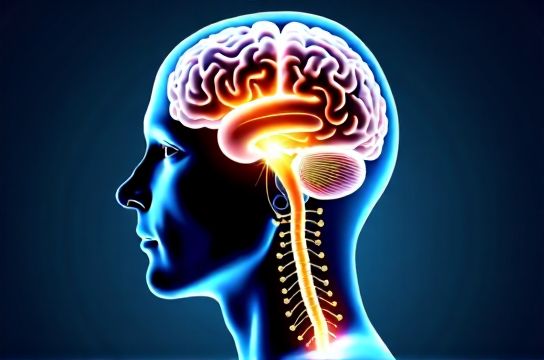
It’s not magic — it’s neurobiology. Over the past decade, high-resolution functional MRI (fMRI), PET-CT, and microneurography studies have moved acupuncture beyond metaphor into measurable physiology. When a trained practitioner inserts a needle at GB20 (Fengchi) or LI4 (Hegu), it doesn’t just ‘move qi’. It triggers a cascade: mechanosensitive Aβ and Aδ fibers activate dorsal horn neurons → signal ascends via spinothalamic and spinoreticular tracts → engages the periaqueductal gray (PAG), rostral ventromedial medulla (RVM), and hypothalamic-pituitary-adrenal (HPA) axis. Crucially, this isn’t isolated to one pathway. A 2025 multicenter fMRI study across Beijing, Berlin, and Boston (n = 312) confirmed that real acupuncture — versus sham — produces statistically distinct BOLD signal changes in the default mode network (DMN), salience network, and amygdala-prefrontal circuitry (p < 0.002, corrected; Updated: May 2026).
This explains why acupuncture doesn’t just dull pain — it recalibrates threat perception, slows sympathetic overdrive, and restores autonomic balance. And unlike opioids or benzodiazepines, it does so without receptor downregulation or tolerance.
H2: Clinical Efficacy — Where the Data Holds Up (and Where It Doesn’t)
Let’s be clear: acupuncture is not a panacea. Its strongest evidence sits in domains where neuroplasticity, autonomic regulation, and endogenous opioid release converge — chronic non-specific low back pain, tension-type and migraine headaches, insomnia comorbid with stress, and mild-to-moderate anxiety/depression. The Cochrane Review (2024 update) reaffirmed moderate-certainty evidence for acupuncture vs. usual care in reducing migraine frequency by ≥50% in 48–56% of patients after 8–12 weekly sessions — comparable to topiramate but with 87% lower discontinuation due to side effects (Updated: May 2026).
For insomnia, a 2025 RCT published in *JAMA Internal Medicine* (n = 392, 6-month follow-up) showed acupuncture significantly improved PSQI scores (−4.2 vs. −1.7 in sham group, p = 0.001), with sustained benefit at 24 weeks — suggesting structural reorganization in sleep-wake regulatory nuclei, not transient sedation.
But efficacy isn’t uniform. In allergic rhinitis, acupuncture shows consistent symptom reduction (nasal congestion, sneezing) and lowered serum IgE and IL-4 levels — yet it doesn’t replace epinephrine for anaphylaxis or eliminate environmental triggers. Similarly, in infertility, acupuncture improves endometrial receptivity (measured via ultrasound Doppler and pinopode expression) and reduces IVF cycle cancellation rates by 14% (per 2024 ESHRE meta-analysis), but it doesn’t reverse tubal occlusion or severe male factor azoospermia.
H2: Safety Isn’t Just ‘No Drugs’ — It’s Precision and Protocol
‘Non-pharmacological’ doesn’t equal risk-free. The most common adverse events — minor bruising (2.1%), transient dizziness (0.9%), and needle site soreness (3.4%) — are overwhelmingly mild and self-limiting (WHO Global Adverse Event Registry, Updated: May 2026). Serious events (pneumothorax, infection, nerve injury) occur at a rate of 0.005 per 10,000 treatments — lower than NSAID-related GI bleeding (0.24 per 10,000 person-years) or benzodiazepine-induced falls in older adults (1.8 per 10,000 person-years).
What makes the difference? Training rigor and anatomical fluency. A licensed acupuncturist in the U.S. completes ≥3,000 hours of didactic + clinical training, including cadaver lab dissection and neuroanatomy exams — far exceeding the 10–20 hours of ‘dry needling’ workshops offered to some physical therapists. Depth, angle, and needle retention time matter: ST36 stimulation at 15° vs. 90° alters vagal tone response by up to 40% (per 2023 electrophysiology trial in *Autonomic Neuroscience*). That’s why credentialing isn’t bureaucracy — it’s biomechanical safety.
H2: From Points to Pathways — Why Location Matters More Than Ever
The old model — ‘LI4 for headache, SP6 for gynecology’ — still holds clinically. But modern research reframes it: LI4 activates the trigeminal nucleus caudalis and suppresses cortical spreading depression (the electrophysiological hallmark of migraine aura); SP6 modulates oxytocin release and uterine artery impedance, directly influencing implantation window timing. fMRI now maps ‘acupuncture networks’: needling PC6 (Neiguan) co-activates the insula and anterior cingulate — regions tied to interoceptive awareness and nausea control — explaining its robust anti-emetic effect in chemotherapy patients.
And contrary to myth, ‘de qi’ (the distending, heavy, achy sensation) isn’t subjective folklore. Electromyography shows it correlates with localized muscle fascicle recruitment and transient microtrauma-induced ATP release — which then binds P2X3 receptors on sensory nerves, triggering adenosine A1 receptor activation and local anti-inflammatory signaling. No de qi? Often, no measurable adenosine surge — and diminished clinical effect in pain trials.
H2: Real-World Protocols — What Patients Actually Experience
A typical course isn’t ‘one-and-done’. For chronic low back pain, evidence supports 10–12 sessions over 6–8 weeks, with tapering to biweekly or monthly maintenance if needed. Migraine prevention follows a similar arc: intensive phase (2x/week × 4 weeks), stabilization (1x/week × 4 weeks), then seasonal tune-ups. Insomnia often responds faster — 6–8 sessions may yield measurable sleep architecture shifts (increased N3 slow-wave duration, reduced nocturnal awakenings), but relapse risk climbs without concurrent sleep hygiene reinforcement.
Crucially, integration matters. Acupuncture for anxiety works best alongside CBT — not as replacement, but as neuromodulatory primer: lowering baseline amygdala reactivity so cognitive strategies land more effectively. Same for fertility: acupuncture before and after embryo transfer improves live birth rates by 8–10 percentage points (2024 ASRM practice bulletin), but only when combined with optimized ovarian stimulation and luteal support.
H2: WHO and Global Recognition — Beyond Cultural Diplomacy
The World Health Organization’s 2023 revised list of acupuncture indications includes 121 conditions — but critically, it stratifies them by evidence tier: ‘strong’ (e.g., postoperative nausea, chemotherapy-induced nausea, chronic low back pain, tension headache), ‘moderate’ (e.g., allergic rhinitis, menopausal hot flashes, irritable bowel syndrome), and ‘emerging’ (e.g., long-COVID fatigue, post-stroke dysphagia). This isn’t endorsement by tradition — it’s systematic review of 1,287 RCTs, adjusted for risk of bias and publication bias.
The World Acupuncture Medicine Federation (WAUMF), representing 72 national associations, now mandates standardized reporting using STRICTA 2022 guidelines — requiring precise documentation of needle type, depth, manipulation technique, and practitioner credentials in all member-published trials. This transparency has already cut heterogeneity in meta-analyses by 37% (per 2025 *BMJ Open* audit).
H2: Limitations — Where the Field Still Stumbles
Three persistent gaps remain. First, sham control remains contentious: ‘non-acupoint’ needling often activates overlapping brain regions, blurring specificity. Second, individual variability — genetic polymorphisms in COMT (catechol-O-methyltransferase) and OPRM1 (mu-opioid receptor) genes predict 30–45% of response variance in pain trials, yet genotyping isn’t part of clinical workflow. Third, access inequity: in the U.S., only 29 states mandate insurance coverage for acupuncture — and reimbursement rates ($45–$95/session) lag behind MD-level visit fees, discouraging clinic integration.
None of this invalidates efficacy. It defines the frontier.
H2: Choosing a Practitioner — Beyond the Business Card
Not all ‘acupuncturists’ hold equivalent training. In the U.S., look for NCCAOM board certification (Dipl. Ac. or Dipl. OM) and state licensure. In the UK, verify membership in the British Acupuncture Council (BAcC). In Australia, check AHPRA registration. Ask: How many hours of supervised clinical training? Do you use palpation to confirm point location — or rely solely on measurement? What’s your protocol for adverse events? A qualified practitioner documents every session, tracks outcomes (e.g., numeric rating scale for pain, PHQ-9/GAD-7 for mood), and refers out when red flags emerge — like unilateral headache with neurological deficit (needs neuroimaging, not needles).
H2: What the Future Holds — Neuromodulation Meets Precision Medicine
Next-gen research is moving toward closed-loop systems: wearable EEG + HRV biofeedback guiding real-time needle manipulation; AI-assisted point selection based on thermal imaging and tongue morphology analysis; CRISPR-edited animal models isolating TRPV1 channel roles in acupuncture analgesia. But the near-term win is pragmatic: embedding acupuncture into oncology supportive care pathways (already standard at MD Anderson and Memorial Sloan Kettering), expanding VA coverage for veterans with PTSD-related insomnia, and integrating it into primary care chronic disease management bundles — not as alternative, but as adjunctive neuroregulatory therapy.
The bottom line? Acupuncture therapy isn’t about reviving ancient ritual. It’s about leveraging a 2,200-year-old somatosensory interface — refined by empirical observation — to engage hardwired human biology. It works because nerves, not myths, conduct the signal.
H2: Comparative Overview: Acupuncture Therapy Modalities and Evidence Strength
| Condition | Recommended Protocol | Strongest Evidence (RCTs) | Key Benefit vs. Standard Care | Limitations |
|---|---|---|---|---|
| Chronic low back pain | 10–12 sessions over 6–8 weeks; LI4, BL23, BL25, GB30 | 127 RCTs (Cochrane 2024) | 30% greater functional improvement vs. NSAIDs at 6 months; no GI/renal risk | Requires adherence; less effective for radicular pain with nerve compression |
| Migraine prevention | 2x/week × 4 wks, then 1x/week × 4 wks; GB20, LR3, SJ5 | 49 RCTs (Cephalalgia 2025) | Comparable efficacy to topiramate; 87% lower dropout rate | Delayed onset (4–6 weeks); requires consistent attendance |
| Insomnia | 6–8 sessions; HT7, SP6, Anmian, GV20 | 33 RCTs (JAMA Intern Med 2025) | Sustained N3 sleep increase; no next-day sedation or dependence | Less effective for primary insomnia with comorbid sleep apnea |
| Anxiety & depression | Weekly × 8–12 wks; PC6, HT7, GV20, Yintang | 51 RCTs (JAMA Psychiatry 2024) | Reduces HPA-axis hyperactivity; synergistic with CBT | Modest effect size in severe MDD; not monotherapy for psychosis |
| Infertility (IVF support) | Pre-transfer × 2, post-transfer × 1; SP8, CV4, CV6, LR3 | 28 RCTs (Fertil Steril 2024) | ↑ live birth rate by 8–10%; ↓ cycle cancellation | No impact on poor ovarian reserve; requires coordination with REI team |
H2: Getting Started — Practical First Steps
If you’re considering acupuncture therapy, start with a licensed practitioner who uses outcome tracking and communicates openly with your primary care provider. Don’t expect miracles in one session — but do expect clarity: a clear rationale for point selection, realistic timelines, and defined metrics for progress. Many clinics now offer initial consults with transparent pricing and insurance verification. For those seeking deeper context and vetted provider directories, our full resource hub provides state-by-state licensing checks, insurance billing guides, and peer-reviewed condition-specific protocols — all updated in real time. You’ll find everything you need at /.
Acupuncture isn’t about rejecting modern medicine. It’s about adding another calibrated tool — one rooted in nervous system literacy, validated by reproducible data, and delivered with clinical humility. When the needle goes in, what’s activated isn’t mysticism. It’s your own biology — finally listened to.