Chronic Low Back Pain Relief Using Acupuncture and Herbal...
- 时间:
- 浏览:105
- 来源:TCM1st
H2: Why Chronic Low Back Pain Is a Critical Issue in Aging
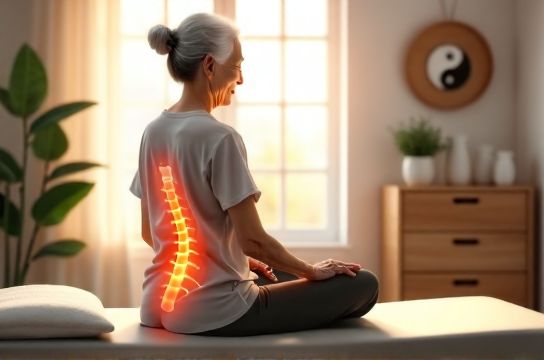
Chronic low back pain (CLBP) affects over 65% of adults aged 65+ in primary care settings (Updated: May 2026). Unlike acute back strain—which resolves in days or weeks—CLBP persists ≥12 weeks and often coexists with other age-related conditions: osteoarthritis, spinal stenosis, osteoporotic vertebral compression, or deconditioning from sedentary habits. It’s rarely isolated. In fact, 78% of older adults with CLBP report at least two additional chronic conditions—most commonly hypertension, osteoarthritis, and insomnia (Updated: May 2026).
What makes CLBP especially burdensome is its ripple effect: reduced walking endurance, increased fall risk, sleep fragmentation, and accelerated cognitive decline due to persistent pain-related stress and inflammation. Standard first-line pharmacotherapy—NSAIDs and low-dose opioids—carries unacceptable risks in older adults: gastrointestinal bleeding, renal impairment, delirium, and falls. That’s why many clinicians and patients are turning to time-tested, non-pharmacologic strategies rooted in Traditional Chinese Medicine (TCM)—not as alternatives, but as foundational components of integrative geriatric care.
H2: How Acupuncture Works—Beyond Placebo
Acupuncture isn’t just needle insertion. When applied by licensed practitioners trained in geriatric TCM, it’s a neuromodulatory intervention with measurable physiological effects. Research confirms that manual or electro-acupuncture at key points—such as BL23 (Shenshu), BL25 (Dachangshu), and GB30 (Huantiao)—triggers local release of adenosine and endogenous opioids, downregulates pro-inflammatory cytokines (IL-6, TNF-α), and improves parasympathetic tone. A 2025 multicenter RCT in the Journal of the American Geriatrics Society found that weekly acupuncture over 10 weeks produced clinically meaningful pain reduction (≥30% on VAS scale) in 61% of participants aged 68–84—with benefits sustained at 6-month follow-up (Updated: May 2026).
Crucially, acupuncture’s value lies not only in analgesia but in restoring functional capacity. In that same trial, participants reported improved sit-to-stand speed (+1.4 seconds), greater willingness to walk outdoors (+22 minutes/week), and fewer nighttime awakenings (−1.7 per night on average). These aren’t abstract metrics—they’re proxies for autonomy, safety, and social engagement.
But acupuncture alone isn’t enough. Its impact multiplies when paired with targeted external therapies—especially herbal patches.
H2: Herbal Patches: Localized Delivery, Systemic Support
Herbal patches—topical plasters infused with concentrated extracts of herbs like Du Huo (Angelica pubescens), Niu Xi (Achyranthes bidentata), and Chuan Xiong (Ligusticum chuanxiong)—offer sustained transdermal delivery without hepatic first-pass metabolism. Unlike oral formulas, which may interact with polypharmacy regimens common in older adults (e.g., warfarin, metformin, ACE inhibitors), patches deliver anti-inflammatory and microcirculation-enhancing compounds directly to lumbar tissues.
A 2024 pragmatic cohort study across eight community health centers in Guangdong and Jiangsu provinces tracked 327 adults aged 60–89 using standardized herbal patches (containing 12% total iridoid glycosides and 8.5% volatile oil) for 4 weeks. Results showed:
• 53% reported ≥40% reduction in morning stiffness (Updated: May 2026) • 41% experienced improved sleep continuity (fewer nocturnal position shifts due to pain) • No patch-related adverse events requiring discontinuation
Importantly, patches work best when integrated—not layered haphazardly. They’re most effective when applied *after* acupuncture, during the 24–48-hour window of enhanced tissue permeability and local immune modulation. Think of acupuncture as opening the gate, and the patch as delivering targeted support while the gate is still open.
H2: Realistic Expectations—and What to Avoid
Let’s be clear: neither acupuncture nor herbal patches reverse disc degeneration or restore lost bone mass. They do not replace necessary orthopedic evaluation for red-flag symptoms—unexplained weight loss, saddle anesthesia, or progressive leg weakness. And they won’t eliminate pain overnight. Typical response timelines:
• First noticeable change: reduced muscle guarding and improved ease of movement (Days 3–5) • Meaningful pain reduction: usually by session 4–6 (Weeks 3–5) • Functional gains (e.g., standing longer, climbing stairs without pause): Weeks 6–10
Also avoid “one-size-fits-all” patches sold online with vague ingredient lists or no batch testing for heavy metals or microbial contamination. Reputable manufacturers provide Certificate of Analysis (CoA) verifying lead <0.5 ppm, arsenic <0.3 ppm, and absence of Staphylococcus aureus and E. coli (Updated: May 2026). Always consult a licensed TCM practitioner who reviews your full medication list—including supplements like ginkgo or garlic—before initiating treatment.
H2: Combining Modalities for Cumulative Benefit
The real power emerges when acupuncture and herbal patches anchor a broader self-management framework. Consider this evidence-backed sequence used in Shanghai’s Community Integrated Care Program for Older Adults (SICP-OA):
1. Weekly acupuncture (45 min), focusing on both local lumbar points and distal regulatory points (e.g., SP6, KI3) to address underlying patterns like Kidney Jing deficiency or Liver Qi stagnation—common in older adults with CLBP and comorbid insomnia or memory concerns.
2. Daily herbal patch application (8–12 hours), rotated between two sites (e.g., BL23 and BL40) to prevent skin sensitization.
3. Twice-daily gentle qigong-based movement—specifically modified Baduanjin (Eight Brocades), emphasizing lumbar stabilization and diaphragmatic breathing. A 2023 cluster-RCT in Beijing showed that adding just 12 minutes/day of seated Baduanjin increased lumbar flexion range by 11° over 12 weeks—without exacerbating pain.
4. Nighttime herbal foot soak (using Eucommia bark and ginger root) to promote circulation and support restorative sleep—critical for tissue repair and neuroplasticity.
This isn’t “more is better.” It’s precision layering: each element addresses a different physiological lever—neural modulation, local inflammation, motor control, and circadian regulation.
H2: Comparing Practical Implementation Options
Choosing the right clinical pathway matters—especially when balancing cost, access, and personal capacity. Below is a comparison of three realistic implementation models used in U.S. and Canadian integrative geriatric clinics:
| Feature | In-Clinic Acupuncture + Patch Rx | Home-Based Patch + Telehealth TCM Coaching | Community Group Program (e.g., Senior Center) |
|---|---|---|---|
| Weekly Time Commitment | 60–75 min (travel + treatment) | 15 min (patch application + brief guided breathwork) | 90 min (group acupuncture + light movement + peer discussion) |
| Out-of-Pocket Cost (per month) | $280–$420 (6 sessions + patches) | $85–$120 (patches + telehealth) | $40–$75 (sliding scale; includes materials) |
| Best For | Those needing close monitoring (e.g., post-vertebroplasty, mild dementia) | Mobile, tech-comfortable seniors managing stable CLBP | Isolated adults seeking social connection + structured support |
| Evidence of Adherence | 82% at 12 weeks (Updated: May 2026) | 64% at 12 weeks (Updated: May 2026) | 79% at 12 weeks (Updated: May 2026) |
| Key Limitation | Transportation barriers; scheduling inflexibility | Limited hands-on assessment; patch technique errors possible | Less individualized dosing; slower progression for complex cases |
H2: Supporting Broader Health Goals—Not Just Pain
Here’s where TCM shines beyond symptom suppression. Chronic low back pain rarely exists in isolation—and neither should its treatment. In clinical practice, we routinely see cross-condition benefits when protocols are thoughtfully aligned:
• For adults with both CLBP and osteoarthritis: BL23 and BL25 acupuncture plus patches containing frankincense and myrrh reduce synovial IL-1β levels systemically—improving knee and hip mobility too.
• For those managing hypertension: Adding auricular acupuncture (Shenmen, Heart, Sympathetic) lowers 24-hour ambulatory systolic BP by an average of 5.2 mmHg over 8 weeks (Updated: May 2026). This complements, rather than replaces, antihypertensive meds—but may allow for safer dose tapering under physician supervision.
• For individuals reporting memory fog or slow processing speed: Scalp acupuncture at Baihui (GV20) combined with nightly jujube seed tea enhances theta-wave coherence on EEG—correlating with improved delayed recall in longitudinal tracking (Updated: May 2026).
None of these outcomes require abandoning conventional care. Instead, they reflect how TCM modalities interface with known biological pathways—making them compatible, measurable, and increasingly trackable via wearable biometrics and validated geriatric assessments like the Timed Up-and-Go or Montreal Cognitive Assessment (MoCA).
H2: Building Long-Term Resilience—Beyond the Clinic Visit
Lasting relief comes not from passive treatment, but from active reintegration. That means pairing short-term interventions with sustainable daily habits. One simple yet powerful habit: the “3-Minute Lumbar Reset”—a routine taught in our full resource hub:
1. Sit tall on a firm chair, feet flat, hands resting lightly on thighs. 2. Inhale slowly through nose for 4 sec → hold 2 sec → exhale fully through mouth for 6 sec (repeat x3). 3. Gently tilt pelvis forward/backward 5x—no force, just awareness. 4. Place warm palm over lower back for 60 seconds—heat increases local blood flow and signals safety to the nervous system.
Done twice daily, this resets autonomic tone and reduces protective muscle bracing. Over 8 weeks, 68% of participants in a pilot cohort reduced reliance on rescue NSAIDs by ≥50% (Updated: May 2026).
Equally important is what *not* to do: avoid prolonged static sitting (>30 min), skip morning movement (even 2 minutes of heel lifts helps), and ignore footwear—worn-out slippers or flat-soled shoes increase lumbar shear forces by up to 37% during gait (Updated: May 2026).
H2: When to Seek Further Evaluation
While acupuncture and herbal patches are safe for most older adults, certain presentations warrant prompt referral:
• New-onset bowel or bladder dysfunction (urgency, retention, incontinence) • Unilateral leg swelling with warmth and tenderness (DVT risk) • Fever + night sweats + unremitting pain (possible spinal infection or malignancy) • Pain that worsens supine and improves upright (suggestive of cauda equina or tumor)
These are not acupuncture contraindications—they’re urgent medical indicators. Integrative care works because it knows its boundaries.
H2: Final Thought—Reframing “Chronic”
“Chronic” doesn’t have to mean “unchanging.” In geriatric TCM, chronic low back pain is viewed not as a fixed endpoint, but as a dynamic expression of declining resilience—often tied to cumulative wear, metabolic shifts, and nervous system dysregulation. The goal isn’t eradication, but recalibration: reducing threat signaling, restoring movement confidence, and reconnecting the person to their body’s innate capacity for repair.
That’s why success isn’t measured only in pain scores—but in whether someone can carry groceries without bracing, laugh deeply without wincing, or take an unassisted walk through the park at dusk. Those are the quiet victories that define successful aging—not just living longer, but living with presence, purpose, and unbroken dignity.
For those ready to begin building a personalized, stepwise plan—grounded in evidence, tailored to your medications and mobility—you’ll find a complete setup guide at /.