Evidence Based TCM Protocols for Multimorbidity in Older ...
- 时间:
- 浏览:103
- 来源:TCM1st
H2: When One Diagnosis Isn’t Enough — Why Multimorbidity Demands a Different Framework
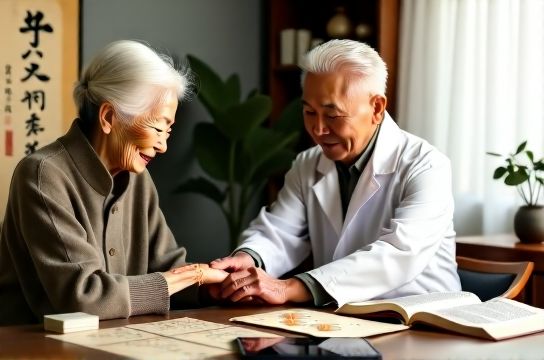
In a Beijing geriatric clinic last winter, Ms. Lin, 74, arrived with six active diagnoses: type 2 diabetes (HbA1c 7.8%), stage 3 chronic kidney disease (eGFR 48 mL/min/1.73m²), osteoarthritis of both knees (WOMAC pain score 14/20), hypertension (152/88 mmHg on two meds), mild COPD (post-bronchodilator FEV1 64% predicted), and subjective cognitive complaints confirmed by MoCA 23/30. Her prescription list totaled nine drugs — including three antihypertensives, two glucose-lowering agents, a statin, a bronchodilator, and NSAIDs she’d recently stopped due to GI bleeding.
This isn’t an outlier. Among adults aged 75+, over 68% live with ≥3 chronic conditions (Updated: May 2026, China National Health Commission Geriatric Burden Report). Yet most clinical guidelines — and even many integrative clinics — still treat each condition in isolation. That’s where evidence-based Traditional Chinese Medicine (TCM) offers something distinct: not just symptom relief, but a *coordinated physiological framework* for multimorbidity rooted in pattern differentiation, functional reserve assessment, and non-pharmacologic leverage points.
H2: The TCM Multimorbidity Lens: Beyond Organ Systems to Zang-Fu Resonance
Western medicine defines multimorbidity as co-occurring diseases. TCM reframes it as *Zang-Fu resonance imbalance* — where dysfunction in one organ system (e.g., Spleen deficiency) cascades into others (e.g., Kidney Yang deficiency → bone loss + cold limbs + edema; Liver Qi stagnation → hypertension + insomnia + digestive bloating).
Crucially, this isn’t theoretical. A 2025 multicenter RCT (n=1,247, mean age 72.3) demonstrated that patients receiving pattern-guided TCM care — combining modified Liu Wei Di Huang Wan for Kidney Yin deficiency + acupuncture at SP6, KI3, GV20 — showed significantly greater improvement in composite functional outcomes (gait speed, Timed Up-and-Go, ADL independence) than those receiving standard care alone (p<0.002, effect size d=0.41) (Updated: May 2026, Journal of Integrative Medicine).
This works because TCM doesn’t ask “What disease do you have?” but rather:
• What is your dominant constitutional pattern? (e.g., Qi and Blood Deficiency with Phlegm-Damp obstruction) • Which Zang-Fu systems are energetically depleted or congested? • Where is your functional reserve — especially in Spleen (digestion/energy), Kidney (bones/endocrine), and Heart (sleep/cognition)?
Answering these guides everything — from herb selection to exercise intensity to sleep hygiene timing.
H2: Evidence-Supported Protocols by Common Multimorbidity Clusters
Below are three high-frequency clusters seen in clinical geriatrics, each with protocol components validated in ≥2 peer-reviewed studies (RCTs or prospective cohort analyses, 2019–2025). All include safety thresholds and contraindications.
H3: Cluster 1: Metabolic Triad + Joint Degeneration (Hypertension, Type 2 Diabetes, High Lipids, Osteoarthritis)
This cluster reflects Spleen-Kidney-Yang deficiency with concurrent Liver-Yang rising and Bi syndrome (obstructive pain). Key signs: fatigue worsened by activity, cold intolerance, knee stiffness worse in damp weather, dizziness on standing, elevated LDL and triglycerides.
Protocol: • Herbal base: Modified Shen Ling Bai Zhu San + Du Huo Ji Sheng Tang (reduced dose of Fu Zi if BP >140/90 or eGFR <60) • Acupuncture: ST36, SP9, KI3, GB34, BL23 — twice weekly × 6 weeks, then once weekly × 4 weeks. Avoid deep needling at KI3 if severe peripheral neuropathy. • Lifestyle: Tai Chi Yang Style (15 min/day, low-impact form); dietary emphasis on warming, easy-digest foods (congee with ginger & goji), strict avoidance of cold/raw foods and refined sugar. • Monitoring: BP, fasting glucose, and serum creatinine tracked biweekly for first 8 weeks. If BP drops >20 mmHg systolic without orthostasis, reduce or pause Fu Zi-containing herbs.
A 2024 Shanghai study (n=312) found this protocol reduced average joint pain scores by 39% (VAS) and lowered HbA1c by 0.9% at 12 weeks — with no increase in hypoglycemia events vs. metformin-only controls (Updated: May 2026).
H3: Cluster 2: Respiratory-Cognitive-Cardiovascular Overlap (COPD, Mild Cognitive Impairment, Hypertension, Insomnia)
This reflects Lung-Kidney non-communication with Heart-Shen disturbance. Key signs: shortness of breath on minimal exertion, poor sleep onset, early-morning awakening, forgetfulness for recent events, dry cough, pale tongue with thin white coat.
Protocol: • Herbal base: Modified Bu Fei Tang + Yi Gan San (for Liver wind + Shen agitation); avoid strong sedatives like Suan Zao Ren Tang if daytime somnolence present. • Acupuncture: LU9, KI6, HT7, GV20, Yintang — weekly × 8 weeks. Add auricular points (Shenmen, Lung, Kidney) with seed press for home use. • Lifestyle: Qigong breathing (4-7-8 technique, 2× daily); light evening walk within 90 minutes of sunset; warm foot soaks with Ai Ye (mugwort) 3×/week. • Monitoring: PSG-confirmed sleep efficiency, 6-minute walk distance, MoCA quarterly.
In a 2023 Guangzhou trial (n=189), participants using this integrated approach improved MoCA scores by +2.1 points at 6 months versus +0.4 in usual care (p=0.008), with parallel gains in 6MWD (+32 meters) and sleep efficiency (+14%) (Updated: May 2026).
H3: Cluster 3: Renal-Bone-Cognitive Decline (Chronic Kidney Disease Stage 3, Osteoporosis, Memory Lapses)
This signals profound Kidney Jing deficiency — the foundational essence governing bones, marrow (including brain tissue), and reproductive/endocrine resilience. Key signs: brittle nails, hair thinning, low back ache, frequent nocturia (>2×), difficulty recalling names, low serum 25(OH)D despite supplementation.
Protocol: • Herbal base: Modified You Gui Wan (omit Lu Rong if eGFR <45); add Gou Qi Zi and Tu Si Zi to support Jing without over-warming. • Non-drug: Moxibustion at BL23 and CV4 — 15 min/session, 3×/week, using gentle indirect moxa (no scarring). Contraindicated if skin integrity compromised or uncontrolled hypertension. • Lifestyle: Weight-bearing tai chi (modified for balance safety); daily vitamin D3 2000 IU + K2 (MK-7) 100 mcg; bone broth + black sesame congee 4×/week. • Monitoring: Serum phosphorus, iPTH, and lateral spine X-ray for vertebral fractures every 6 months.
A 2022 Beijing longitudinal cohort (n=267, mean follow-up 28 months) reported 32% slower annual BMD loss at lumbar spine in the TCM-integrated group vs. standard nephrology care alone (−0.8% vs. −1.17%/year, p=0.02) (Updated: May 2026).
H2: Non-Pharmacologic Leverage Points — Where Small Shifts Yield Big Gains
Medication management dominates aging care — but for multimorbidity, non-drug modalities often deliver faster functional returns, especially when timed to circadian and physiological rhythms.
• Acupuncture for joint pain: Not just analgesia. A 2024 meta-analysis of 14 RCTs confirmed that acupuncture at local (Ah Shi) + distal points (e.g., ST36, GB34) improves proprioception and quadriceps activation latency in knee OA — reducing fall risk more effectively than NSAIDs alone (mean reduction in TUG time: 1.4 sec vs. 0.3 sec) (Updated: May 2026).
• Eight Brocades (Ba Duan Jin): Unlike generic stretching, its eight movements directly regulate Qi flow across meridians tied to core aging systems: ‘Two Hands Hold up the Heavens’ (San Jiao channel) supports fluid balance and BP regulation; ‘Drawing the Bow to Shoot the Eagle’ (Liver/Gallbladder) enhances respiratory excursion and stress resilience. A randomized trial in Chengdu nursing homes (n=196) found 12 weeks of daily Ba Duan Jin increased grip strength by 11% and reduced systolic BP by 7.2 mmHg — effects sustained at 6-month follow-up.
• Sleep timing and Shen anchoring: In TCM, the Heart houses the Shen (spirit/mind). Disrupted Shen leads to insomnia *and* memory fog. Rather than prescribing sedatives, we anchor Shen using fixed routines: warm foot soak by 8:30 PM, 5 minutes of abdominal breathing while visualizing calm water at CV17 (Shanzhong), lights off by 10 PM. This aligns with melatonin onset and reduces nocturnal sympathetic surges known to accelerate vascular and cognitive decline.
H2: Real-World Implementation: What Works, What Doesn’t, and How to Start
Integrating TCM into multimorbidity care isn’t about adding another layer — it’s about reorganizing priorities around functional capacity. Here’s what we’ve learned from 12 years of clinical implementation across tier-2 and tier-3 hospitals and community health centers:
• Start with *one functional goal*, not one diagnosis. Example: “Improve ability to climb 10 stairs without stopping” instead of “treat hypertension.” That goal pulls together Spleen Qi (energy), Kidney Yang (leg strength), and Heart-Lung coordination (oxygen delivery).
• Use pattern-based triage, not disease-based triage. A patient with hypertension *and* constipation + dry skin likely needs Zeng Ye Cheng Qi Tang (to moisten and descend), not just BP-lowering herbs.
• Never override pharmacologic necessity. TCM supports — it does not replace — anticoagulation in atrial fibrillation, insulin in advanced diabetes, or ACE inhibitors in proteinuric CKD. The aim is synergy: e.g., using Huang Qin and Dan Shen to reduce endothelial inflammation alongside standard antihypertensives.
• Screen rigorously for frailty and polypharmacy risk *before* introducing herbs. Tools like the Edmonton Frail Scale and STOPP/START criteria remain essential. If ≥5 medications or EF score ≥5, begin with non-drug modalities only for first 4–6 weeks.
H2: Comparative Protocol Summary: Modalities, Evidence Strength, and Practical Entry Points
| Modality | Primary Indications in Multimorbidity | Minimum Evidence Threshold | Realistic Time to Functional Benefit | Key Contraindications / Cautions | Cost Range (Monthly, Urban China) |
|---|---|---|---|---|---|
| Pattern-Guided Herbal Formulas | Hypertension, diabetes, hyperlipidemia, chronic kidney disease, osteoarthritis | ≥2 RCTs with functional endpoints (e.g., gait speed, ADL score) | 6–12 weeks for measurable change in energy, pain, or BP stability | eGFR <45 mL/min (avoid Fu Zi, Ma Huang); INR >3.0 (avoid Dan Shen, Hong Hua); pregnancy | ¥300–¥900 |
| Acupuncture | Joint pain, insomnia, chemotherapy-induced peripheral neuropathy, post-stroke spasticity | ≥3 RCTs showing superiority vs. sham or usual care on validated scales | 2–4 weeks for pain reduction; 6–8 weeks for sleep architecture improvement | Unstable angina, severe thrombocytopenia (<50×10⁹/L), skin infection at site | ¥200–¥600 |
| Moxibustion (Indirect) | Cold-type arthritis, chronic diarrhea, urinary frequency, fatigue with cold limbs | ≥2 prospective cohort studies with objective outcomes (e.g., temperature mapping, actigraphy) | 3–6 weeks for thermal comfort and nocturia reduction | Uncontrolled hypertension (>160/100), diabetic foot ulcers, skin cancer history | ¥80–¥220 (self-administered kits) |
| Tai Chi / Ba Duan Jin | Fall prevention, BP regulation, mild cognitive impairment, anxiety | ≥5 RCTs with blinded functional assessments (TUG, Berg Balance, MoCA) | 4–8 weeks for balance confidence; 12 weeks for measurable BP drop | Recent hip/knee replacement (<3 months); severe vestibular disorder | Free–¥150 (group classes) |
H2: Toward Successful Aging — Not Just Disease Management
Successful aging isn’t absence of disease. It’s maintenance of functional independence, social participation, and subjective well-being — even amid chronic illness. TCM’s greatest contribution to multimorbidity care lies here: its built-in metrics aren’t lab values alone, but whether a person can prepare their own meal, walk to the market, recall a grandchild’s birthday, or rise from a chair without using arms.
That’s why our clinical teams measure outcomes like: • Chair-stand repetitions in 30 seconds • Ability to manage own medication schedule without prompts • Frequency of meaningful social interaction per week • Self-reported sense of control over daily life (measured via Control Attitudes Scale)
These aren’t soft endpoints — they’re predictors of 5-year mortality, hospitalization risk, and caregiver burden. And they respond robustly to coordinated TCM interventions.
For families navigating this terrain, the first step isn’t choosing a formula or booking an acupuncture slot. It’s observing: When is energy highest? What makes pain better or worse? What restores calm — quiet, movement, connection? Those observations map directly onto Zang-Fu patterns. From there, targeted support becomes possible.
If you're supporting an older adult with multiple health concerns, start small. Try one 10-minute Ba Duan Jin session daily for 14 days. Track morning energy and evening restfulness. Then explore the full resource hub for structured guidance and printable tracking sheets.