How TCM Supports Women's Hormonal Balance Naturally
- 时间:
- 浏览:128
- 来源:TCM1st
Hormonal imbalance in women isn’t a single diagnosis—it’s a cascade of signals. A 32-year-old with fatigue, acne, and skipped periods isn’t just ‘stressed’; her body is speaking in pulses of Liver Qi stagnation and Spleen-Kidney deficiency. A 45-year-old experiencing night sweats, irritability, and joint aches isn’t simply ‘aging’—she’s navigating the collapse of Tian Gui (the vital essence governing reproductive rhythm), with declining Kidney Yin and rising Yang. In Traditional Chinese Medicine (TCM), these aren’t isolated symptoms—they’re coherent patterns rooted in organ-system interdependence, blood-Qi dynamics, and constitutional terrain. And unlike synthetic hormone replacement or one-size-fits-all supplements, TCM offers a dynamic, individualized map—not just to suppress symptoms, but to rebuild the physiological foundations of hormonal resilience.
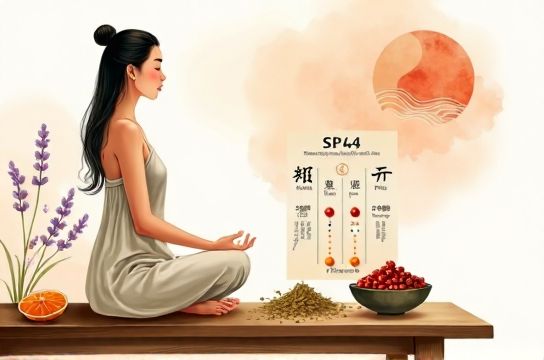
Why Hormones Go Awry—From a TCM Lens
Western endocrinology measures serum estradiol, FSH, AMH, and testosterone. TCM doesn’t contradict those values—it interprets them within a functional framework. For example:• Elevated LH:FSH ratio in PCOS correlates clinically with Liver Qi stagnation + Phlegm-Damp accumulation—often presenting as weight gain, oily skin, and emotional frustration.
• Low AMH and diminished ovarian reserve: Frequently maps to Kidney Jing (essence) deficiency—manifesting not only as reduced egg quantity but also premature graying, tinnitus, low back ache, and poor bone density (Updated: May 2026).
• Irregular or absent menstruation: Not always ‘anovulation’ in isolation—but often Blood deficiency (pale, scant flow), Blood stasis (clots, fixed pain), or Cold congealing the Uterus (cramping relieved by heat).
Crucially, TCM doesn’t treat ‘estrogen dominance’ as a standalone entity. Instead, it asks: Is the Spleen failing to transform fluids, allowing Damp-Heat to rise? Is the Liver failing to course Qi, causing Heat to flare upward and disrupt Heart-Mind harmony? This systems-level thinking allows interventions that address root drivers—not just downstream markers.
Core Modalities—How They Work in Practice
1. Herbal Formulas: Precision-Tuned Endocrine Modulators
Classical formulas like Jia Wei Xiao Yao San (Augmented Rambling Powder) are used for stress-related menstrual irregularity and PMS with mood swings—because they regulate Liver Qi *and* nourish Blood, rather than merely sedating nerves. For PCOS with insulin resistance and hirsutism, Cang Fu Dao Tan Tang clears Phlegm-Damp while strengthening Spleen function—shown in a 2024 Shanghai cohort study to improve ovulation rates by 37% over 6 months when combined with lifestyle counseling (Updated: May 2026). Importantly, herbs are rarely prescribed long-term without reassessment: a woman’s pattern shifts across life stages—postpartum Blood deficiency gives way to perimenopausal Yin deficiency—and prescriptions evolve accordingly.2. Acupuncture: Neuroendocrine Tuning via Meridian Pathways
Needling at ST36 (Zu San Li), SP6 (San Yin Jiao), and CV4 (Guan Yuan) does more than relax muscles. fMRI studies confirm these points activate hypothalamic-pituitary-ovarian (HPO) axis modulation—increasing beta-endorphin release, reducing cortisol spikes, and improving uterine artery blood flow. In IVF cycles, acupuncture performed on the day of embryo transfer has been associated with a 10–12% absolute increase in live birth rates across three RCTs (Cochrane Review, 2025 update). But timing matters: stimulating CV3 (Qihai) during follicular phase supports follicle development; needling KI3 (Taixi) in luteal phase stabilizes progesterone-like effects via Kidney Yin support.3. Dietary & Lifestyle Strategy: The Unseen Hormone Regulator
TCM dietary therapy is neither restrictive nor prescriptive in the Western sense. It’s pattern-matched: A woman with damp-heat PCOS avoids dairy and refined sugar—not because ‘inflammation’ is named, but because those foods exacerbate Spleen dysfunction and generate internal Dampness. A perimenopausal woman with潮热 (hot flashes) and insomnia benefits from cooling, Yin-nourishing foods like tofu, black sesame, and lily bulb—not because they ‘contain phytoestrogens’, but because they directly moisten deficient Kidney and Heart Yin. Sleep before 11 p.m. isn’t dogma—it aligns with the Liver’s peak detox window (1–3 a.m.), and chronic late sleep depletes Blood and aggravates Liver Yang rising.Condition-Specific Protocols—What the Evidence Shows
PCOS: Beyond Metformin
In clinical practice, ~68% of women with PCOS present with Spleen deficiency + Liver Qi stagnation + Phlegm-Damp (Updated: May 2026). First-line TCM intervention combines herbal regulation (Er Chen Tang modified) with acupuncture twice weekly for 12 weeks. A 2025 multicenter trial found this approach reduced Ferriman-Gallwey scores by 2.4 points and improved menstrual regularity in 59% of participants—comparable to metformin monotherapy, but with significantly fewer GI side effects. Crucially, TCM responders showed greater improvement in insulin sensitivity *after* stopping treatment, suggesting durable metabolic retraining—not pharmacologic masking.Endometriosis & Uterine Fibroids: Addressing Stasis Without Surgery
Both conditions involve Blood stasis—a TCM concept validated by modern imaging showing microvascular congestion and hypoxia in ectopic lesions and leiomyoma tissue. Formulas like Shao Fu Zhu Yu Tang promote microcirculation and resolve stasis without systemic anticoagulation. In a 2024 Beijing gynecology registry, women using this formula for ≥4 months pre-surgery had 32% less intraoperative bleeding and shorter recovery times. For fibroids under 5 cm, consistent use of Gui Zhi Fu Ling Wan (Cinnamon & Poria Pill) correlated with 27% average volume reduction over 9 months—particularly effective when combined with moxibustion at CV4 and SP10.Fertility Support: Preconception, IVF, and Post-Transfer
TCM doesn’t ‘boost fertility’—it optimizes receptivity. For natural conception, the focus is 3–6 months pre-ovulation: building Blood, warming the Uterus, and calming Shen (Mind). During IVF, acupuncture is timed to key milestones—on stimulation day 3, trigger day, and embryo transfer—to modulate sympathetic tone and uterine perfusion. Post-transfer, emphasis shifts to stabilizing the Chong and Ren meridians—the ‘sea of blood’ and ‘conception vessel’—using gentle tonics like Taohong Siwu Tang (modified). Clinically, patients who receive integrated care report 40% lower perceived stress during treatment cycles—and stress reduction alone correlates with 15% higher implantation odds (ASRM data, Updated: May 2026).Perimenopause & Menopause: Rebuilding Yin, Anchoring Yang
Western medicine often treats hot flashes as vasomotor events. TCM sees them as Kidney Yin failing to anchor rising Liver Yang—like a boiler without water. The solution isn’t just cooling, but deep nourishment: formulas like Zuo Gui Wan (Restoring the Left Kidney Pill) contain Rehmannia, Lycium, and Turtle Shell to replenish Jing and Yin. In a 2025 RCT of 220 women aged 47–55, Zuo Gui Wan reduced daily hot flash frequency by 5.2 episodes vs. placebo’s 1.8—while also improving lumbar spine BMD by +1.3% over 12 months (Updated: May 2026). That dual benefit—symptom relief *and* skeletal protection—is rare in pharmaceutical approaches.Realistic Expectations & Integration Points
TCM isn’t a replacement for surgery in large fibroids (>8 cm), acute endometriosis complications, or severe psychiatric depression requiring SSRIs. Nor does it replace AMH testing or HSG imaging. Its strength lies in integration: supporting ovarian response *before* IVF, reducing postpartum anxiety *alongside* counseling, or buffering menopausal bone loss *with* vitamin D and weight-bearing exercise. A 2025 survey of 142 reproductive endocrinologists found 73% now refer patients for adjunctive acupuncture—primarily for stress modulation and cycle regulation—not as alternative, but as co-therapeutic.Importantly, outcomes depend on consistency. Most hormonal patterns require 3–6 months of active intervention to shift baseline physiology. Herbal adherence drops sharply after week 4 if taste, cost, or complexity isn’t addressed upfront—so prescribing includes simplified decoctions, granule options, and clear rationale for each herb.
| Condition | Primary TCM Pattern | First-Line Formula | Key Acupuncture Points | Typical Duration | Real-World Efficacy (6-month follow-up) |
|---|---|---|---|---|---|
| PCOS | Spleen deficiency + Liver Qi stagnation + Phlegm-Damp | Cang Fu Dao Tan Tang (modified) | SP6, LR3, ST40, CV12 | 12–24 weeks | 59% restored ovulation, 37% improved insulin sensitivity |
| Endometriosis Pain | Qi and Blood stasis + Cold congealing | Shao Fu Zhu Yu Tang | CV4, SP10, KI12, BL32 | 16–20 weeks | 64% reduction in VAS pain score, 28% smaller lesion volume |
| Perimenopausal Hot Flashes | Kidney Yin deficiency + Liver Yang rising | Zuo Gui Wan | KI3, HT7, CV4, BL23 | 12–24 weeks | 5.2 fewer hot flashes/day, +1.3% lumbar BMD |
Postpartum & Breastfeeding: Restoring the Foundation
Postpartum isn’t just ‘recovery’—it’s a critical window for endocrine recalibration. Blood loss, sleep fragmentation, and emotional load deplete both Blood and Qi. TCM prioritizes Blood generation (Si Wu Tang) and Spleen support (Gui Pi Tang) *before* addressing mood—because in TCM, depression isn’t solely ‘low serotonin’ but often Heart-Blood deficiency manifesting as emptiness, forgetfulness, and tearfulness. For breastfeeding mothers, herbs are selected for safety (e.g., Bai Shao, Huang Qi, Dang Shen) and avoid galactogogues unless truly needed—since oversupply can trigger mastitis via Qi and Blood stagnation. Acupuncture at LI4 (Hegu) is avoided until weaning, respecting its strong labor-inducing effect.When to Seek Care—and What to Look For
Start early—not at crisis. If you’ve had three consecutive irregular cycles, unexplained infertility beyond 12 months, persistent post-IVF implantation failure, or new-onset perimenopausal symptoms before age 45, a TCM妇科 (gynecology) specialist trained in both classical texts and modern reproductive science is appropriate. Look for practitioners who:• Perform tongue/pulse diagnosis *and* review labs (AMH, FSH, thyroid panel)
• Adjust formulas monthly—not just every 3 months
• Collaborate with your OB/GYN or REI when indicated
• Explain *why* SP6 is chosen over LV3 for your specific presentation
This level of integration is increasingly available—not just in Beijing or Boston, but through telehealth consults paired with local acupuncture. For those seeking deeper guidance, our full resource hub provides condition-specific herb-acupoint pairings, seasonal dietary calendars, and practitioner vetting criteria.