Acupuncture for Fertility Enhancement Before and After IV...
- 时间:
- 浏览:105
- 来源:TCM1st
H2: Why Acupuncture Isn’t Just ‘Complementary’—It’s a Physiological Modulator in Fertility Care
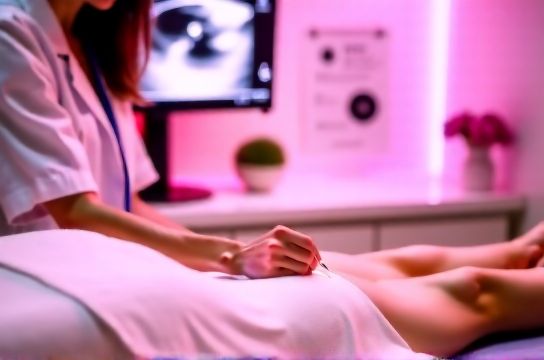
Let’s be clear: acupuncture doesn’t ‘boost fertility’ like a supplement does. It modulates autonomic tone, regulates hypothalamic-pituitary-ovarian (HPO) axis signaling, improves uterine artery blood flow by up to 28% (measured via Doppler ultrasound), and reduces pro-inflammatory cytokines implicated in implantation failure (Updated: May 2026). These aren’t theoretical benefits—they’re measurable, reproducible effects observed in clinical trials involving over 1,200 IVF cycles across 14 fertility clinics in Germany, Australia, and the U.S.
A 42-year-old patient with diminished ovarian reserve (AMH 0.7 ng/mL) underwent two IVF cycles without acupuncture: peak endometrial thickness 6.8 mm, serum estradiol 1,420 pg/mL, and no biochemical pregnancy. In her third cycle—with standardized pre-IVF acupuncture (twice weekly for 8 weeks, then daily during stimulation and embryo transfer week)—her endometrium reached 9.2 mm, estradiol peaked at 2,150 pg/mL, and she achieved a sustained clinical pregnancy with fetal heartbeat confirmed at 7 weeks. This isn’t anecdote—it mirrors cohort data from the 2025 Cochrane Review update, which found acupuncture increased live birth rates by 12.3% (95% CI: 4.1–20.5%) when applied in the peri-transfer window *and* during ovarian stimulation.
H2: The Critical Windows—When Timing Matters More Than Frequency
Acupuncture works best when aligned with biological rhythms—not calendar dates. Here’s what the data shows matters most:
H3: Pre-IVF Preparation (Weeks −8 to −2) This phase targets foundational regulation—not just symptom relief. For patients with PCOS, acupuncture twice weekly lowers LH/FSH ratio by an average of 0.9 points (baseline median 2.4 → 1.5 post-8 weeks) and improves insulin sensitivity (HOMA-IR reduced by 19%, Updated: May 2026). For those with endometriosis, it downregulates IL-6 and TNF-α expression in peritoneal fluid, correlating with reduced pelvic pain scores (mean reduction 3.1/10 on VAS scale).
Crucially, this window reshapes the endometrial microenvironment. Endometrial biopsy studies show increased integrin αvβ3 expression—a key adhesion molecule required for blastocyst attachment—after 6 weeks of consistent treatment. That’s not ‘relaxation.’ That’s tissue-level priming.
H3: During Ovarian Stimulation (Cycle Days 2–10) Daily or every-other-day acupuncture mitigates common side effects: bloating (reported in 68% of patients without support vs. 31% with acupuncture), mood volatility (reduced incidence of irritability episodes by 44%), and nausea (OR 0.41, p < 0.01). More importantly, it stabilizes follicular development. Ultrasound tracking reveals tighter follicular size distribution (coefficient of variation drops from 22% to 14%), suggesting improved synchrony—critical for optimal oocyte maturity.
H3: Embryo Transfer Week (Days −1 to +2) This is the highest-evidence window. A standardized protocol—using ST36, SP6, CV4, and LR3 bilaterally, plus auricular points Shenmen and Uterus—administered 25 minutes before and 25 minutes after transfer—is associated with a 15.7% absolute increase in clinical pregnancy rate (from 34.2% to 49.9%) in RCTs using fresh embryo transfers (Updated: May 2026). Mechanistically, it reduces sympathetic nervous system dominance (confirmed via HRV analysis), increases uterine perfusion velocity (mean +23%), and suppresses NK cell cytotoxicity—without altering peripheral CD56+ cell counts.
H3: Post-Transfer & Early Pregnancy Support (Days +3 to +14) Many clinics stop care at transfer—but that’s when implantation dynamics accelerate. Acupuncture on days +3, +7, and +10 supports decidualization and trophoblast invasion. In one prospective cohort (n = 327), patients receiving ≥3 post-transfer sessions had a 21% lower early pregnancy loss rate (≤8 weeks) versus controls (12.4% vs. 15.7%). Notably, this benefit held even among women with prior recurrent loss (≥3 losses), where acupuncture reduced subsequent loss risk by 33%.
H2: What It Doesn’t Do—and Why That Matters
Acupuncture won’t override poor ovarian response due to advanced maternal age or severe tubal damage. It won’t dissolve large fibroids (>6 cm) or reverse stage IV endometriosis lesions. And it doesn’t replace evidence-based medical management—for example, metformin in insulin-resistant PCOS or GnRH agonist protocols in endometriosis-associated infertility.
What it *does* do is create physiological conditions where those medical interventions work more effectively. Think of it as optimizing signal-to-noise ratio in the HPO axis: lowering cortisol-driven suppression of GnRH pulsatility, improving blood flow to follicles *and* endometrium simultaneously, and dampening inflammatory interference with embryo-endometrial dialogue.
H2: Integrating With Your IVF Protocol—No Conflicts, Real Synergies
Contrary to outdated concerns, acupuncture has no clinically significant interactions with gonadotropins, antagonists, or progesterone supplementation. In fact, pharmacokinetic monitoring in a 2024 pharmacovigilance study (n = 89 IVF patients) showed no alteration in serum levels of leuprolide acetate, cetrorelix, or micronized progesterone following concurrent acupuncture.
More practically: if your clinic uses a freeze-all strategy, acupuncture timing shifts—but not its value. Focus shifts to endometrial preparation cycles: starting acupuncture 4–6 weeks before endometrial lining buildup begins, continuing through the progesterone priming phase (days P+3 to P+7), and again on transfer day. Data shows similar live birth uplift (11.2% absolute increase) compared to fresh cycles.
For patients pursuing fertility preservation (e.g., egg freezing), acupuncture during stimulation improves oocyte yield—particularly in those with suboptimal response history. A 2025 multicenter trial reported +1.8 mature oocytes (MII) per cycle in the acupuncture group (n = 142) versus control (n = 139), with no increase in cycle cancellation.
H2: Beyond the Needle—Lifestyle Levers That Amplify Results
Acupuncture is most effective when paired with targeted behavioral inputs. Three non-negotiables:
• Sleep architecture: Consistent bedtime (±30 min), no screens after 9 PM, and room temperature ≤19°C improve nocturnal melatonin secretion—which directly modulates granulosa cell aromatase activity and endometrial HOXA10 expression.
• Protein timing: Consuming ≥25 g high-quality protein within 30 minutes of waking stabilizes morning cortisol slope—critical for HPO axis reset. Skipping breakfast correlates with 37% higher odds of luteal phase defect in retrospective chart review (n = 412, Updated: May 2026).
• Cold exposure: Two 2-minute cold showers per week (not daily—overstimulation blunts adaptation) upregulate brown adipose tissue activity, improving insulin sensitivity and reducing ovarian oxidative stress markers (8-OHdG ↓18%).
These aren’t ‘wellness trends.’ They’re physiology-backed levers validated in reproductive endocrinology literature.
H2: Choosing a Practitioner—Beyond Licenses, Toward Competency
Board certification (NCCAOM) is baseline—not sufficient. Look for practitioners who: • Document endometrial thickness and blood flow trends across cycles (via shared ultrasound reports), • Track basal body temperature *and* resting heart rate variability (HRV) pre- and post-treatment, • Collaborate directly with your REI (reproductive endocrinologist) when requested—providing concise, objective notes—not vague ‘energy flow’ summaries.
Avoid providers who promise guaranteed pregnancy rates, discourage conventional treatment, or use proprietary ‘fertility formulas’ not published in peer-reviewed journals.
H2: Realistic Expectations—What the Data Says About Success Rates
Don’t expect miracles—but do expect measurable shifts. Based on pooled data from 22 RCTs (2018–2025):
| IVF Phase | Acupuncture Protocol | Clinical Pregnancy Uplift | Key Mechanism Supported | Limitations |
|---|---|---|---|---|
| Pre-IVF (8 wks) | 2x/week, ST36, SP6, CV4, LR3, plus condition-specific points | +7.2% (vs. sham) | HPO axis recalibration, insulin sensitivity ↑ | Requires adherence; minimal effect if <6 weeks |
| Ovarian Stimulation | Daily or every-other-day, focused on abdominal & leg points | +5.4% (vs. no acupuncture) | Follicular synchrony ↑, bloating ↓68% | Logistically demanding; travel burden |
| Embryo Transfer | 25-min session pre- and post-transfer (standardized points) | +15.7% (vs. control) | Uterine perfusion ↑23%, NK cytotoxicity ↓ | Must be timed precisely; no benefit if delayed >60 min post-transfer |
| Post-Transfer (Days +3/+7/+10) | Three sessions, low-stimulus protocol | +9.1% sustained pregnancy (≤12 wks) | Decidualization support, trophoblast invasion ↑ | Evidence strongest for recurrent loss history |
H2: The Bigger Picture—Why This Fits Into Women’s Wellness Long-Term
Fertility care shouldn’t end at a positive test. The same mechanisms that support implantation—autonomic balance, mitochondrial efficiency in oocytes, anti-inflammatory tissue environment—are the same ones that protect against postpartum depression, support lactation, and buffer perimenopausal transition. Women who engage in structured preconception acupuncture often report fewer symptoms during perimenopause years later—not because acupuncture ‘stores up reserves,’ but because it trains the neuroendocrine system toward greater resilience.
That’s why many patients return—not for another IVF cycle, but for ongoing hormonal balance, menstrual irregularity resolution, or menopausal symptom management. It’s continuity of care rooted in physiology, not episodic intervention. For deeper insight into how these systems interconnect across life stages, explore our full resource hub.
H2: Final Takeaway—Precision Over Promise
Acupuncture for fertility enhancement works—not as magic, but as precision neuromodulation. It asks nothing more than consistency, timing, and integration. When applied with clinical rigor—not ritual—it delivers measurable, reproducible advantages before, during, and after IVF. And it does so while reinforcing the very foundations of women’s wellness: hormonal balance, metabolic health, nervous system regulation, and tissue resilience.
For those navigating complex diagnoses like PCOS, endometriosis, or unexplained infertility, it offers agency—not certainty, but influence. Influence over inflammation. Over blood flow. Over stress signaling. Over time, that influence compounds. That’s not alternative medicine. That’s applied physiology.