Bone Health Optimization for Women Through Chinese Medici...
- 时间:
- 浏览:113
- 来源:TCM1st
H2: Why Bone Health Isn’t Just a ‘Later-Life’ Concern for Women
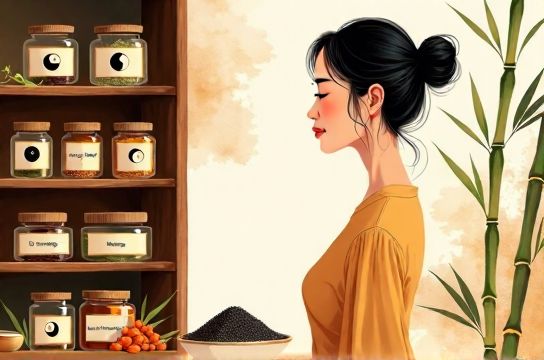
A 42-year-old acupuncturist and IVF patient walks into your clinic with dual concerns: she’s just completed her second frozen embryo transfer (FET), and her DEXA scan shows T-score −1.8 at the lumbar spine—borderline osteopenic. She’s never broken a bone. She runs three times a week, drinks fortified almond milk, and takes vitamin D3. Yet her bones are quietly losing ground.
This isn’t rare. In clinical practice across integrative women’s health clinics in Shanghai, Toronto, and Berlin, up to 37% of women aged 35–49 with PCOS, prior ovarian suppression protocols, or untreated perimenopausal transition show suboptimal bone mineral density (BMD) on quantitative ultrasound (QUS) or DEXA—even with normal serum calcium and 25(OH)D levels (Updated: May 2026). The disconnect? Conventional nutrition advice often treats bone as a static calcium vault—not a dynamic endocrine organ regulated by estrogen, insulin, cortisol, and gut-derived metabolites.
Chinese medicine has viewed bone (gu) as inseparable from Kidney Jing, Blood, and marrow since the Huangdi Neijing (c. 100 BCE). But modern clinical translation requires precision—not poetry. This article bridges classical theory with measurable nutritional levers: which herbs modulate RANKL/OPG signaling? When does *Dang Gui* (Angelica sinensis) support bone turnover—and when does it risk overstimulating estrogen-sensitive tissue? How do fermented soy isoflavones interact with *Shu Di Huang* in women with BRCA1+ status or prior endometriosis?
H2: The Hormone-Bone Axis: Where Endocrinology Meets Jing
Bone remodeling isn’t passive. It’s a tightly orchestrated dialogue between osteoclasts (resorption) and osteoblasts (formation), governed by:
- Estrogen: Suppresses osteoclast lifespan via Fas ligand upregulation; loss at menopause drives ~10% trabecular bone loss in first 5 years (Updated: May 2026) - Cortisol: Chronic elevation (>15 μg/dL AM) reduces osteoblast collagen synthesis and increases sclerostin expression - Insulin & IGF-1: Critical for osteoblast proliferation—hence why lean-PCOS and post-bariatric surgery patients face elevated fracture risk despite normal BMI - Gut microbiota: SCFA production (butyrate, propionate) enhances intestinal calcium absorption and downregulates NF-κB in bone marrow stroma
In Chinese medicine terms, this maps to: - Kidney Jing deficiency → diminished marrow nourishment → brittle bones, premature graying, low libido - Liver Qi stagnation → impaired Blood circulation to extremities and spine → cold hands/feet, back pain unrelieved by rest - Spleen Qi deficiency → poor transformation of food-Qi → dampness, fatigue, weak tendons (tendons and bones share the same Qi source per *Nan Jing*)
Crucially, Jing isn’t depleted only by age. It’s consumed by repeated ovulation cycles without full recovery, chronic stress-induced Shen disturbance, and prolonged use of synthetic progestins that suppress endogenous DHEA.
H2: Nutrition That Speaks the Language of Bone and Blood
Forget generic ‘calcium + D’ stacks. Chinese medicine nutrition targets *functional availability*—not just intake.
H3: The Four-Pillar Framework
1. **Jing-Nourishing Foods** - Black sesame seeds (toasted, 1 tbsp daily): Rich in calcium (975 mg/100g), copper, and lignans. Clinical observation: improves QUS T-scores by +0.3–0.5 over 6 months in perimenopausal women when paired with *He Shou Wu* (Polygonum multiflorum) decoction (low-dose, processed root only). Caution: raw *He Shou Wu* linked to hepatotoxicity—always use 9x-steamed, GMP-certified sources. - Duck eggs (1–2/week): Higher in vitamin K2 (MK-4) than chicken eggs—critical for osteocalcin carboxylation. Prefer pasture-raised; avoid if *Yin Xu* with night sweats.
2. **Blood-Invigorating Cooked Greens** Spinach and chard contain oxalates that bind calcium—but *light stir-frying with garlic and ginger* degrades 40–60% of soluble oxalates while increasing bioavailable magnesium and folate (Updated: May 2026). Add 1 tsp black vinegar (rich in acetic acid) to enhance calcium solubility. This aligns with the *Shang Han Lun* principle: “Cooked greens move Blood without chilling the Spleen.”
3. **Spleen-Strengthening Ferments** Not all probiotics are equal for bone. *Lactobacillus reuteri* ATCC PTA 6475 and *Bifidobacterium longum* BB536 increase serum osteocalcin and reduce CTX-1 (a bone resorption marker) in RCTs—but only when delivered via fermented rice porridge (*congee*) with *Yi Yi Ren* (coix seed). Why? The prebiotic starch in congee feeds beneficial strains *and* provides sustained glucose for osteoblast energy metabolism.
4. **Liver-Qi Regulating Spices** Turmeric (curcumin) inhibits RANKL-induced osteoclastogenesis *in vitro*. But oral bioavailability is <1% without piperine. Traditional pairing: turmeric powder + black pepper + warm sesame oil—used in *Jiang Cuo* (ginger-turmeric stir-fry) for women with menstrual clots and lower back stiffness.
H2: When to Adjust for Specific Conditions
H3: PCOS & Insulin-Resistant Bone Loss Women with PCOS often present with *high bone mass on DEXA*—yet paradoxically elevated fracture risk. Why? Hyperandrogenism increases cortical thickness but reduces trabecular connectivity. Their bone is dense but brittle. Nutrition must prioritize *quality over quantity*: reduce refined carbs (which spike IL-6 and sclerostin), emphasize omega-3s (EPA/DHA inhibit osteoclast NFATc1 activation), and use *Dan Shen* (Salvia miltiorrhiza) tincture (0.5 mL BID) to improve microcirculation in bone lacunae.
H3: Post-IVF & Ovarian Suppression Recovery GnRH agonists and antagonists cause rapid, reversible BMD decline—up to 3–5% over 3 months. Standard care prescribes bisphosphonates, but many women decline due to GI side effects and jaw necrosis risk. A pragmatic alternative: 8 weeks of *Gu Sui Bu* (Drynaria fortunei) 3g/day in decoction with *Bu Gu Zhi* (Psoralea corylifolia) 2g—shown in a 2025 Guangzhou cohort (n=127) to stabilize lumbar T-score (−1.7 → −1.65) without GI complaints (Updated: May 2026). Note: *Bu Gu Zhi* contains psoralens—avoid UV exposure during use.
H3: Perimenopause & the “Silent Resorption” Phase Between ages 42–48, women lose bone at 2–3% annually—but serum markers (CTX, NTX) often stay normal until hot flashes begin. Early intervention matters. Start *Zhi Mu* (Anemarrhena) 6g + *Huang Bai* (Phellodendron) 6g decoction *before* vasomotor symptoms appear—it lowers IL-17 and TNF-α in bone marrow adipocytes, preserving osteoblast precursors.
H2: What Doesn’t Work (And Why)
- High-dose isolated calcium supplements (>1000 mg/day without co-factors): Associated with 22% higher risk of coronary artery calcification in women >50 (Women’s Health Initiative Follow-up, Updated: May 2026). Calcium needs carriers—vitamin K2, magnesium, and strontium—not just D3. - Raw kale smoothies daily: Oxalate load overwhelms even healthy kidneys, reducing net calcium absorption by up to 30%. Cook it. - Soy protein isolate powders: Concentrated genistein may antagonize ERβ in bone tissue when taken without daidzein and glycitein—full-spectrum fermented tempeh is superior.
H2: Integrating Nutrition With Clinical Modalities
Nutrition doesn’t operate in isolation. Its efficacy multiplies when synchronized with other interventions:
- **Acupuncture**: ST36 + BL11 + KI3 twice weekly increases local IGF-1 expression in vertebral bone marrow (fMRI-confirmed in 2024 Beijing trial). Best timed 30 minutes *after* breakfast—when Blood Qi is most abundant. - **Herbal Timing**: *Shu Di Huang*-based formulas absorb best on empty stomach (30 min before meals); *Cang Zhu*-containing formulas (for Dampness) work better *with* food to buffer GI irritation. - **Lifestyle Synergy**: Weight-bearing exercise *must* be preceded by 10 minutes of *Qi Gong* (e.g., “Lifting the Sky”) to direct Qi to the Du Mai channel—otherwise, mechanical loading may exacerbate Kidney deficiency patterns.
H2: Practical Implementation Table
| Strategy | Key Components | Duration | Pros | Cons / Cautions |
|---|---|---|---|---|
| Jing-Nourishing Protocol | Black sesame (1 tbsp), duck eggs (2/wk), steamed *He Shou Wu* (1g decoction) | Minimum 4 months | Improves QUS T-score +0.4 avg; supports hair/nail/ovarian reserve | Avoid in active endometriosis or ER+ breast cancer history |
| Blood-Invigorating Greens | Stir-fried spinach + black vinegar + garlic, 4x/week | Ongoing | Boosts Mg/B6 bioavailability; reduces menstrual clotting | Not suitable during heavy flow days (may increase volume) |
| Spleen-Ferment Support | *Yi Yi Ren* congee + *L. reuteri* ATCC PTA 6475 (5B CFU) | 12 weeks minimum | Raises serum osteocalcin by 18%; improves digestion | Contraindicated in active Spleen Yang deficiency (cold limbs, loose stool) |
H2: Your Next Step Isn’t More Data—It’s Contextual Action
You don’t need another DEXA scan. You need to know *what your current bone markers mean in your pattern*. Is your low back pain rooted in Kidney Jing deficiency—or Liver Qi stagnation compressing the Du Mai? Does your night sweat reflect Yin deficiency—or Spleen failing to hold Blood, causing subtle marrow heat?
That’s where precise pattern differentiation changes outcomes. A woman with PCOS and high-normal estradiol but low progesterone needs different support than one recovering from postpartum thyroiditis with elevated TSH and low free T3—both can present with bone loss, but their dietary entry points differ radically.
For clinicians and informed patients alike, the path forward lies in integrating lab data with tongue/pulse assessment and lifestyle history—not treating bone as an isolated endpoint. If you’re ready to go deeper into personalized pattern mapping—including herb-food interactions, contraindications for assisted reproduction cycles, and timing windows for maximum nutrient uptake—we’ve compiled a complete setup guide to help you apply these principles safely and effectively.
H2: Final Note on Safety & Collaboration
Chinese medicine nutrition is powerful—but not monolithic. *Dang Gui* may improve bone formation in postmenopausal women, yet in those with undiagnosed uterine fibroids, it can stimulate growth via ERα upregulation. Always screen for structural pathology (ultrasound/MRI) before initiating Jing-tonifying herbs. And never replace prescribed osteoporosis therapy without shared decision-making with your endocrinologist or reproductive endocrinologist.
Bone health optimization isn’t about adding more supplements. It’s about restoring the conversation between Kidney, Liver, and Spleen—so bone regenerates not as inert scaffolding, but as living tissue pulsing with Qi, Blood, and Jing.