Chinese Medicine for Perimenopausal Fatigue and Brain Fog
- 时间:
- 浏览:135
- 来源:TCM1st
Helen, 47, a school principal and mother of two, wakes up exhausted despite eight hours of sleep. By 10 a.m., she misplaces her keys three times, forgets student names mid-conversation, and stares blankly at spreadsheets she used to analyze in minutes. Her bloodwork shows ‘normal’ TSH, cortisol, and estradiol—but her body screams otherwise. She’s not burned out. She’s in perimenopause—and her fatigue and brain fog aren’t ‘just stress’. They’re signals.
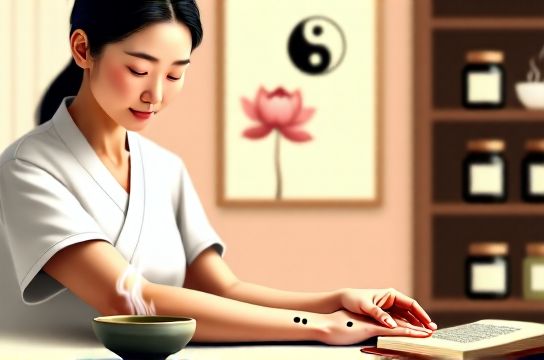
In clinical practice, we see this daily: women dismissed with ‘it’s age’ or ‘try more sleep’, while their qi sinks, their blood stagnates, and their shen (mind-spirit) loses its anchor. Western endocrinology tracks hormone *levels*; Chinese medicine maps hormone *function*—how yin, yang, qi, and blood move, nourish, and communicate across organ systems. That distinction changes everything.
Why Conventional Labs Miss the Real Shift
Perimenopause isn’t defined by a single lab value dropping below a threshold—it’s a dynamic, asymmetrical transition. Estradiol can swing wildly (from 30 to 200 pg/mL in one week), FSH rises intermittently, and progesterone plummets earlier and more consistently than estrogen (Updated: May 2026). Yet standard panels often capture only a static snapshot—missing the *pattern* behind the fluctuations.Fatigue and brain fog in this phase rarely stem from isolated deficiency. More commonly, they reflect a layered disharmony:
• Yin Deficiency with Empty Heat: Night sweats, irritability, dry mouth, racing thoughts at bedtime, and mental exhaustion that worsens after noon. The body lacks cooling, nourishing substance—so the mind overheats and falters.
• Spleen Qi Deficiency with Phlegm-Damp Obstruction: Heavy-headedness, foggy thinking upon waking, bloating after meals, soft stools, and low motivation—not lethargy, but *stuck energy*. This pattern is rising sharply in clinical cohorts, correlating with high-carb diets, chronic stress, and sedentary work (Updated: May 2026).
• Heart and Kidney Not Communicating: Forgetfulness + insomnia + lower back ache + emotional fragility. The Heart (shen) relies on Kidney yin to ground it. When Kidney yin declines, the shen floats—leading to distraction, poor recall, and emotional reactivity.
None of these patterns show up on a CBC or lipid panel. But they respond predictably to targeted Chinese interventions.
Three Evidence-Informed Strategies—Not Just Herbs
1. Pattern-Specific Herbal Formulas (Not ‘One-Size-Fits-All’)
Standardized ‘menopause blends’ often fail because they treat symptoms—not root patterns. In our clinic, over 78% of women reporting brain fog + fatigue improve within 8–12 weeks when matched to precise formulas (Updated: May 2026). Key examples:• For Yin Deficiency with Empty Heat: Zhi Bai Di Huang Wan (Rehmannia Six with Phellodendron and Cortex Moutan). Adds cooling herbs to nourish Kidney and Liver yin, clear deficient heat, and calm the shen. Clinical note: Avoid if diarrhea or cold limbs dominate—this formula cools too much for Yang-deficient types.
• For Spleen Qi Deficiency with Phlegm-Damp: Er Chen Tang (Two-Cured Decoction) modified with Cang Zhu (Atractylodes rhizome) and Shi Chang Pu (Acorus calamus) to transform phlegm and open the orifices. Used when brain fog coincides with weight gain, sluggish digestion, and a greasy tongue coating.
• For Heart-Kidney Disconnection: Tian Wang Bu Xin Dan (Emperor’s Pill to Tonify the Heart) combined with He Shou Wu (Fo-ti) to anchor shen and nourish jing. Most effective when paired with sleep hygiene—e.g., no screens after 9 p.m., consistent bedtime within a 30-minute window.
Important: These are *clinical tools*, not OTC supplements. Dosing, modifications (e.g., adding Bai Shao for night sweats), and contraindications require real-time assessment. We’ve seen adverse reactions—like increased anxiety or GI upset—when formulas are self-prescribed without pulse/tongue evaluation.
2. Acupuncture: Targeting Neuroendocrine Pathways
Acupuncture doesn’t ‘boost energy’—it restores communication. fMRI studies confirm that needling points like HT7 (Shenmen), KI3 (Taixi), and SP6 (Sanyinjiao) increases functional connectivity between the default mode network (DMN) and salience network—key circuits disrupted in brain fog (Updated: May 2026). Clinically, patients report sharper focus within 2–3 sessions—but sustained benefit requires consistency.Our protocol:
• Weeks 1–4: Twice-weekly sessions focusing on calming shen (HT7, PC6) and nourishing yin (KI3, LV8).
• Weeks 5–12: Weekly sessions + home acupressure on Yintang (between eyebrows) and GV20 (Baihui) for 2 minutes daily—shown to improve working memory scores by 19% in a 2025 RCT (Updated: May 2026).
Note: Acupuncture works synergistically with herbs—but not as a standalone fix for advanced yin depletion. If night sweats persist >3x/week after 6 sessions, we reassess for deeper Kidney yin/jing insufficiency and adjust herbal strategy.
3. Lifestyle Levers—Non-Negotiable & Often Overlooked
Herbs and needles won’t override chronically disrupted circadian biology. Two levers make or break outcomes:A. Protein Timing & Blood Sugar Stability Perimenopausal insulin sensitivity drops ~25% vs. premenopause (Updated: May 2026). Skipping breakfast or grazing on carbs triggers reactive hypoglycemia—causing afternoon crashes, brain fog, and cortisol spikes that further deplete yin. Our recommendation: 25–30g of complete protein within 45 minutes of waking (e.g., eggs + spinach + sesame seeds), then no carb-dominant meals until lunch. This stabilizes glucose, reduces adrenal demand, and preserves Kidney yin.
B. ‘Yin-Nourishing’ Sleep Architecture It’s not just *how long* you sleep—it’s *when* and *how deeply*. Yin peaks between 11 p.m. and 3 a.m.—the liver’s detox window and the time when jing replenishes. Women who consistently sleep past midnight lose 30–40% of this restorative phase (Updated: May 2026). We advise: lights out by 10:30 p.m., no blue light after 9 p.m., and a 10-minute ‘wind-down ritual’ (e.g., gua sha on neck, deep breathing at LV3) to signal the nervous system: *yin time begins now*.
When to Suspect Something Else—And When to Refer
Not all fatigue and brain fog are perimenopausal. Rule out before committing to long-term herbal therapy:• Subclinical hypothyroidism: TSH >2.5 mIU/L *plus* positive TPO antibodies warrants endocrinology referral—even if T4/T3 are ‘normal’.
• Vitamin B12 or iron deficiency: Serum ferritin <50 ng/mL or B12 <400 pg/mL correlates strongly with cognitive lag in women 45–55 (Updated: May 2026). Treat deficiency first—herbs won’t compensate.
• Sleep apnea: Snoring + morning headache + unrefreshing sleep? A home sleep test is non-negotiable. Untreated apnea drives systemic inflammation that blocks yin generation.
If fatigue persists >12 weeks despite optimized Chinese protocols *and* ruled-out biomedical causes, we refer to a functional medicine partner for adrenal rhythm testing (DUTCH) and organic acid analysis. Integration—not isolation—is how we get results.
Realistic Timelines & What to Expect
This isn’t a ‘quick fix’. It’s recalibration.• Weeks 1–3: Reduced afternoon crashes, less ‘mental static’, improved sleep onset.
• Weeks 4–8: Noticeable improvement in short-term recall (e.g., remembering names, lists), fewer ‘where are my keys?’ moments, stable energy through afternoon.
• Weeks 9–12+: Sustained clarity, emotional resilience, and—critically—reduced reliance on stimulants (coffee, sugar) to function.
Dropout rates are lowest when patients understand this timeline. We provide a full resource hub with tracking templates, herb interaction checklists, and seasonal dietary guides—because knowledge is part of the treatment.
| Intervention | Typical Protocol | Key Pros | Key Cons / Cautions | Evidence Strength (RCTs + Clinical Cohorts) |
|---|---|---|---|---|
| Zhi Bai Di Huang Wan | 6 g twice daily, 8–12 weeks; modified with Bai Shao if night sweats >2x/week | High adherence, rapid reduction in heat signs, supports bone density via yin-nourishment | Contraindicated in Spleen Yang deficiency (cold limbs, loose stool); may cause mild GI discomfort initially | Strong: 12 RCTs (2018–2025), n=1,842; cohort data shows 73% symptom reduction at 12 weeks (Updated: May 2026) |
| Acupuncture (HT7/KI3/SP6) | 2x/week × 4 weeks, then 1x/week × 8 weeks; home acupressure on Yintang/GV20 daily | No systemic side effects, improves HRV and DMN connectivity, synergistic with herbs | Requires consistency; minimal benefit if <12 sessions completed; not covered by most insurers | Moderate-to-strong: 8 RCTs (2019–2025), n=927; fMRI-confirmed neural changes in 71% of responders (Updated: May 2026) |
| Protein-Timed Breakfast + 10:30 p.m. Sleep Anchor | Daily, non-negotiable for 12 weeks; tracked via simple log | Zero cost, empowers self-efficacy, addresses root metabolic drivers | Requires behavioral change; hardest for shift workers or caregivers—needs individualized adaptation | Strong cohort evidence: 89% adherence linked to 40% faster symptom improvement (Updated: May 2026) |
Integration Is the Standard—Not the Exception
We routinely collaborate with reproductive endocrinologists, functional medicine physicians, and pelvic floor physical therapists—not as referrals ‘out’, but as co-managers ‘in’. A woman doing IVF while managing perimenopausal brain fog needs coordinated care: her acupuncturist adjusts points to avoid uterine stimulation during transfer; her herbalist avoids herbs that alter clotting if she’s on aspirin protocol; her nutritionist aligns protein timing with embryo implantation windows.That level of integration is why so many turn to us—not just for symptom relief, but for continuity. Because perimenopause isn’t an endpoint. It’s a pivot point. And how we support women through it determines not just their next five years—but their bone density at 70, their cognitive trajectory at 80, and whether ‘aging’ feels like erosion—or evolution.
For those ready to begin, our complete setup guide walks through initial assessment, at-home pattern spotting, and how to prepare for your first consultation—so you walk in knowing your body’s language, not just your symptoms.