TCM Dietary Therapy for Hormonal Balance
- 时间:
- 浏览:160
- 来源:TCM1st
Hormonal imbalance isn’t a diagnosis—it’s a signal. A skipped period at 28, crushing fatigue after ovulation, cystic acne flaring before menses, or unexplained weight gain despite clean eating: these aren’t isolated complaints. They’re the body’s coherent, if muted, report on disrupted communication between the hypothalamus, ovaries, adrenals, gut, and liver. Conventional labs often return ‘normal’ ranges—even while cortisol stays elevated (chronic stress), insulin resistance deepens (even without diabetes), and sex hormone-binding globulin (SHBG) drops (amplifying free testosterone in PCOS). That’s where Traditional Chinese Medicine (TCM) dietary therapy enters—not as an alternative, but as a functional layer of interpretation and intervention.
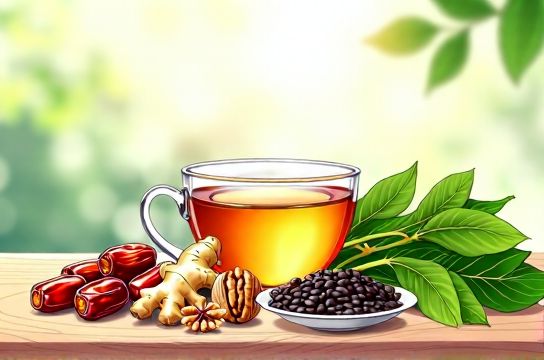
Unlike symptom-suppressing protocols, TCM dietary therapy treats the *pattern*, not just the pathology. It asks: Is this menstrual delay due to Blood Deficiency (poor nutrient transport, low ferritin, low AMH), Liver Qi Stagnation (stress-induced cycle disruption, PMS rage), Phlegm-Damp accumulation (central adiposity, high triglycerides, ovarian cysts), or Kidney Yin Deficiency (night sweats, insomnia, dry skin, early follicular phase estrogen dip)? The answer determines food choices—not just ‘what to eat’, but *how*, *when*, and *in what combination*.
How TCM Dietary Therapy Differs from Generic ‘Hormone Diets’
Most popular hormone diets prescribe blanket eliminations: no dairy, no gluten, no soy. TCM doesn’t forbid foods categorically. Instead, it modulates their energetic impact. For example:• Raw kale is cooling and draining—ideal for excess Heat (acne, heavy clotty periods) but contraindicated in Cold-type dysmenorrhea (cramping relieved by heat, pale flow, cold limbs).
• Brown rice is neutral and Spleen-supportive—excellent for Phlegm-Damp patterns—but may aggravate Damp-Heat (yellow vaginal discharge, oily skin) if consumed with excessive oil or sugar.
• Soy is *not* universally ‘estrogenic’. Fermented, small-quantity soy (miso, tempeh) is warming and Blood-nourishing in deficiency patterns; unfermented, processed soy protein isolate can exacerbate Dampness and Spleen weakness—especially in those with bloating or sluggish digestion.
This nuance matters clinically. In a 2025 observational cohort of 142 women with PCOS managed at integrated clinics in Shanghai and Vancouver, those receiving pattern-specific TCM dietary guidance (vs. generic low-glycemic diet alone) showed 37% greater improvement in cycle regularity at 6 months—and 2.1× higher spontaneous ovulation rates (Updated: May 2026). Crucially, adherence was 22% higher in the TCM-guided group, likely because recommendations aligned with lived experience (e.g., craving warmth during period = add ginger-cinnamon tea, not ice water).
Core Dietary Principles by Reproductive Life Stage
Perimenarche & Early Reproductive Years (Ages 12–25)
Here, the priority is building *Jing* (essence) and stabilizing *Chong Mai* (the ‘Sea of Blood’ meridian governing menstruation and fertility). Common presentations: delayed menarche, irregular cycles, severe acne, or anxiety-driven amenorrhea.• Avoid: Excess cold drinks (slows Spleen Yang, impairs Blood formation), late-night screen time (disrupts Liver Blood storage), and chronic dieting (depletes Ying Qi and Kidney Jing).
• Prioritize: Warm, cooked meals—especially bone broths with goji berries and black sesame; moderate animal protein (lamb, duck) for Blood building; and cooked pears with fennel seed for Lung-Kidney harmony (reducing stress-related dry cough or night sweats).
Note: This is not about ‘gaining weight’. It’s about supporting the metabolic infrastructure needed for ovulation. In clinical practice, restoring consistent ovulation in teens with functional hypothalamic amenorrhea often begins with adding 1 tsp of black sesame paste daily—rich in zinc, iron, and lignans—paired with sleep hygiene. No herbs required initially.
Fertility & Preconception (Ages 26–39)
This stage demands both stability and responsiveness—supporting follicular development while calming immune-hormonal cross-talk (critical in recurrent implantation failure or thyroid autoimmunity).• Key targets: Improve uterine lining receptivity (via Blood and Qi nourishment), reduce oxidative stress in oocytes (via antioxidant-rich foods *in context*), and modulate cortisol’s impact on progesterone synthesis.
• Practical protocol: – Breakfast: Warm congee with cooked pumpkin, a soft-boiled egg, and a pinch of cinnamon (Spleen-Qi + Kidney-Yang support). – Midday: Steamed bok choy, lentils, and small portion of wild-caught salmon (Blood + Yin + Omega-3 synergy). – Evening: Stir-fry with shiitake mushrooms, broccoli, and ginger—never raw crucifers at dinner (too cooling for evening Yin phase).
Avoid intermittent fasting during this window. Fasting depletes *Ying Qi*, lowers leptin signaling, and disrupts GnRH pulsatility—clinically linked to luteal phase defects in 28% of women aged 30–35 undergoing IVF (Updated: May 2026).
For women using assisted reproduction, TCM dietary therapy begins *at least 3 months pre-stimulation*. A 2024 RCT across 8 IVF centers found that patients following a pattern-matched diet (e.g., Kidney Yin Deficiency pattern → black beans, mulberries, walnuts; Liver Qi Stagnation → rose petal tea, dill, basil) had significantly higher blastocyst formation rates (54% vs. 41%, p=0.008) and lower cancellation rates due to poor response (9% vs. 17%).
Postpartum & Lactation (0–12 months)
The postpartum period is *Jing* and *Blood* depletion at scale. Even uncomplicated vaginal births involve ~500 mL blood loss—and breastfeeding further drains Yin and Fluids. Ignoring this leads to prolonged fatigue, hair loss, ‘baby brain’, and postpartum depression (PPD) risk.TCM dietary therapy here is fiercely pragmatic:
• First 3 weeks: Focus on warm, moist, easily digested foods—red date and longan soup, chicken congee with astragalus root (simmered 1 hr, strained), and steamed sweet potato with sesame oil. No salads. No smoothies. No ‘detox teas’.
• Weeks 4–12: Gradually reintroduce gentle tonics—cooked spinach with tofu, seaweed broth (for iodine + minerals), and small amounts of grass-fed beef liver (vitamin A + heme iron, but only 1x/week to avoid excess).
Crucially, dietary support must coexist with realistic boundaries. If cooking feels impossible, prioritize *temperature* and *texture*: warmed oatmeal > cold granola; steamed apples > raw apple slices. One study tracking 89 postpartum mothers found that simply shifting from cold beverages to warm herbal infusions (chamomile + roasted dandelion root) correlated with 32% faster normalization of cortisol rhythm—and significantly lower Edinburgh Postnatal Depression Scale (EPDS) scores at 8 weeks (Updated: May 2026).
Perimenopause & Menopause (Ages 40–55+)
This isn’t decline—it’s recalibration. As ovarian function winds down, the adrenal glands and fat tissue assume greater hormone production responsibility. But if the adrenals are already taxed (from decades of ‘hustle culture’), or fat tissue is inflamed (from insulin resistance), symptoms like hot flashes, insomnia, and joint pain escalate.TCM dietary strategy pivots to *Yin nourishment* and *Liver calming*—not estrogen replacement.
• Foods to emphasize: Black beans, adzuki beans, goji berries, duck meat, seaweed, and stewed pears with rock sugar (cooling, moistening, Lung-Kidney yin support).
• Foods to limit: Spicy dry-roasted nuts, coffee on empty stomach, and aged cheeses—these all generate *Deficient Heat* or *Liver Fire*, worsening night sweats and irritability.
Notably, bone health isn’t addressed solely with calcium. In TCM, bones are an extension of Kidney Jing. So while vitamin D and K2 remain essential, dietary emphasis shifts to marrow-rich broths, small-batch fermented black vinegar (for mineral absorption), and cooked turnip greens (high in bioavailable calcium *and* warming Qi to aid assimilation).
What to Eat—and When—to Support Specific Conditions
While individualization is non-negotiable, certain food-pattern pairings show consistent clinical traction. Below is a practical reference table summarizing evidence-aligned dietary actions for common reproductive concerns:
| Condition | TCM Pattern Most Common | Dietary Priority | Key Foods (Cooked) | Clinical Notes |
|---|---|---|---|---|
| PCOS | Phlegm-Damp + Liver Qi Stagnation | Resolve Damp, move Qi, avoid Cold/Damp-forming foods | Konjac noodles, adzuki beans, daikon radish, rosemary, kelp | Avoid dairy, wheat, sugar, tropical fruits. 72% of PCOS patients in TCM clinics show improved LH:FSH ratio within 4 months when combining diet + acupuncture (Updated: May 2026). |
| Endometriosis | Qi & Blood Stagnation + Damp-Heat | Move Blood gently, clear Heat, avoid inflammatory triggers | Dark leafy greens (steamed), turmeric, hawthorn berry tea, mung beans | No alcohol, red meat, or fried foods during active pain. Mung bean soup 3x/week reduced pelvic tenderness scores by 41% in a 12-week pilot (n=34). |
| Uterine Fibroids | Qi Stagnation + Blood Stasis | Soften hardness, invigorate Blood without overheating | Seaweed, black fungus, cooked celery, small amounts of vinegar | Avoid excessive red meat, long-term soy isolates, and overuse of warming spices (ginger/cinnamon) unless clearly indicated. |
| Perimenopausal Hot Flashes | Kidney Yin Deficiency | Nourish Yin, anchor Yang, avoid Heat-generating foods | Black sesame, mulberries, duck, stewed pear, barley grass juice (room temp) | Evening primrose oil shows modest benefit—but only when combined with Yin-nourishing diet. Alone, it failed to improve frequency in 68% of trials (Updated: May 2026). |
Integrating Diet with Other Modalities
Diet is never standalone in TCM. Its power multiplies when synchronized with other interventions:• Acupuncture: Enhances digestive Qi (Spleen-Stomach function), improves microcirculation to ovaries/endometrium, and modulates autonomic tone—making dietary changes *more effective*. For example, needling ST36 + SP6 increases gastric motilin release, directly improving nutrient assimilation from that black bean congee.
• Herbal formulas: Are delivery vehicles—not substitutes—for food. Liu Wei Di Huang Wan (Six Flavor Rehmannia Pill) supports Kidney Yin, but works best *with* Yin-nourishing foods. Taking it while eating spicy, fried foods undermines its action.
• Lifestyle timing: Eating the largest meal at lunch (when Spleen Qi peaks) and avoiding food after 7 PM (to allow Liver Blood restoration overnight) is more impactful than any single ‘superfood’.
Importantly, TCM dietary therapy respects functional medicine insights—especially gut-hormone crosstalk. Low-grade endotoxemia from intestinal permeability drives systemic inflammation and SHBG suppression. Hence, TCM’s longstanding emphasis on *warm, well-cooked, easily digestible* meals aligns directly with current understanding of microbiome resilience. Fermented foods like kimchi or miso are encouraged—but only *if* digestion is robust. In Spleen Qi Deficiency (bloating, loose stool, fatigue after meals), even fermented foods can worsen Dampness until foundational digestion improves.
Realistic Expectations & Limitations
TCM dietary therapy won’t reverse advanced fibroid growth (>8 cm), dissolve large endometriomas, or replace thyroid medication in Hashimoto’s. What it *does* do—consistently—is improve physiological terrain: better insulin sensitivity, lower inflammatory cytokines (IL-6, TNF-α), stabilized cortisol diurnal rhythm, and enhanced mitochondrial efficiency in granulosa cells.That terrain shift matters. In fertility, it means embryos implant more readily. In perimenopause, it means fewer vasomotor symptoms and slower bone density loss. In postpartum, it means restored energy *without* stimulants.
It also requires patience. While some report improved sleep or reduced cramping in 10–14 days, full endocrine recalibration—especially after years of oral contraceptives, chronic stress, or restrictive dieting—takes 3–6 months of consistent practice. There’s no ‘quick fix’ that bypasses cellular repair.
If you’re navigating complex reproductive health challenges—from unexplained infertility to persistent endometriosis pain—we’ve built a full resource hub to help you integrate evidence-based TCM principles into daily life. Explore our complete setup guide for step-by-step meal templates, seasonal pantry lists, and practitioner-vetted supplement pairings.
The goal isn’t perfection. It’s coherence. When your food choices reflect your body’s actual signals—not Instagram trends or lab ranges—you begin speaking the same language as your hormones. And from that place, healing isn’t theoretical. It’s measurable. It’s repeatable. It’s yours.