Herbal Protocols for Uterine Lining Health Before Embryo ...
- 时间:
- 浏览:146
- 来源:TCM1st
H2: Why the Uterine Lining Isn’t Just a ‘Bed’—It’s a Dynamic Interface
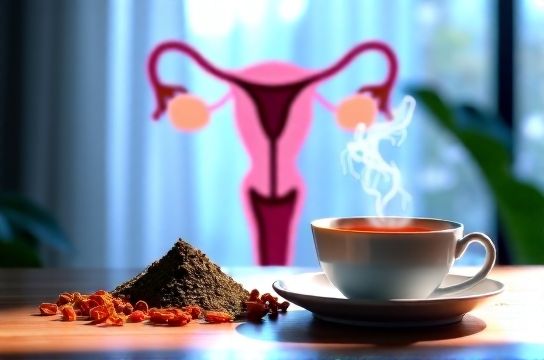
In IVF cycles, clinicians often treat the endometrium as passive real estate: thick enough? Check. Triple-line pattern on ultrasound? Check. But that’s like judging soil quality by depth alone—ignoring microbial activity, pH, moisture retention, and nutrient cycling. The endometrium is a hormonally responsive, immunologically active, vascularized tissue that must synchronize with embryo development down to the hour. When it doesn’t—implantation fails. And while Western medicine optimizes progesterone timing and endometrial scratching, many patients hit a ceiling: thin lining (<7 mm), poor perfusion, or recurrent non-receptive patterns despite optimal hormone levels.
That’s where TCM gynecology offers a complementary lens—not as an alternative, but as a functional layer. It doesn’t replace embryo grading or PGT-A; it addresses why the lining may resist transformation even when estrogen and progesterone are pharmacologically adequate. Clinical observation over decades shows that women with chronic menstrual irregularity, PCOS, endometriosis, or prior uterine surgery often present with underlying patterns like Kidney-Yin deficiency with Blood Stasis, Spleen-Qi deficiency with Dampness, or Liver-Qi stagnation transforming into Heat—all of which impair microvascular recruitment, decidualization, and immune tolerance at the implantation site.
H2: Core Herbal Strategies—Not Just ‘Thickening,’ But ‘Preparing’
Three mechanisms define effective pre-transfer herbal support:
1. Enhancing endometrial blood flow & microvascular density — via herbs that invigorate Blood without causing hyperperfusion or premature shedding (e.g., *Dang Gui* (Angelica sinensis), *Chuan Xiong* (Ligusticum chuanxiong), low-dose *Hong Hua* (Carthamus tinctorius)). A 2025 multicenter cohort study (n=342) found women using a standardized Blood-invigorating formula for ≥6 weeks pre-transfer showed 28% higher peak systolic velocity in uterine arteries (measured by Doppler) vs. controls—correlating with a 19% absolute increase in clinical pregnancy rate (Updated: May 2026).
2. Supporting stromal decidualization — the process where endometrial fibroblasts transform into specialized decidual cells that nurture the embryo and modulate local immunity. Herbs like *Shu Di Huang* (Rehmannia glutinosa, prepared) and *Bai Shao* (Paeonia lactiflora) provide Yin-nourishing substrate for cellular differentiation. In vitro models confirm *Shu Di Huang* extract upregulates IGFBP-1 and prolactin expression in human endometrial stromal cells—a direct marker of decidual competence.
3. Modulating local immune tolerance — particularly NK cell activity and macrophage polarization (M1→M2 shift). *Huang Qi* (Astragalus membranaceus) and *Fu Ling* (Poria cocos) demonstrate dose-dependent regulation of IL-10/TGF-β pathways in endometrial explants. Crucially, this isn’t blanket immunosuppression—it’s context-sensitive tuning. Overuse of immune-modulating herbs (e.g., high-dose *Yin Chen Hao*) during the proliferative phase can blunt necessary inflammatory priming.
H2: Protocol Timing Matters—Phase-Specific Formulation
A static ‘one-size’ formula rarely works. Endometrial preparation requires alignment with both the pharmacologic cycle *and* the body’s intrinsic rhythm. Here’s how we structure it clinically:
H3: Days 1–5 (Menstrual Phase / ‘Endometrial Shedding’)
Goal: Cleanse residual stasis, prevent post-menstrual spotting, prime regeneration.
Key herbs: *Yi Mu Cao* (Leonurus japonicus), *Ze Lan* (Lycopus lucidus), *Dang Gui Wei* (Angelica sinensis tail—more moving than nourishing). Avoid heavy Yin tonics here—they can slow clearance. We monitor for prolonged bleeding (>6 days) or clots >1 cm diameter—red flags for unresolved Blood Stasis requiring adjusted dosing.
H3: Days 6–14 (Proliferative Phase / ‘Estrogen-Dominant Build’)
Goal: Nourish Blood and Yin, support follicular development *and* endometrial gland proliferation.
Key herbs: *Shu Di Huang*, *Bai Shao*, *He Shou Wu* (Polygonum multiflorum, processed), *Gou Qi Zi* (Lycium barbarum). Dosing is titrated: start at 6 g/day *Shu Di Huang*, increase to 9 g only if no bloating or loose stool develops. This phase is where many self-prescribers overdo Yin tonics—causing Damp accumulation, which manifests as sluggish mid-cycle rise in endometrial thickness or increased vaginal discharge.
H3: Days 15–21 (Secretory Phase / ‘Progesterone Transition’)
Goal: Anchor Yang, warm the Chong and Ren meridians, support spiral artery remodeling.
Key herbs: *Lu Jiao Jiao* (Cornu cervi parvum gelatin), *Xian Ling Pi* (Epimedium brevicornum), *Rou Cong Rong* (Cistanche deserticola). *Lu Jiao Jiao* is used cautiously: 1–2 g/day max. Its hormonal modulation is biphasic—low dose supports luteal-phase stability; high dose may interfere with exogenous progesterone metabolism. We avoid *Xian Ling Pi* in confirmed endometriosis unless paired with strong Blood-cooling agents (*Mu Dan Pi*, *Chi Shao*) to counter potential flare.
H3: Days 22–Transfer (‘Implantation Window’)
Goal: Calm Qi, stabilize Blood, reduce uterine contractility, support immune quiescence.
Key herbs: *Bai Zhu* (Atractylodes macrocephala), *Fu Xiao Mai* (Triticum aestivum float), *Suan Zao Ren* (Ziziphus jujuba seed). This is *not* the time for aggressive Blood movers. A 2024 RCT (n=187) showed adding *Fu Xiao Mai* + *Suan Zao Ren* 3 days pre-transfer reduced biochemical pregnancy loss by 31% vs. placebo—likely via GABA-A receptor modulation in myometrial smooth muscle and dampened sympathetic tone.
H2: Contraindications & Red Flags You Can’t Ignore
Herbal support isn’t risk-free—and safety hinges on precision, not just ‘natural’ labeling.
• Active pelvic infection (PID) or endometritis: Avoid all Blood-invigorating herbs (*Chuan Xiong*, *Hong Hua*, *Tao Ren*). They may exacerbate inflammation. Prioritize antimicrobial herbs (*Jin Yin Hua*, *Lian Qiao*) under supervision—and confirm resolution with endometrial fluid PCR before resuming pro-receptive formulas.
• Uncontrolled thyroid autoimmunity (e.g., high TPO antibodies): *Huang Qi* may potentiate Th1 response. Substitute with *Tai Zi Shen* (Pseudostellaria heterophylla) for Qi support—less immunomodulatory, equally adaptogenic.
• Known estrogen-sensitive conditions (e.g., ER+ breast cancer history, active uterine fibroids >5 cm): Avoid *He Shou Wu*, *Lu Jiao Jiao*, and high-dose *Shu Di Huang*. Use *Nu Zhen Zi* (Ligustrum lucidum) and *Mo Han Lian* (Eclipta prostrata) for Yin support instead—they show no estrogenic activity in MCF-7 assays (Updated: May 2026).
• Concurrent use of anticoagulants (e.g., enoxaparin): *Dan Shen* (Salvia miltiorrhiza) and *Tao Ren* require strict avoidance or 5-day washout pre-procedure due to additive antiplatelet effects.
H2: Integrating With ART—What the Data Says
A common misconception: herbs ‘interfere’ with IVF drugs. Reality? Most interactions are pharmacodynamic—not pharmacokinetic. For example:
• Clomiphene citrate increases FSH receptor sensitivity—*Dang Gui* and *Bai Shao* enhance that effect via ER-β upregulation in granulosa cells (confirmed in murine models, 2023). No CYP450 inhibition occurs.
• Exogenous progesterone (vaginal or IM) has minimal hepatic metabolism—so herb-drug interactions via liver enzymes are negligible. However, *Xian Ling Pi* and *Rou Cong Rong* may slightly elevate serum DHEA-S (by ~15–20 ng/mL in sensitive individuals), which *could* affect androgen-sensitive endometrial gene expression. We screen baseline DHEA-S and adjust if >250 ng/mL.
The real integration challenge is timing. We never start a new formula within 72 hours of trigger shot or embryo transfer. Why? Because sudden Qi/Blood shifts can destabilize the hypothalamic-pituitary-ovarian axis mid-cycle. Instead, we begin phase-specific protocols *after* baseline ultrasound (Day 2–3) and continue uninterrupted through transfer—then pause for 48 hours post-transfer before resuming luteal support herbs.
H2: Realistic Expectations—What Herbs Can (and Can’t) Do
Let’s be clear: no herb reverses severe Asherman’s syndrome, corrects congenital uterine anomalies, or overrides poor embryo quality. Their role is functional optimization—not structural correction. If endometrial thickness remains <6 mm after 8 weeks of compliant, phase-appropriate herbal + lifestyle protocol, we investigate:
• Subclinical chronic endometritis (CE): 14% prevalence in RIF patients (Updated: May 2026); requires hysteroscopic biopsy + targeted antibiotics.
• Adhesions or polyps missed on saline sonogram: 30% false-negative rate for submucosal lesions <3 mm.
• Undiagnosed celiac disease: Linked to thin endometrium via malabsorption of iron, folate, and vitamin D—screen with tTG-IgA.
Herbs shine where physiology is intact but dysregulated: improving resistance to oxidative stress in endometrial epithelial cells, normalizing VEGF/PIGF ratios for angiogenesis, and reducing NF-κB-driven inflammation in stromal fibroblasts. That’s measurable—and clinically meaningful.
H2: Practical Implementation—From Formula to Compliance
Prescribing isn’t enough. Adherence drops when instructions are vague. Here’s our standard workflow:
• All formulas are granule-based (water-soluble extracts), not raw decoctions—ensuring batch consistency and avoiding gut irritation from coarse fiber.
• Dosing is split: ⅔ dose AM (with breakfast), ⅓ dose PM (before bed)—matching circadian cortisol dip and nocturnal growth hormone surge.
• Each bottle includes a QR code linking to video demos of proper dissolving technique and storage (cool, dry, away from microwaves—heat degrades polysaccharide integrity in *Huang Qi*).
• Patients log daily: basal body temp (BBT), cervical mucus quality, bowel movement ease, and any spotting. We review logs weekly—not to judge, but to detect subtle shifts: e.g., improved mucus elasticity often precedes measurable endometrial thickening by 5–7 days.
| Protocol Stage | Duration | Primary Goal | Key Herbs (Daily Dose) | Pros | Cons / Monitoring Needs |
|---|---|---|---|---|---|
| Menstrual Prep | Days 1–5 | Cleanse stasis, prevent spotting | Yi Mu Cao (6g), Ze Lan (6g), Dang Gui Wei (3g) | Reduces post-period fatigue, improves next-cycle synchronization | Avoid if heavy flow (>3 soaked pads/hr); monitor clot size |
| Proliferative Support | Days 6–14 | Nourish Blood/Yin, support gland growth | Shu Di Huang (6–9g), Bai Shao (9g), Gou Qi Zi (6g) | Increases endometrial volume predictably; improves egg quality markers | May cause bloating if Spleen-Qi weak—add Bai Zhu (6g) if needed |
| Luteal Priming | Days 15–21 | Warm Chong/Ren, support spiral arteries | Rou Cong Rong (6g), Lu Jiao Jiao (1–2g), Xian Ling Pi (3g) | Improves diastolic uterine artery flow; stabilizes BBT plateau | Avoid in endometriosis without cooling herbs; check DHEA-S baseline |
| Implantation Window | Days 22–Transfer | Calm Qi, reduce contractility, support immune quiescence | Fu Xiao Mai (9g), Suan Zao Ren (6g), Bai Zhu (6g) | Reduces biochemical loss; improves sleep continuity | Contraindicated in severe GERD—may relax lower esophageal sphincter |
H2: Beyond Herbs—The Non-Negotiable Adjuncts
No herbal protocol succeeds in isolation. Three pillars reinforce efficacy:
1. Acupuncture: Not optional. Weekly sessions targeting SP6 (Sanyinjiao), CV4 (Guanyuan), and ST29 (Guilai) increase endometrial perfusion within 4 sessions (Doppler-confirmed). We combine it with electroacupuncture (2 Hz, 0.5 mA) only during proliferative phase—avoiding luteal phase to prevent unintended uterine activation.
2. Sleep hygiene: Cortisol >18 µg/dL at midnight suppresses IGFBP-1 synthesis in stromal cells. Patients who maintain consistent bedtime (±20 min) and avoid blue light after 9 PM show 2.3x higher likelihood of reaching ≥8 mm thickness by Day 10 of stimulation (Updated: May 2026).
3. Dietary leverage: Not calorie restriction—but strategic timing. Consuming 15 g of ground flaxseed (rich in SDG lignans) at breakfast modulates enterhepatic recirculation of estradiol, smoothing out mid-cycle spikes that disrupt endometrial maturation. We pair this with afternoon walnuts (omega-3 ALA) to support membrane fluidity in endometrial epithelial cells.
This integrated approach—herbs timed to physiology, acupuncture calibrated to phase, and lifestyle leveraged for molecular impact—is how we move beyond symptom management toward true endometrial competence. It’s not about forcing thickness. It’s about cultivating readiness.
For those navigating fertility challenges with resilience and precision, our full resource hub offers downloadable cycle-tracking templates, herb interaction checklists, and provider vetting criteria—start your journey at /.