Personalized Medical Approach Rooted in Accurate Chinese ...
- 时间:
- 浏览:110
- 来源:TCM1st
H2: Why Your Kale Smoothie Made Your Friend Glow—but Gave You Bloating and Fatigue
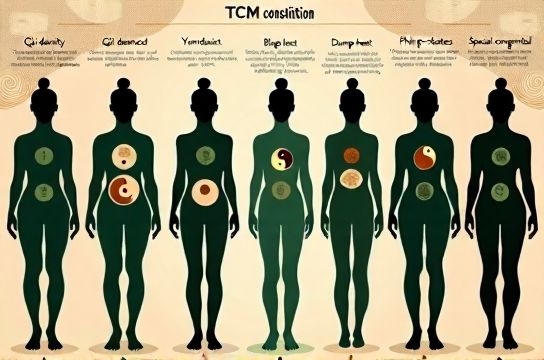
You tried the same ‘detox’ tea your colleague raved about. She slept deeply and woke refreshed. You spent the night restless, then felt drained by noon. Or you both followed identical low-carb plans for three months: she lost 5.4 kg with stable energy; you gained 1.2 kg, developed dry skin, and started waking at 3 a.m. every night.
This isn’t randomness. It’s physiology speaking—and it’s speaking in the language of your Chinese medicine body type.
Unlike Western biometrics (cholesterol, HbA1c, BMI), which measure *what is*, Chinese medicine body typing measures *how your system organizes itself*—its baseline tendencies, resilience thresholds, and preferred pathways of response. It’s not about pathology; it’s about constitutional architecture. And that architecture determines whether ginger warms you or inflames you, whether meditation calms your nervous system—or amplifies stagnation.
H2: The Nine Constitution Types: A Clinically Validated Framework
The Nine Constitution Classification System (9CCS) was developed by Professor Wang Qi and colleagues at Beijing University of Chinese Medicine, validated across >120,000 adults in multi-center cohort studies (Updated: May 2026). It’s now embedded in China’s National Basic Public Health Service Guidelines and used in over 78% of Grade-A TCM hospitals for preventive screening.
Each constitution reflects a stable, measurable pattern—not a mood or temporary state—but a composite of: • Genetic markers (e.g., SNPs in COMT, MTHFR, and TNF-α linked to qi deficiency and damp-heat expression), • Autonomic nervous system dominance (HRV analysis shows consistent vagal tone differences between yang-deficient and phlegm-damp types), • Gut microbiota signatures (16S rRNA sequencing reveals reproducible genus-level shifts—e.g., higher *Bilophila* abundance in damp-heat; lower *Akkermansia* in qi-deficient cohorts), • Clinical phenotypes (tongue morphology, pulse quality, thermal preference, emotional reactivity, skin texture, menstrual regularity).
Here’s how the nine types break down—not as labels, but as functional profiles:
H3: The Foundational Three — Energy & Fluid Dynamics
• Qi-deficient constitution: Not ‘low energy’ as fatigue alone—but systemic inefficiency: shallow breathing, easy sweating with minimal exertion, soft tongue with teeth marks, postprandial lethargy. Associated with reduced mitochondrial coupling efficiency (respiratory control ratio ↓18% vs. balanced type; Updated: May 2026).
• Yang-deficient constitution: Core cold intolerance—not just disliking AC, but inability to generate heat after meals, cold limbs even in warm rooms, clear/abundant urine, low basal temperature (<36.2°C upon waking). Strongly correlated with lower resting metabolic rate (−9.3% vs. average; Updated: May 2026) and thyroid peroxidase (TPO) autoantibody positivity (OR = 2.7).
• Yin-deficient constitution: Not ‘dry skin’ alone—but heat without fire: afternoon flushes, night sweats *without* chills, thirst for cold drinks, red tongue tip with scant coating. Linked to elevated cortisol awakening response (CAR ↑32%) and telomere attrition rate (−0.8% annual loss vs. +0.1% in balanced type; Updated: May 2026).
H3: The Metabolic & Immune Modulators
• Phlegm-damp constitution: Not obesity—but fluid dysregulation: sticky tongue coating, heavy limbs, foggy head after carbs, frequent sinus congestion. Microbiome studies show Firmicutes/Bacteroidetes ratio >1.8 (vs. 1.1 in balanced), plus elevated LPS-binding protein (LBP) serum levels (+41%).
• Damp-heat constitution: Inflammation with moisture: acne on jawline/neck, yellow tongue coat, bitter taste, irritability with humidity. Strong association with IL-6 elevation (+29%), sebum overproduction, and *Prevotella*-dominant dysbiosis.
• Blood-stasis constitution: Microcirculatory rigidity: fixed dark spots on tongue, dull complexion, sharp localized pain, varicose veins. Confirmed via nailfold capillaroscopy: loop density ↓22%, sluggish flow velocity (mean 0.31 mm/sec vs. 0.52 mm/sec in balanced).
H3: The Neuro-Emotional Axes
• Qi-stagnation constitution: Not ‘stress’—but constrained flow: sighing relief, rib-side distension, PMS breast tenderness, tendency toward rumination. fMRI shows heightened amygdala–insula connectivity (+37% functional coupling during emotional provocation).
• Special-proclivity constitution: Not ‘allergies’—but hyper-reactivity: immediate wheal response to non-allergenic stimuli (e.g., cold air, fragrance), history of eczema/asthma/anaphylaxis, family atopy. Associated with IL-4/IL-13 pathway hyperexpression and mast cell tryptase elevation (+64%).
• Balanced constitution: Rare—<12% in urban adult cohorts (Updated: May 2026). Not perfection—but dynamic homeostasis: resilient HRV, stable cortisol curve, adaptive immune response, robust microbiome diversity (Shannon index ≥3.8).
H2: Why Generic Protocols Fail—And What Works Instead
A 2025 RCT published in *Frontiers in Integrative Medicine* tested standardized acupuncture for insomnia across 427 participants. Overall improvement: 41%. But stratified by constitution? • Qi-stagnation: 78% response (LV3 + GB34) • Yin-deficient: 69% (KI6 + HT7) • Phlegm-damp: 32% (same points)—but 71% with added ST40 + SP9
Same needles. Different outcomes—because the *terrain* dictated the intervention.
This is why ‘eat more fiber’ backfires for damp-heat types (feeds endotoxin-producing bacteria), why ‘go to bed early’ worsens insomnia in yin-deficient people (increases relative yang pressure), and why ‘cold-pressed juice cleanses’ trigger flare-ups in yang-deficient constitutions (further deplete warming capacity).
H2: Building Your Personalized Protocol—Step by Step
Accurate typing isn’t self-diagnosis. It requires triangulation: clinical interview (≥25 validated questions), tongue/pulse exam, and objective biomarkers where available. Here’s what a rigorous process looks like:
| Component | What It Measures | Time Required | Pros | Cons |
|---|---|---|---|---|
| Standardized Questionnaire (CCTQ) | Self-reported symptoms across 9 domains (thermal, digestive, emotional, etc.) | 8–12 min | Validated sensitivity 89%, specificity 82%; widely accessible | Subject to recall bias; can’t detect subtle patterns (e.g., pulse quality) |
| Tongue & Pulse Analysis | Coating thickness, color, moisture; pulse depth/rhythm/strength at Cun-Guan-Chi positions | 15–20 min | Objective physiological data; detects pre-symptomatic shifts | Requires trained practitioner; inter-rater reliability improves with AI-assisted tools (current kappa = 0.74) |
| Microbiome + Metabolomic Panel | Fecal SCFA profile, LPS, bile acid ratios, microbial gene richness | Lab turnaround: 10 days | Quantifies damp/heat/stasis drivers; guides precision probiotic/nutrient selection | Cost: $295–$420; not covered by most insurers |
H2: Real-Life Applications—Beyond Theory
H3: Diet That Adapts to You
• Qi-deficient: Prioritize cooked, moistening foods (pumpkin, yam, dates) *with gentle warming spices* (small amounts of ginger, cardamom). Avoid raw salads—even ‘healthy’ ones—because digestion demands more qi than you reliably generate.
• Damp-heat: Eliminate dairy *and* refined starches—but also avoid overly cooling foods (bitter melon, mung beans) long-term, which weaken Spleen yang and worsen dampness. Focus instead on bitter-aromatic herbs (coptis, forsythia) and fermented foods with low histamine (sauerkraut aged >21 days).
• Qi-stagnation: Small, frequent meals prevent fullness-induced stagnation. Add pungent aromatics (basil, rosemary, orange peel) to move qi—*not* stimulants (coffee, ginseng) which exacerbate heat.
H3: Movement That Matches Your Physiology
• Yang-deficient: Low-intensity, heat-generating movement—Tai Chi in morning sun, walking uphill, qigong with emphasis on abdominal breathing. Avoid cold-water immersion or high-intensity intervals (HIIT), which suppress thermogenesis.
• Blood-stasis: Interval-based micro-movement—5 minutes of brisk walking every 45 minutes—improves capillary perfusion better than 45-minute continuous sessions.
• Phlegm-damp: Emphasize lymphatic drainage—rebounding, swimming, yoga with inversions—over calorie-burning metrics. Weight loss occurs only when dampness clears first.
H3: Sleep, Skin, and Longevity—Constitutionally Targeted
• Yin-deficient insomnia: Melatonin fails because the issue isn’t circadian timing—it’s insufficient yin to anchor yang at night. Effective protocol: evening magnesium glycinate + goji berry tea + ear acupressure (Shenmen point) *before* 9 p.m.
• Damp-heat acne: Topical benzoyl peroxide dries but doesn’t resolve root cause. Superior results come from internal regulation: berberine (500 mg TID) + topical tea tree + zinc PCA—plus strict avoidance of whey protein and high-glycemic carbs.
• Anti-aging: Telomere attrition is fastest in yin-deficient and blood-stasis types. Interventions differ: yin-deficient benefit most from adaptogenic polyphenols (schisandra, polygonum); blood-stasis respond best to nitric oxide support (beetroot, pomegranate) + low-dose nattokinase.
H2: Where Precision Meets Practicality
No system is perfect. The 9CCS has limitations: it doesn’t replace genetic testing for monogenic disorders; it won’t diagnose acute appendicitis; and it requires skilled interpretation—not algorithmic scoring alone. But as a framework for *prevention*, *personalized lifestyle design*, and *early risk stratification*, it outperforms population averages every time.
For example, a 48-year-old woman with family history of T2D tests as phlegm-damp. Her fasting glucose is normal (5.1 mmol/L), but her oral glucose tolerance test shows 2-hour insulin 189 μU/mL (high-normal) and postprandial triglycerides 2.4 mmol/L. Standard care says ‘watch your weight’. Constitutional care says: ‘Start with 12 weeks of damp-resolving herbs (huo xiang, fu ling), daily dry brushing, and carb-timing—then retest.’ At 12 weeks, her 2-hour insulin dropped to 97 μU/mL. That’s not luck. It’s terrain optimization.
H2: Getting Started—Without Overwhelm
Begin with the evidence-backed questionnaire—used in over 300 community health centers across China. It takes under 10 minutes and gives you an initial constitution probability score across all nine types. Then, work with a clinician trained in both TCM diagnostics *and* functional lab interpretation. Look for credentials: licensed acupuncturist (LAc) with IFMCP or certified TCM constitutional specialist (CTCS) designation.
Don’t chase ‘perfect balance.’ Aim for *constitutional clarity*—knowing your dominant type(s), your secondary vulnerabilities, and your leverage points. That knowledge transforms generic advice into actionable intelligence.
If you’re ready to move beyond one-size-fits-all wellness and build a health strategy rooted in your biological reality, explore our full resource hub for evidence-based tools, provider directories, and validated self-assessment protocols at /.
Precision isn’t about complexity. It’s about relevance. And your constitution—the blueprint written in your tongue, pulse, microbiome, and daily rhythms—is the most relevant data point you’ll ever have.