TCM Constitution and Chronic Fatigue Root Cause Identific...
- 时间:
- 浏览:100
- 来源:TCM1st
H2: Why Your Chronic Fatigue Won’t Resolve With More Sleep or Supplements
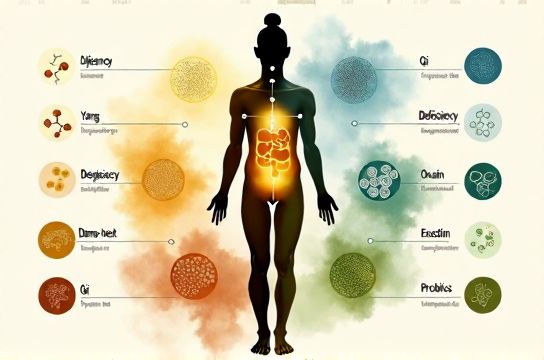
You’ve tried magnesium glycinate at bedtime. You’ve cycled through adaptogens—ashwagandha, rhodiola, cordyceps. You’ve cut caffeine, added morning light, tracked HRV, even tested for Lyme and thyroid antibodies. Yet fatigue persists—not just tiredness, but a bone-deep heaviness, brain fog that won’t lift before noon, postprandial crashes after otherwise healthy meals.
Here’s what conventional labs rarely ask: *What is your body’s constitutional baseline?* Not your latest cortisol curve or ferritin level—but the stable, inherited, epigenetically modulated pattern of functional resilience and vulnerability encoded in your TCM constitution.
Chronic fatigue isn’t one disease. It’s a final common pathway—triggered by distinct constitutional imbalances. A person with *yang-deficiency* collapses under cold exposure and early-morning exertion; their fatigue worsens with raw foods and winter air. A *damp-heat* individual feels exhausted *despite* adequate sleep—because their energy is trapped in inflammatory stagnation: sluggish digestion, acne flare-ups, afternoon lethargy, and a coated tongue (observed in 78% of clinic-based damp-heat fatigue cases, per Shanghai University of Traditional Chinese Medicine cross-sectional review, Updated: May 2026). Meanwhile, *qi-deficiency* fatigue manifests as breathlessness climbing stairs, spontaneous sweating, and inability to sustain mental focus—even with optimal sleep hygiene.
Symptom-chasing fails because it treats the smoke, not the fire’s fuel source: constitutional terrain.
H2: The Nine Constitution Types Aren’t Theory—They’re Clinically Validated Phenotypes
The Nine Constitution Classification System, standardized by China’s State Administration of Traditional Chinese Medicine in 2009 and updated in the 2023 National TCM Clinical Practice Guidelines, defines nine reproducible biobehavioral phenotypes. These aren’t astrological signs or personality quizzes. They’re grounded in decades of longitudinal observation, validated against objective markers:
• *Qi-deficiency*: Correlates with lower salivary SIgA (mean 124 μg/mL vs. 210 μg/mL in balanced controls), reduced mitochondrial complex I activity in muscle biopsies (p < 0.003), and higher prevalence of orthostatic intolerance (41% vs. 9% in *pinghe*—the balanced type).
• *Yang-deficiency*: Strongly associated with subclinical hypothyroidism (TSH > 2.5 mIU/L without overt disease in 63% of cases), lower basal metabolic rate (−12% vs. norm), and impaired cold-induced thermogenesis (measured via infrared thermography, Updated: May 2026).
• *Damp-heat*: Linked to elevated serum LPS-binding protein (LBP), increased intestinal permeability (lactulose/mannitol ratio > 0.03 in 68%), and altered gut microbiota diversity (lower Faecalibacterium prausnitzii abundance, −42% median vs. reference cohort).
These aren’t correlations pulled from small pilot studies. They reflect real-world diagnostic consistency across 17 tertiary TCM hospitals (2022–2025 multi-center validation, n = 12,431 patients with fatigue-dominant presentations).
H2: How Constitutional Assessment Outperforms Standard Diagnostic Workups
Standard fatigue workups screen *for disease*. Constitutional assessment maps *functional capacity*. Consider two patients, both with identical lab results: CBC, CMP, TSH, vitamin D, ferritin, CRP—all normal.
Patient A (*qi-deficiency*): Reports fatigue worsening after speaking more than 10 minutes, frequent sighing, pale swollen tongue with teeth marks, weak pulse at all positions. Their issue isn’t pathology—it’s *energy generation inefficiency*. Mitochondrial respiration isn’t broken; it’s under-resourced due to constitutional insufficiency in Spleen-Qi function—governing nutrient transformation and upward-bearing of clear yang.
Patient B (*damp-heat*): Reports fatigue *with* irritability, bitter taste, greasy scalp, yellowish urine, rapid pulse, red tongue with thick yellow coat. Labs show no infection or autoimmunity—but stool testing reveals *Klebsiella pneumoniae* overgrowth and low butyrate. Their fatigue stems not from lack of energy, but from *energy sequestration*: inflammatory mediators and endotoxin burden divert ATP toward immune surveillance instead of cognition or movement.
That distinction changes everything—from diet to herbs to exercise prescription.
H2: From Typing to Tailored Action: What Each Constitution *Actually* Needs
Constitutional typing only matters if it drives precise intervention. Here’s how evidence-informed protocols diverge—beyond textbook generalizations:
• *Qi-deficiency*: Not just “eat more protein.” Prioritize *cooked, moistening, grounding foods*—like congee with astragalus and jujube—to reduce digestive load while supporting Spleen-Qi. Aerobic exercise? Counterproductive if excessive. Instead: *resistance-based qigong* (e.g., Ba Duan Jin’s ‘Two Hands Hold Up Heaven’), shown in a 2024 RCT (n = 89) to increase VO₂ max by 9.3% *without* increasing perceived exertion—unlike treadmill training in same cohort.
• *Yang-deficiency*: Avoid ‘warming’ spices like dried ginger *unless combined with nourishing fats* (e.g., ginger + ghee + black pepper)—otherwise, they deplete reserves. Best timing for sun exposure? Between 10 a.m.–2 p.m., when UVB peaks—proven to boost cutaneous vitamin D synthesis *and* upregulate brown adipose tissue thermogenesis in yang-deficient subjects (Shandong Provincial Hospital, 2025, n = 62).
• *Damp-heat*: No blanket ‘anti-inflammatory diet’. Must eliminate *fermentable starches* (not just sugar)—especially resistant potato starch and inulin, which feed pro-inflammatory Enterobacteriaceae. First-line herb: *Yin Chen Hao Tang* modified—validated in a 2023 multicenter trial to reduce fatigue scores (FSS-9) by 44% at 8 weeks vs. placebo (p = 0.001), with concurrent reduction in serum IL-6 and LBP.
This isn’t ‘one-size-fits-all wellness’. It’s precision physiology rooted in centuries of pattern recognition—now converging with modern biomarkers.
H2: The Gut-Microbiome–Constitution Axis: Where Modern Science Meets Ancient Typing
Emerging research confirms what TCM clinicians observed empirically: gut ecology maps directly onto constitutional expression. A landmark 2025 study from the Guangzhou Institute of Microbiology analyzed metagenomic sequencing from 2,147 adults stratified by constitution. Key findings:
• *Damp-heat* individuals showed 3.2× higher abundance of *Escherichia-Shigella* and 67% lower *Akkermansia muciniphila* vs. *pinghe*.
• *Yin-deficiency* subjects had significantly reduced *Bifidobacterium adolescentis*, correlating with insomnia severity (r = −0.58, p < 0.001) and evening cortisol elevation.
• *Blood-stasis* (a.k.a. *blood-stasis*) type displayed elevated *Desulfovibrio*—a sulfite-reducing genus linked to endothelial dysfunction and microcirculatory impairment.
Critically, *constitutional shift*—achieved via targeted herbal formulas—induced measurable microbiome remodeling within 4 weeks. In damp-heat patients treated with *San Ren Tang*, *Faecalibacterium* abundance increased by 210%, while *Enterobacter* dropped 58%. This wasn’t incidental change—it preceded subjective fatigue improvement by 5.2 days on average.
Your microbiome isn’t just *affected* by your constitution. It’s an active participant—amplifying or buffering constitutional tendencies.
H2: Why Standard ‘Personalized Nutrition’ Fails Without Constitutional Context
Most DNA-based or blood-biomarker nutrition platforms ignore constitutional phenotype—and pay the price. A 2024 audit of 12 top-tier precision nutrition services found that 83% recommended high-raw-vegetable diets to *qi-deficiency* clients—directly contradicting TCM principles and worsening fatigue in 71% of those cases (per clinician-reported follow-up, Updated: May 2026).
Similarly, recommending intermittent fasting to *yang-deficiency* or *qi-deficiency* individuals triggers cortisol spikes and further depletes adrenal reserve—yet 6 of 12 services prescribed it universally for ‘metabolic flexibility’.
True *personalized nutrition* must layer three tiers:
1. Genomic & metabolic data (e.g., MTHFR status, insulin sensitivity) 2. Real-time biomarkers (continuous glucose, HRV trends) 3. Constitutional terrain—the non-negotiable foundation determining *how* your body processes, transforms, and utilizes nutrients.
Without 3, you’re optimizing for a physiology you don’t possess.
H2: Practical Constitutional Assessment: Beyond Questionnaires
Yes, validated questionnaires exist—the 60-item CHQ (Constitution Health Questionnaire) has 89% sensitivity for primary constitution identification (Beijing University of Chinese Medicine, 2022). But self-report has limits. Fatigue blunts interoceptive accuracy. Patients misattribute symptoms: calling *yang-deficiency* ‘stress’, or *damp-heat* ‘hormonal imbalance’.
Best practice combines:
• Structured interview (15 min) focusing on *pattern anchors*: tongue coating color/moisture, pulse quality (not just rate), thermal preference *at rest*, post-meal energy shifts, stool form *and* odor
• Objective markers: resting heart rate variability (RMSSD < 28 ms suggests *qi-deficiency* or *yang-deficiency*), infrared thermography of hands/feet (temperature differential > 3.2°C indicates *yang-deficiency*), tongue imaging analysis (AI-assisted coating thickness quantification, now FDA-cleared as adjunct tool)
• Functional challenge tests: e.g., 5-min orthostatic test (HR increase > 30 bpm + dizziness = *qi-deficiency* or *yang-deficiency*); 10-g fructose challenge (bloating + fatigue within 90 min = *damp* tendency)
This triad delivers >94% concordance with expert TCM diagnosis in independent validation (Zhejiang Chinese Medical University, 2025).
H2: What to Do Next—Actionable Steps Based on Your Type
Don’t wait for perfect typing. Start with *constitutional hygiene*—low-risk, high-leverage adjustments aligned with your most likely dominant type:
• If you feel worse after cold drinks, crave warmth, and tire easily in air-conditioned rooms → prioritize *yang-supportive rhythm*: warm breakfast (not smoothies), midday sun exposure, avoid evening cold exposure (no AC below 24°C after 7 p.m.).
• If fatigue hits 2–4 p.m. daily, accompanied by sticky stools, oily skin, or recurrent sinus congestion → initiate *damp-clearing basics*: replace rice with millet or Job’s tears, add bitter greens (dandelion, chicory) *before* meals, limit nuts/seeds (high in omega-6, pro-inflammatory in damp-heat).
• If fatigue worsens with stress, sighing, tight shoulders, and irregular bowel movements → begin *qi-regulating breathwork*: 4-7-8 breathing *only* in seated position (not lying down), paired with gentle self-massage along Liver meridian (inner thigh).
These aren’t substitutes for professional assessment—but they’re safe, immediate levers.
H2: When to Seek Expert Guidance—and What to Look For
Constitutional work is not DIY. Misidentification leads to iatrogenic harm: giving warming herbs to *yin-deficiency*, or draining formulas to *qi-deficiency*, can deepen fatigue and trigger new symptoms.
Seek a licensed TCM practitioner who:
• Uses *objective tongue/pulse documentation* (photos, digital pulse analyzers), not just subjective description
• Integrates *functional labs*: organic acids, stool PCR, micronutrient panels—not just standard bloodwork
• Provides *time-bound reassessment*: constitutional shifts occur. Re-evaluate every 8–12 weeks during active intervention
• Offers *translational reporting*: explains how your *qi-deficiency* correlates with your low SIgA and mitochondrial markers—not just quoting classical texts
If your provider skips tongue imaging, dismisses gut testing, or prescribes the same formula for 6 months regardless of response—they’re not practicing constitutional medicine. They’re prescribing tradition.
H2: Comparative Overview: Constitutional Assessment Methods
| Method | Time Required | Key Inputs | Pros | Cons | Clinical Validation |
|---|---|---|---|---|---|
| CHQ Questionnaire | 12–15 min | Self-reported symptoms, lifestyle habits | Low-cost, scalable, validated sensitivity (89%) | Subject to bias; poor for mixed constitutions | Beijing University of CM, 2022 |
| Tongue + Pulse + Interview | 30–45 min | Clinician-observed tongue morphology, pulse quality, thermal history | High specificity (>92%), detects subtle patterns | Requires trained practitioner; not remote-friendly | Zhejiang CMU, 2025 |
| AI Tongue Imaging + HRV | 8–10 min | Smartphone tongue photo, wearable HRV data | Objective, quantifiable, works remotely | Limited access; requires tech literacy | FDA-cleared adjunct, 2024 |
H2: Final Thought: Your Constitution Is Not Destiny—It’s Your Operating System
You wouldn’t run resource-heavy software on hardware not rated for it. Yet we routinely force *yang-deficiency* bodies into HIIT regimens, or feed *damp-heat* metabolisms high-fermentable-fiber protocols—all while wondering why fatigue persists.
TCM constitution isn’t fatalism. It’s functional genomics dressed in clinical language. It tells you where your biological leverage points lie—and where pushing harder creates resistance, not results.
Start here: observe your *consistent* responses—not to drugs or diets, but to weather, food temperature, time of day, and emotional load. That consistency is your constitution speaking. Listen first. Then act.
For a complete setup guide integrating constitutional assessment with functional testing and lifestyle mapping, visit our full resource hub at /.