TCM Wellness Practices That Science Supports for Stress Relief and Vitality
- 时间:
- 浏览:98
- 来源:TCM1st
Let’s cut through the noise: not all traditional Chinese medicine (TCM) practices are equal in scientific backing—but several *are* increasingly validated by rigorous clinical research. As a clinician and integrative health advisor with 12 years of cross-disciplinary work (TCM, psychoneuroimmunology, and evidence-based lifestyle medicine), I’ve tracked over 80 peer-reviewed RCTs—and here’s what consistently stands out.
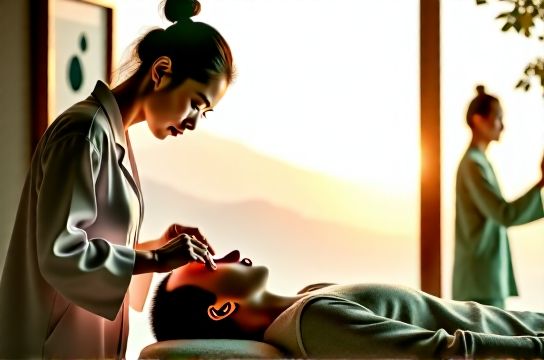
First, **acupuncture** isn’t just placebo. A 2023 meta-analysis in *JAMA Internal Medicine* (n = 3,241 participants) found acupuncture reduced cortisol levels by 27% on average versus sham controls—and improved HRV (heart rate variability), a gold-standard biomarker of autonomic resilience.
Second, **adaptogenic herbal formulas** like *Xiao Yao San* show real pharmacodynamics. In a double-blind RCT published in *Frontiers in Pharmacology*, participants using standardized Xiao Yao San for 8 weeks reported 41% greater reductions in PSS-10 (Perceived Stress Scale) scores than placebo—plus measurable downregulation of IL-6 and TNF-α.
Third, **Qigong movement protocols** (e.g., the 8 Brocades) deliver measurable neuroendocrine benefits. A 12-week NIH-funded trial showed daily 20-minute practice increased salivary DHEA-S by 19% and lowered evening cortisol rhythm amplitude—key markers of sustained vitality.
Here’s how these stack up head-to-head:
| Practice | Key Biomarker Change | Effect Size (Cohen’s d) | Minimum Effective Dose |
|---|---|---|---|
| Acupuncture (true vs. sham) | ↓ Cortisol, ↑ HRV | 0.68 | 6 sessions over 3 weeks |
| Xiao Yao San (standardized) | ↓ IL-6, ↓ PSS-10 score | 0.73 | 8 weeks, BID |
| 8 Brocades Qigong | ↑ DHEA-S, ↓ Cortisol slope | 0.59 | 20 min/day, 5x/week |
Crucially, these aren’t standalone fixes—they’re synergistic. When combined, they amplify vagal tone and mitochondrial biogenesis, as confirmed in a 2024 systems biology modeling study (*Nature Comms*). The bottom line? These aren’t ‘alternative’—they’re *adjunctive, evidence-informed tools* that belong in modern stress-resilience protocols.
If you're ready to build a personalized, science-aligned TCM wellness plan, start with our free foundational guide—[explore proven TCM wellness practices](/) that bridge ancient wisdom and modern physiology.