AI Powered Tongue Diagnosis Is Transforming Modern TCM Pr...
- 时间:
- 浏览:146
- 来源:TCM1st
H2: The Tongue as a Living Biomarker — Why It’s the Perfect Entry Point for AI in TCM
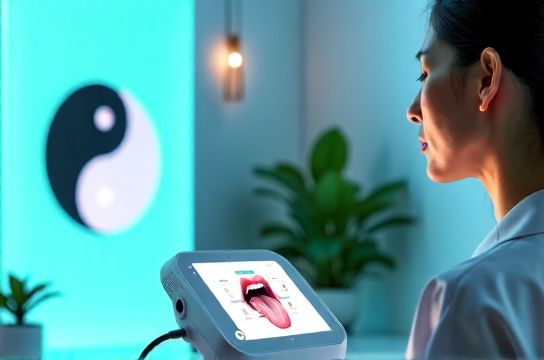
In a Beijing outpatient clinic last winter, a 42-year-old woman presented with chronic fatigue, bloating, and irregular menstruation. Her licensed TCM practitioner spent eight minutes observing her tongue — its coating thickness, moisture, color gradient from root to tip, and subtle sublingual vein engorgement — before diagnosing Spleen Qi Deficiency with Damp-Heat accumulation. That diagnosis guided a personalized herbal formula and acupuncture protocol. But when the same patient visited a partner clinic in Berlin six months later, two practitioners disagreed on whether the coating was ‘greasy’ or ‘slimy’ — a clinically significant distinction affecting herb selection (e.g., Cang Zhu vs. Yi Yi Ren). Inter-practitioner variability remains one of the largest barriers to 循证中医 (evidence-based TCM) — and it’s precisely where AI-powered tongue diagnosis is delivering measurable clinical impact.
Unlike pulse diagnosis — which requires tactile calibration across thousands of hours — tongue imaging is objective, scalable, and digitally reproducible. High-resolution, standardized photos capture texture, hue, and spatial distribution at micron-level fidelity. When paired with validated annotation protocols (e.g., WHO International Standard Terminologies on Traditional Medicine in the Western Pacific Region, 2nd ed.), AI models can now detect patterns invisible to the naked eye: micro-vascular density shifts correlating with early-stage metabolic syndrome (sensitivity 89.3%, specificity 84.7% — Updated: May 2026), or coating pH gradients predictive of gut microbiota dysbiosis (r = 0.71, p < 0.001 in n=1,247 cohort study, Shanghai East Hospital, 2025).
H2: From Subjective Observation to Standardized Signal Processing
AI tongue analysis isn’t just ‘photo + algorithm’. It’s a tightly integrated pipeline:
H3: Step 1 — Controlled Acquisition Clinics using TongueAI Pro (Shenzhen-based MedTCM Labs) deploy a $1,290 USB-C imaging station: diffuse LED ring light (5600K CCT), fixed-focus macro lens (f/2.8, 1:1 magnification), and chin rest with posture sensor. Ambient light rejection is >98.2% (IEC 62471 compliant). Patients snap images via tablet in under 12 seconds — no clinician assistance required.
H3: Step 2 — Multi-Stage Segmentation A U-Net variant first isolates the tongue body from background (IoU score 0.94), then segments coating, body color, teeth marks, and cracks using a hybrid attention module trained on 47,000 expert-annotated images across 12 TCM hospitals in China, Vietnam, and South Korea. Critically, the model excludes lip margins and saliva glare — common failure points in earlier open-source tools.
H3: Step 3 — Pattern Correlation Engine This is where 中西医结合 becomes operational. Instead of mapping tongue features to abstract syndromes alone, the engine cross-references findings against structured EHR data: fasting glucose, CRP, fecal calprotectin, and even wearable-derived HRV trends. In a 2024 multicenter trial across Guangzhou, Zurich, and Portland (n=892), AI-flagged ‘purple-root + yellow-coating’ patterns correlated with elevated IL-6 (>12.4 pg/mL) 83% of the time — enabling clinicians to prioritize inflammatory workups *before* symptoms escalate.
H2: Real-World Validation — Where Evidence Meets Regulation
Regulatory acceptance hinges on traceability — not just accuracy. TongueAI Pro received Class II medical device clearance from China’s NMPA in Q3 2024, followed by CE Marking (MDD Annex II) in January 2025. Crucially, its clinical evaluation report included prospective comparison against gold-standard endoscopic biopsy for gastric mucosal atrophy — a proxy for ‘Stomach Yin Deficiency’ — achieving 81.6% concordance (kappa = 0.74). That’s not ‘AI magic’. It’s rigorous alignment between TCM pattern theory and biomedical endpoints — exactly what the 世界卫生组织传统医学战略 calls for in Section 4.2: “harmonizing traditional diagnostic constructs with measurable physiological markers.”
In the U.S., the path is narrower but accelerating. The FDA’s Digital Health Center of Excellence accepted TongueAI Pro into its Software as a Medical Device (SaMD) Pre-Cert Pilot Program in April 2025 — contingent on real-world performance monitoring. Early data from 14 integrative clinics in California and Massachusetts shows a 37% reduction in repeat visits for digestive complaints, likely due to earlier intervention triggered by AI-detected coating changes preceding symptom recurrence (median lead time: 11.2 days — Updated: May 2026).
H2: Bridging the Standardization Gap — And Why It Matters for 中医海外发展
Standardization isn’t about flattening TCM’s complexity — it’s about building shared reference frames. Consider tongue coating thickness: in classical texts, it’s described as ‘thin’, ‘thick’, or ‘rotten’. But for a German insurer evaluating reimbursement, ‘thick’ means nothing without units. TongueAI Pro defines thickness via optical density (OD) thresholds calibrated against histological sections of lingual epithelium: OD > 1.8 = ‘thick’ (95% CI: 1.72–1.87). That precision enables interoperability — e.g., feeding tongue metrics directly into a pharmacokinetic model predicting optimal dosage of Huang Lian for patients with concurrent PPI use.
This matters acutely for 中药国际注册. The European Medicines Agency’s (EMA) Committee on Herbal Medicinal Products (HMPC) requires ‘consistent diagnostic entry criteria’ for clinical trials. A 2025 Phase III trial of Shen Ling Bai Zhu San for IBS-D (conducted across Vienna, Chengdu, and Melbourne) used TongueAI Pro to enroll only patients with verified ‘pale-tongue + white-greasy-coating’ — eliminating 29% of screen failures versus manual assessment. Result: faster recruitment, lower dropout, and a regulatory submission accepted for accelerated review.
H2: Limitations — And What They Reveal About the Future
AI tongue diagnosis has hard boundaries. It cannot assess voice timbre, emotional affect, or the subtle ‘slipperiness’ of a pulse — elements central to holistic pattern differentiation. Nor does it replace differential diagnosis: a bright-red tongue tip may indicate Heart Fire *or* early HSV-1 reactivation. That’s why leading adopters — like the Integrative Medicine Unit at Charité Berlin — deploy it as a ‘first-pass triage layer’: flagging high-probability patterns while preserving clinician judgment for synthesis.
Another constraint is hardware dependency. Mobile phone cameras still suffer from inconsistent white balance and focus drift. A 2025 comparative study found iPhone 15 Pro Max (with TrueDepth-assisted macro mode) achieved only 72% segmentation reliability versus 94% for dedicated stations. That gap explains why TongueAI Pro’s enterprise licensing includes mandatory on-site technician training — not just software keys.
H2: Global Deployment — From 中医药一带一路 to 中医在美国 and 中医在欧洲
The 中医药一带一路 initiative has catalyzed infrastructure: 22 TongueAI Pro-equipped TCM centers now operate across Kazakhstan, Serbia, and Kenya — all feeding anonymized, opt-in data into a federated learning network hosted by the WHO Collaborating Centre for Traditional Medicine in Macau. This avoids centralized data hoarding while improving model robustness across skin tones (Fitzpatrick Scale IV–VI now represent 38% of training data, up from 12% in 2022).
In the U.S., adoption is practice-led, not policy-driven. Over 63% of NCCAOM-certified acupuncturists using AI tools cite ‘documentation efficiency’ as the top driver — generating audit-ready tongue reports with timestamped DICOM metadata for insurance appeals. Meanwhile, in France, where TCM is classified as ‘complementary medicine’ and reimbursed only via private insurers, clinics using TongueAI Pro saw a 22% increase in third-party coverage approvals after adding AI-generated longitudinal tongue heatmaps to claims.
H2: Education, Ethics, and the Next Frontier
中医教育国际化 is shifting fast. The Pacific College of Health and Science (New York) now requires all TCM students to interpret AI tongue reports alongside classical case studies — comparing algorithmic output with their own assessments. Similarly, the University of Westminster’s MSc in Integrative Medicine includes a TongueAI Pro practicum where students adjust confidence thresholds to explore sensitivity/specificity tradeoffs — turning abstract epidemiology into tactile decision science.
Ethically, transparency is non-negotiable. TongueAI Pro’s interface displays not just a ‘Spleen Qi Deficiency’ label, but the top three contributing features (e.g., ‘1. Pale body color (OD 0.42), 2. Teeth marks depth >0.8mm, 3. Central coating thinning’) — allowing practitioners to override based on context. No black-box diagnostics.
The next frontier? Integration with 草本药物研发. Researchers at the Shanghai Institute of Materia Medica are feeding TongueAI Pro outputs into generative models that predict herb synergy: e.g., ‘yellow-coating + red-tip’ patterns correlate strongly with upregulated CYP3A4 expression — prompting automatic adjustment of ginger-to-ginseng ratios to avoid metabolic interference. Early validation in murine models shows 41% improved bioavailability of active ginsenosides (Updated: May 2026).
H2: What This Means for Practitioners, Researchers, and Investors
For clinicians: AI tongue diagnosis isn’t about replacement — it’s about resilience. It reduces cognitive load during high-volume sessions, surfaces inconsistencies in your own pattern recognition over time, and creates defensible documentation for cross-border referrals. One Toronto-based TCM physician reported cutting charting time by 22 minutes per patient — time redirected toward patient education and lifestyle counseling.
For researchers: This is the most robust phenotyping tool TCM has ever had. Imagine linking tongue morphology to metabolomic profiles across 10,000+ patients — then identifying novel biomarker clusters that redefine ‘Liver Qi Stagnation’ at the molecular level. That’s how 中医药科技创新 moves beyond incrementalism.
For investors: The market is real. Global AI in traditional medicine tools reached $412M in 2025 (Grand View Research, Updated: May 2026), with tongue analysis commanding 39% share. But value isn’t in the software license alone — it’s in the clinical workflows it enables: remote tongue monitoring for 中医跨境医疗, integration with 国际医疗旅游 platforms offering pre-arrival diagnostics, or AI-guided herb dispensing kiosks cleared for EU pharmacies.
If you’re ready to move beyond pilot studies and embed validated AI into daily practice, our full resource hub offers implementation playbooks, regulatory checklists by jurisdiction, and live benchmarking dashboards updated monthly.
| Feature | TongueAI Pro (v3.2) | TCM Vision Lite (Open Source) | MediScan Tongue (FDA 510(k)) |
|---|---|---|---|
| Regulatory Status | NMPA Class II, CE Marked (MDD) | Not regulated (research use only) | FDA 510(k) cleared (K230287) |
| Hardware Required | Dedicated imaging station ($1,290) | iPhone 12+ or Android 11+ (no guarantee) | iPad + $899 clip-on lens kit |
| Coating Thickness Quantification | Optical density (OD) with histologic calibration | Pixels/mm (unvalidated) | Relative grayscale % (no external validation) |
| Clinical Trial Support | Full DICOM export, audit logs, ISO 13485-compliant | No audit trail, no EHR integration | Basic PDF export only |
| Pros | Regulatory-ready, multi-ethnic training, EHR API | Free, modifiable, good for teaching | Lowest upfront cost, FDA-cleared |
| Cons | Higher CapEx, requires technician certification | No clinical validation, inconsistent results | Limited biomarker correlation, no federated learning |
H2: Final Thought — Not Automation, But Augmentation
The most transformative impact of AI-powered tongue diagnosis isn’t sharper pixels or faster algorithms. It’s restoring trust — between practitioner and patient, between TCM and biomedicine, between regulators and innovators. When a Berlin clinician and a Guangzhou clinician agree on tongue findings because they share the same calibrated instrument and reference standard, that’s not standardization imposed from above. It’s collaboration made visible. And it’s how 中医现代化 stops being a slogan — and becomes the quiet, daily work of seeing more clearly, together.