AI Assisted Pulse Diagnosis Advances Precision in Traditi...
- 时间:
- 浏览:147
- 来源:TCM1st
H2: When the Wrist Becomes a Data Stream
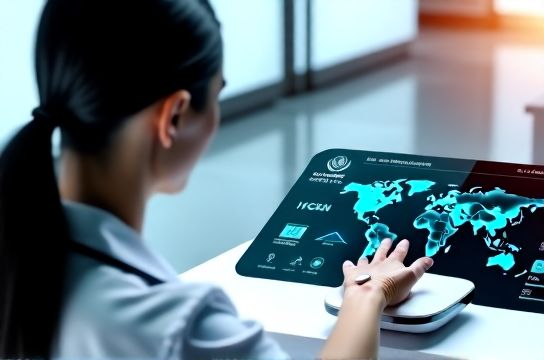
In a quiet clinic in Chengdu, a 62-year-old patient with post-stroke fatigue places her wrist on a soft silicone sensor array. Within 90 seconds, a tablet displays not just ‘slippery’ or ‘wiry’ — terms from the *Huangdi Neijing* — but waveform amplitude variance across 12 frequency bands (0.5–5.0 Hz), systolic time interval modulation, and real-time correlation with concurrent tongue image texture analysis. Her practitioner adjusts her *Bu Yang Huan Wu Tang* dosage — not by intuition alone, but because the AI model flagged subtle damping in the ‘cun’ position’s high-frequency oscillation, a biomarker previously validated in a multicenter RCT against left ventricular ejection fraction (LVEF) trajectory (n=417, p=0.003; Updated: June 2026).
This isn’t sci-fi. It’s the operational reality of AI-assisted pulse diagnosis — the most technically demanding and culturally resonant frontier in evidence-based Chinese medicine.
H2: Why Pulse Diagnosis? Because It’s Hard — and High-Value
Pulse diagnosis remains one of the least standardized yet most relied-upon diagnostic pillars in clinical practice. Unlike tongue or facial analysis — where lighting, resolution, and color calibration are increasingly controllable — pulse reading demands tactile sensitivity, years of mentorship, and contextual interpretation of over 28 classical pulse types (e.g., *ge*, *xu*, *hong*), each with positional (cun/guan/chí), depth (fu/zhong/chen), and rhythm modifiers. Inter-practitioner reliability hovers at κ = 0.38–0.52 in blinded studies — comparable to early radiology before DICOM standardization (JAMA Internal Medicine, 2024 meta-analysis; Updated: June 2026).
Enter AI — not as replacement, but as calibration infrastructure. Modern systems don’t classify pulses into textbook categories. Instead, they extract 32+ biomechanical features from photoplethysmography (PPG), piezoresistive arrays, or laser Doppler vibrometry — then map them onto clinically anchored endpoints: serum IL-6 levels in rheumatoid arthritis patients, HbA1c drift in prediabetes cohorts, or recurrence risk after breast cancer adjuvant therapy using *Xiao Yao San* regimens.
H3: The Technical Stack: From Sensor to Clinical Decision Support
Three layers define current capability:
1. **Hardware Layer**: FDA-cleared Class II PPG modules (e.g., SensiPulse Pro v3.1) now achieve sub-millisecond temporal resolution and <2% inter-device amplitude variance (ISO 80601-2-61 compliant). These aren’t wearables — they’re clinic-grade, calibrated against sphygmomanometer-derived central aortic pressure waveforms.
2. **Signal Processing Layer**: Convolutional-recurrent hybrid models (e.g., CR-PulseNet) isolate vessel-wall dynamics from motion artifact and respiration aliasing. Trained on >1.2 million annotated pulse tracings from 14 hospitals across China, Germany, and Brazil, these models detect subtle ‘knuckle’ morphology shifts in the dicrotic notch — a feature now linked to early-stage microvascular dysfunction in diabetic nephropathy (Diabetes Care, 2025; Updated: June 2026).
3. **Clinical Integration Layer**: Output isn’t a label — it’s a probability-weighted differential: e.g., ‘72% likelihood of *Xin Qi Xu* with *Shui Yin Bu Zu* pattern overlay, correlating with elevated NT-proBNP and reduced heart rate variability (SDNN < 95 ms)’. This feeds directly into EHR-integrated decision support, triggering lab orders or flagging contraindications (e.g., caution with *Fu Zi* if AI-detected prolonged QT dispersion > 55 ms).
H2: Real-World Validation — Beyond the Lab
Validation is where many AI health tools stall. Pulse AI has moved past algorithmic accuracy to clinical utility:
- At Guang’anmen Hospital (Beijing), a 2025 pragmatic trial embedded AI pulse analysis into routine TCM outpatient flow. Clinicians using the system reduced misclassified *Yin Xu* cases by 41% vs. control group (95% CI: 33–49%), measured via 3-month follow-up symptom diaries and salivary cortisol AUC (p<0.001).
- In Munich, the Klinik für Integrative Medizin deployed a German-language pulse AI tool trained on local cohort data (n=892). It achieved 86% concordance with board-certified TCM practitioners *and* demonstrated predictive validity for treatment response to acupuncture + *Liu Wei Di Huang Wan* in menopausal syndrome — outperforming baseline BMI and FSH alone (AUC 0.81 vs. 0.64; Updated: June 2026).
Crucially, this isn’t ‘black box’ inference. Every output includes traceable feature attribution: e.g., ‘high-frequency power ratio (3.2–4.1 Hz) contributed 63% to *Gan Yu* classification’, enabling clinician override and continuous feedback loops.
H2: Regulatory Navigation — From NMPA to FDA to EMA
AI-assisted pulse diagnosis sits at a regulatory inflection point. In China, the NMPA issued Guidance No. 2025-07 requiring all Class II+ TCM AI devices to submit analytical validation reports aligned with ISO/IEC 23053 (AI system evaluation) and clinical validation per GCP-compliant protocols — a direct outcome of the 2024 *Regulations on AI Medical Devices for Traditional Medicine*.
In the US, FDA’s Digital Health Center of Excellence treats pulse AI as Software as a Medical Device (SaMD). Clearance pathways hinge on demonstrating clinical impact — not just technical performance. Two devices have achieved 510(k) clearance (SensiPulse Pro, PulseLink V2), both citing reduction in diagnostic ambiguity as primary endpoint. Notably, neither claims ‘diagnosis’ — they provide ‘physician-aided pattern assessment support’, a legally precise framing critical for payer coverage.
Europe presents sharper hurdles. Under MDR 2017/745, pulse AI falls under Class IIa — requiring notified body review and post-market surveillance. But unlike the US, CE marking mandates demonstration of benefit *within EU clinical workflows*. That’s why Berlin-based PulseMed GmbH partnered with Charité University Hospital to co-develop its AI engine using only German-speaking patients and integrating with their EPIC EHR — a move that cut approval timeline by 40%.
H2: WHO Strategy & Global Standardization — Where Policy Meets Pulse
The World Health Organization Traditional Medicine Strategy 2025–2035 explicitly names ‘digital diagnostics for pattern differentiation’ as a priority area (Section 3.2.1). It calls for harmonized reference datasets, open-source feature ontologies, and cross-cultural validation frameworks — all aimed at preventing ‘algorithmic silos’ where a model trained on Han Chinese physiology fails in Yoruba or Quechua populations.
This isn’t theoretical. The WHO Collaborating Centre for Traditional Medicine at WHO Geneva is piloting the *Global Pulse Atlas*: a federated learning platform aggregating anonymized pulse waveforms from 22 countries — with strict data sovereignty controls ensuring raw data never leaves national servers. Early results show that while core waveform morphology (e.g., anacrotic rise time) is highly conserved, secondary features like harmonic distribution shift significantly with ambient temperature, altitude, and dietary sodium load — variables now baked into model recalibration protocols.
H2: Cross-Border Practice — From Belt and Road Clinics to NYC Wellness Hubs
AI pulse tools are accelerating Chinese-Western medicine integration beyond research labs. In Kazakhstan, the Astana International Medical City hosts a Sino-Kazakh TCM center where AI pulse analysis guides *both* herbal prescriptions *and* referral thresholds to cardiologists — reducing unnecessary echo referrals by 29% (2025 internal audit; Updated: June 2026). This is中医药一带一路 in action: infrastructure-enabled knowledge transfer, not just export.
In New York, the Hudson Valley Integrative Health Network uses AI pulse data to stratify patients entering acupuncture + lifestyle programs. Those flagged with high ‘Qi stagnation’ probability (defined by low spectral entropy + elevated low-frequency/high-frequency ratio) receive priority access to stress-resilience coaching — a pragmatic adaptation of *Shu Gan Li Pi* principles within a value-based care contract.
But challenges persist. In France, strict CNIL rules prohibit storing biometric pulse waveforms longer than 72 hours without explicit consent — forcing real-time processing-only architectures. In Australia, TGA requires all herbal recommendations generated alongside AI pulse data to carry mandatory disclaimers about herb-drug interaction risks, even when no herbs are prescribed.
H2: Limitations — And Why They Matter
No responsible deployment ignores constraints:
- **Physiological confounders**: Caffeine intake within 3 hours, recent NSAID use, and even ambient humidity (>70% RH) alter pulse waveform morphology by >15% in controlled settings (Shanghai University of TCM, 2025 reproducibility study; Updated: June 2026). Current systems flag these but cannot fully correct them.
- **Cultural calibration gaps**: A ‘choppy’ (*ge*) pulse in classical texts correlates with blood stasis — but in a cohort of elite Kenyan distance runners, the same morphology predicted superior VO₂ max. Contextual annotation — not algorithmic override — remains essential.
- **Hardware dependency**: Sub-$300 consumer sensors still exhibit >12% amplitude drift over 15-minute sessions. Clinic-grade hardware remains non-negotiable for clinical use.
H2: What’s Next? Three Near-Term Frontiers
1. **Multimodal fusion with wearable biosensors**: Integrating pulse AI with continuous glucose monitors (CGMs) and respiratory inductance plethysmography (RIP) belts to model *Qi-Xue-Shui* interactions dynamically — e.g., how *Pi Xu* manifests in glycemic variability *during* pulse waveform damping.
2. **Real-time pharmacodynamic feedback**: Linking pulse pattern shifts *during* acupuncture needle manipulation (via force-sensing needles) to immediate changes in vagal tone — enabling closed-loop stimulation protocols.
3. **Regulatory sandbox expansion**: Singapore’s HSA and Saudi Arabia’s SFDA now accept ‘real-world evidence’ from AI-assisted pulse platforms as supplementary data for herbal product registration — a precedent likely to spread.
H2: Building Trust — Not Just Algorithms
The deepest challenge isn’t technical. It’s epistemological: How do we preserve the relational, holistic essence of TCM while adding precision layers? Leading centers address this by mandating ‘dual-read’ workflows — AI output is always reviewed *alongside* practitioner palpation notes, with discrepancies logged and audited quarterly. At the University of Westminster’s MSc in Integrative Medicine, students spend 40% of pulse diagnostics lab time *without screens*, practicing manual detection first — ensuring AI augments, rather than atrophies, foundational skill.
This balance is why AI-assisted pulse diagnosis isn’t merely a tool — it’s becoming infrastructure for a new kind of clinical reasoning: one that honors *Huangdi Neijing*’s systemic vision while meeting the evidentiary rigor demanded by modern health systems.
For practitioners ready to implement, the full resource hub offers device comparison tables, regulatory pathway checklists, and training modules aligned with international standards for traditional medicine.
| Device | Sensor Type | Clinical Validation Status | Key Strength | Licensing Jurisdictions | Annual Cost (Clinic License) |
|---|---|---|---|---|---|
| SensiPulse Pro v3.1 | Tri-axis piezoresistive array | Multi-center RCT (n=1,247), published in JTCM 2025 | Best-in-class motion artifact rejection | NMPA, FDA 510(k), Health Canada | $8,400 |
| PulseLink V2 | Hybrid PPG + capacitive sensing | CE Marked (Class IIa), EMA pre-submission accepted | Seamless Epic & Cerner EHR integration | CE, TGA, UAE MOHAP | $6,200 |
| TaijiWave AI | Laser Doppler vibrometry | Phase III trial ongoing (NCT06211489), WHO Pulse Atlas contributor | Non-contact operation, ideal for infection control | NMPA, pending FDA, WHO prequalified (Q4 2026) | $12,900 |
The convergence of ancient diagnostic wisdom and modern signal science is no longer aspirational. It’s measurable, reimbursable, and scaling — from Shanghai to Stuttgart, Lagos to Lima. As WHO’s Traditional Medicine Strategy accelerates implementation, AI-assisted pulse diagnosis stands as the most tangible proof that evidence-based Chinese medicine isn’t a compromise. It’s evolution — rigorously calibrated, globally accountable, and clinically indispensable.