Dry Needling Vs Acupuncture Key Differences Explained Clearly
- 时间:
- 浏览:94
- 来源:TCM1st
If you're dealing with muscle pain, chronic tension, or recovering from an injury, you've probably heard about both dry needling and acupuncture. They look similar—tiny needles poking into your skin—but don’t be fooled by appearances. These two treatments come from completely different worlds of medicine, and understanding the difference can help you choose the right one for your body.
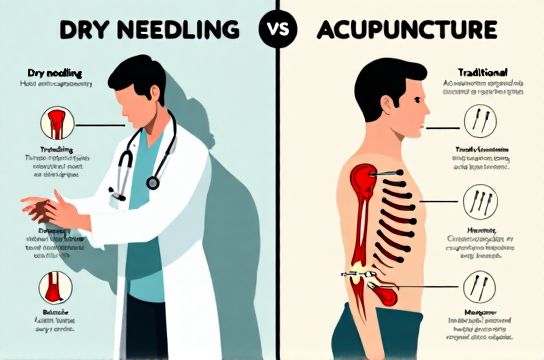
Let’s break it down in plain English, no jargon overload.
**Dry Needling**: A modern, science-based technique mostly used by physical therapists. It targets tight muscle bands called "trigger points" to relieve pain and improve movement.
**Acupuncture**: An ancient Chinese medicine practice that’s been around for over 2,500 years. It works on the concept of energy flow (called "qi") through meridians in the body. Inserting needles at specific points aims to balance this energy and treat a wide range of conditions—from stress to digestive issues.
Still confused? You’re not alone. Here's a quick comparison:
| Feature | Dry Needling | Acupuncture |
|---|---|---|
| Origin | Western medicine (1940s–1980s) | Traditional Chinese Medicine (~2,500 years old) |
| Main Purpose | Relieve muscle pain and trigger points | Balancing energy (qi), treating holistic health issues |
| Training Required | Licensed physical therapists with certification | State-licensed acupuncturists (L.Ac.) |
| Needle Placement | Directly into tight muscles | Along energy meridians (may not be near pain site) |
| Treatment Conditions | Muscle strains, sports injuries, joint dysfunction | Chronic pain, anxiety, insomnia, fertility support |
Now, here’s what most people miss: while both use thin filament needles, their philosophy is totally different. Dry needling is like targeted physical therapy—it’s focused, mechanical, and symptom-driven. Acupuncture takes a broader view, often treating the root cause of an issue, not just the symptom.
For example, if you have shoulder pain from sitting at a desk all day, a dry needling specialist will go straight for the knotted muscles in your upper back. But an acupuncturist might also work on your liver or gallbladder meridian, believing emotional stress or poor digestion could be contributing.
Which one works better? Research says both are effective—but for different things. A 2020 meta-analysis published in the *Journal of Orthopaedic & Sports Physical Therapy* found dry needling significantly reduced musculoskeletal pain in the short term. Meanwhile, the *National Institutes of Health* recognizes acupuncture as effective for conditions like migraines, osteoarthritis, and chemotherapy-induced nausea.
Safety-wise, both are low-risk when done by trained pros. Minor bruising or soreness is common. Just make sure your provider uses sterile, single-use needles.
So, which should you try? If you’re an athlete or dealing with a recent injury, start with dry needling. If your pain is long-term or tied to stress, sleep, or hormonal issues, acupuncture might offer deeper relief.
Bottom line: they’re not interchangeable. Know your goal, check credentials, and choose wisely.