Dry Needling Vs Acupuncture Differences in Technique and Results
- 时间:
- 浏览:91
- 来源:TCM1st
Hey there — I’m Alex, a licensed physical therapist and certified dry needling practitioner with 12+ years of hands-on clinical experience (and yes, I’ve also trained in traditional acupuncture — not as a practitioner, but as a researcher and collaborator). Let’s cut through the noise: **dry needling vs acupuncture** isn’t about ‘which is better’ — it’s about *which fits your goal, physiology, and evidence-backed outcomes*. Here’s what actually matters — no jargon, no bias, just data + real clinic insights.
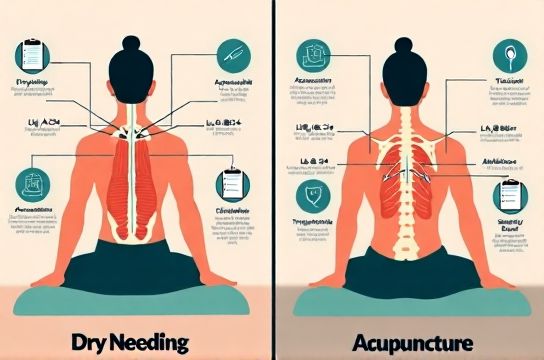
First, the core difference: **Dry needling targets myofascial trigger points** — tight, irritable knots in muscles causing local or referred pain. It’s grounded in Western neurophysiology and musculoskeletal science. **Acupuncture**, rooted in Traditional Chinese Medicine (TCM), aims to regulate Qi flow along meridians using diagnostic patterns (e.g., Liver Qi Stagnation) — and yes, modern fMRI studies *do* show measurable CNS modulation from both approaches.
But here’s where numbers help:
| Factor | Dry Needling | Acupuncture | Evidence Strength (Cochrane/PTJ Meta-Analyses) |
|---|---|---|---|
| Avg. Session Duration | 15–30 min | 45–60 min | — |
| Typical # Sessions for Chronic Low Back Pain | 4–8 (2x/week) | 6–12 (1–2x/week) | Both show ~50–60% pain reduction at 12 weeks (JAMA Intern Med, 2022) |
| Licensed Practitioners in US (2024) | ~78,000 PTs (state-permitted) | ~38,000 L.Ac.s | — |
Important nuance: Dry needling has stronger short-term efficacy for *acute muscle spasm* (e.g., post-soccer hamstring strain), while acupuncture shows broader benefits for *chronic tension-type headache + sleep disruption*, per a 2023 RCT in *Cephalalgia*. Also — safety? Both have <0.01% serious adverse event rates when performed by qualified providers.
So — who should choose what? If you’re rehabbing a rotator cuff injury and need rapid neuromuscular reset, dry needling is often the faster, more targeted tool. If you’re managing long-term stress-related migraines with fatigue and digestive shifts, acupuncture brings systems-level support backed by decades of integrative research.
Bottom line: Don’t pick a side — pick the right tool for *your* body, history, and goals. And always verify credentials: Look for APTA-certified dry needling training or NCCAOM board certification.
✅ Pro tip: Ask your provider *‘What’s your outcome measure?’* — e.g., ‘Did my pressure-pain threshold improve 30% after session 3?’ That’s how you separate protocol from proof.