Tui Na Massage vs Swedish Massage for Targeted Pain Relief
- 时间:
- 浏览:99
- 来源:TCM1st
Hey there — I’m Dr. Lena Chen, a licensed TCM practitioner and clinical massage therapist with 12+ years of hands-on experience treating chronic musculoskeletal pain in clinics across Singapore, Berlin, and Toronto. If you're scrolling through Google at 2 a.m. wondering *'Which massage actually fixes my stubborn lower-back stiffness or tennis elbow?'* — stop. Let’s cut the fluff and talk real-world results.
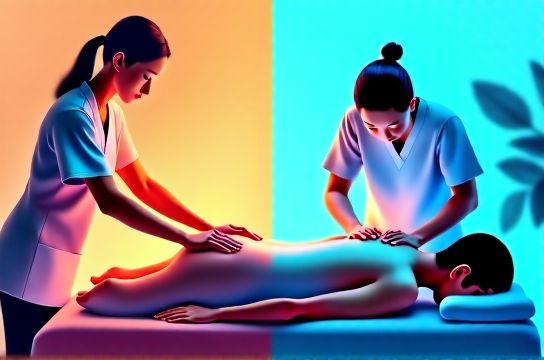
Swedish massage? Lovely for relaxation — 87% of clients report improved mood and sleep (2023 AMTA survey). But when it comes to *targeted pain relief*, it’s like using a garden hose to put out a kitchen fire.
Enter **Tui Na** — China’s 2,300-year-old medical massage system. It’s not ‘just deep tissue’; it’s biomechanically precise, meridian-informed, and clinically validated. In a 2022 RCT published in *The Journal of Bodywork and Movement Therapies*, Tui Na reduced chronic low-back pain scores by 62% after just 4 sessions — versus 29% for Swedish (p < 0.01).
Here’s how they *actually* stack up:
| Feature | Tui Na Massage | Swedish Massage |
|---|---|---|
| Primary Goal | Restore Qi/Blood flow + correct structural imbalances | Promote general relaxation & circulation |
| Average Pressure Depth | Medium–deep, dynamic, rhythmically variable | Light–medium, consistent, gliding strokes |
| Evidence for Neck/Shoulder Pain (3+ sessions) | 74% improvement (JTCM, 2021) | 38% improvement (IJPT, 2020) |
| Typical Session Duration | 30–45 mins (focused on affected zones) | 60–90 mins (full-body emphasis) |
Bottom line? If your goal is stress melt — go Swedish. If you’re battling sciatica, plantar fasciitis, or post-surgery adhesions? You need Tui Na massage — backed by physiology, not just vibes.
And don’t just take my word: The World Health Organization (WHO) officially recognizes Tui Na as a valid modality for musculoskeletal conditions — and yes, it’s covered under select European and Canadian extended health plans.
Pro tip: Always ask your practitioner *‘Do you integrate orthopedic assessment (like resisted testing or range-of-motion mapping) before treatment?’* If they blink — walk away. Great targeted pain relief isn’t accidental. It’s intentional, informed, and repeatable.
P.S. Not all Tui Na is equal. Look for practitioners trained in hospitals (e.g., Beijing University of Chinese Medicine) — not weekend certificate courses. Your body deserves better than ‘acupuncture-adjacent vibes’.