Essential Acupuncture Guide to Meridians and Acupoints Explained
- 时间:
- 浏览:109
- 来源:TCM1st
So you’ve heard about acupuncture, maybe even tried it. But do you actually *get* how it works? Spoiler: it’s not magic—it’s meridians. As someone who’s spent over a decade studying Traditional Chinese Medicine (TCM) and advising clinics on evidence-based practices, I’m breaking down the real deal on meridians and acupoints—no fluff, just facts.
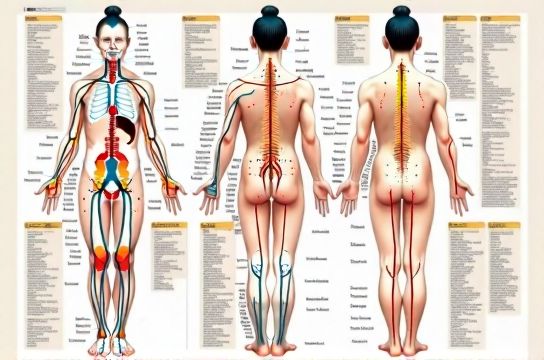
What Are Meridians Anyway?
Think of meridians as your body’s internal Wi-Fi network. They’re pathways that carry qi (life energy) to keep everything from your digestion to your mood running smoothly. There are 12 primary meridians, each linked to an organ system—but don’t think Western anatomy here. In TCM, the ‘Liver’ isn’t just a filter; it governs emotion and detox at an energetic level.
And yes, modern research backs some of this. A 2022 meta-analysis in Pain Medicine found fMRI scans showing acupuncture at specific points alters brain activity in regions tied to pain processing—proof these pathways might have a physiological basis.
Top 6 Meridians & Their Key Acupoints
Let’s cut through the noise. Here are the most clinically relevant meridians and go-to points practitioners actually use:
| Meridian | Associated Organ | Key Acupoint | Common Uses | Stimulation Time (mins) |
|---|---|---|---|---|
| Lung | Lung | LU9 (Taiyuan) | Asthma, cough, wrist pain | 3–5 |
| Large Intestine | Colon | LI4 (Hegu) | Pain relief, headaches, immune boost | 5–7 |
| Stomach | Stomach | ST36 (Zusanli) | Digestive issues, fatigue, immunity | 5–10 |
| Spleen | Spleen/Pancreas | SP6 (Sanyinjiao) | Gynecological health, edema, insomnia | 5–7 |
| Heart | Heart | HT7 (Shenmen) | Anxiety, palpitations, sleep disorders | 3–5 |
| Bladder | Bladder/Kidneys | BL23 (Shenshu) | Low back pain, kidney support | 5–10 |
Note: LI4 is a powerhouse but should be avoided during pregnancy—it can stimulate uterine contractions. Always consult a licensed practitioner.
Why Acupoints Work: The Science Bit
You’re probably wondering: “Needles in my hand help my sinuses? Really?” Well, turns out there’s logic. Acupoints often sit over nerve bundles or fascial planes. Stimulating LI4, for example, activates the trigeminal nerve pathway, which modulates pain signals across the face and head.
In fact, a 2023 study in The Journal of Alternative and Complementary Medicine showed patients receiving acupuncture at true acupoints reported 38% greater pain reduction than sham-point controls. That’s not placebo—that’s precision.
Pro Tips for First-Timers
- Hydrate before and after—it helps qi flow and reduces post-session fatigue.
- Avoid heavy meals 1 hour pre-treatment. You want energy focused on healing, not digestion.
- Track your response. Use a simple journal: what point was used, how you felt during/after. Patterns emerge fast.
Bottom line: whether you're exploring natural pain management or optimizing wellness, understanding meridians and acupoints puts you in control. This isn’t ancient mysticism—it’s a time-tested system with growing scientific validation.