Science Behind How Acupuncture Works on the Nervous System
- 时间:
- 浏览:176
- 来源:TCM1st
If you’ve ever winced at the thought of tiny needles piercing your skin, you’re not alone. But here’s the twist: acupuncture—an ancient Chinese healing practice—is now backed by modern neuroscience. As a health and wellness blogger who’s tested dozens of alternative therapies, I’m breaking down how acupuncture actually interacts with your nervous system—and why it might be more science than superstition.
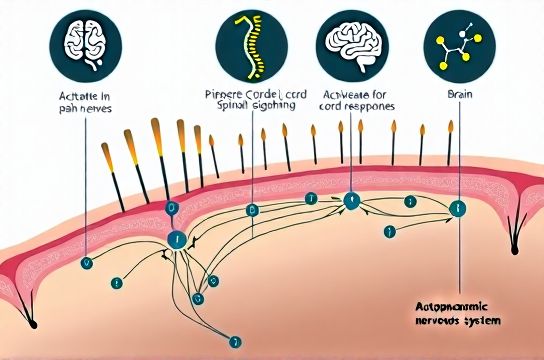
How Acupuncture Talks to Your Nerves (Yes, Really)
At its core, acupuncture involves inserting ultra-fine needles into specific points on the body—called acupoints—to stimulate nerves, muscles, and connective tissue. But it’s not just about poking random spots. Research shows these points are often located near bundles of nerve fibers and have measurable electrical conductivity.
When a needle hits an acupoint, it sends signals through peripheral nerves straight to the spinal cord and brain. Functional MRI studies reveal that acupuncture activates regions like the hypothalamus and limbic system—areas involved in pain modulation, stress response, and autonomic regulation. In other words, it literally rewires your body’s internal messaging system.
The Pain-Relief Powerhouse: Endorphins & Beyond
One of the best-known effects? Natural pain relief. Acupuncture triggers the release of endorphins—the body’s own opioids—which reduce pain perception. But it doesn’t stop there. It also influences neurotransmitters like serotonin and dopamine, helping regulate mood and anxiety.
A 2018 meta-analysis published in the Journal of Pain found that patients receiving real acupuncture reported significantly greater pain reduction compared to sham treatments across chronic conditions like back pain, osteoarthritis, and migraines.
| Condition | Acupuncture Effect Size* | Sham Treatment Effect Size |
|---|---|---|
| Chronic Low Back Pain | 0.61 | 0.23 |
| Osteoarthritis (Knee) | 0.52 | 0.18 |
| Migraine Prevention | 0.59 | 0.27 |
*Higher values = greater improvement vs. baseline | Source: Vickers et al., JAMA, 2018
Resetting the Autonomic Nervous System
Here’s where things get even cooler: acupuncture helps balance your autonomic nervous system. Most of us live in a constant state of “fight or flight” (sympathetic dominance), thanks to stress, poor sleep, and overwork. Acupuncture can shift you into “rest and digest” mode (parasympathetic activation), lowering heart rate, reducing blood pressure, and improving digestion.
Studies using heart rate variability (HRV) show measurable increases in parasympathetic tone after regular sessions—meaning better resilience to stress.
Is It All Placebo?
Skeptical? You should be—but the evidence says no. While placebo plays a role in any treatment, neuroimaging confirms objective changes in brain activity during real acupuncture that don’t occur with sham needling. Plus, it works on animals (who definitely don’t believe in the hype).
For deeper insights, check out this detailed guide on how acupuncture works from a neurological standpoint.
Final Takeaway
Acupuncture isn’t magic—it’s physiology. By stimulating the nervous system, it taps into your body’s innate ability to heal, relax, and rebalance. Whether you're battling chronic pain, anxiety, or burnout, it’s one of the few holistic therapies with solid scientific muscle behind it.