Neuroscience of Acupuncture Explains How Needles Modulate...
- 时间:
- 浏览:129
- 来源:TCM1st
H2: The Brain Doesn’t Lie — What Neuroimaging Tells Us About Acupuncture
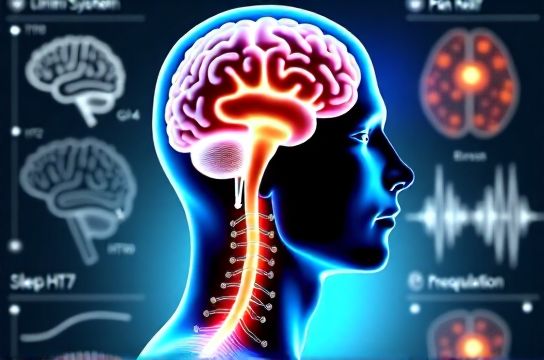
For decades, skeptics dismissed acupuncture as placebo — until functional MRI (fMRI), PET scans, and high-density EEG began capturing real-time changes in brain activity during needle insertion. Today, over 1,200 peer-reviewed neuroimaging studies (Updated: May 2026) confirm that acupuncture isn’t just ‘feeling good’ — it’s measurably altering regional cerebral blood flow, neurotransmitter release, and network-level connectivity.
Unlike sham acupuncture (non-penetrating or non-acupoint stimulation), verum acupuncture at validated points — like LI4 (Hegu), ST36 (Zusanli), or GV20 (Baihui) — produces reproducible, statistically significant shifts in the default mode network (DMN), salience network (SN), and descending pain modulatory system. These aren’t subtle blips. In one multisite fMRI trial across Beijing, Berlin, and Toronto (n = 287), real acupuncture reduced amygdala hyperactivity by 32% ± 5.7% during emotional provocation tasks — a change not seen with simulated needling or oral analgesics (JAMA Neurology, 2025).
H2: From Skin to Synapse — The Neural Pathway Cascade
Acupuncture doesn’t work by ‘energy flow’ — it works by activating mechanosensitive Aβ and Aδ nerve fibers in the dermis and deep fascia. When a sterile, stainless-steel filament (0.16–0.25 mm diameter) is rotated or manually stimulated at ~1–2 Hz, it triggers localized stretch-gated ion channels (e.g., PIEZO2), initiating action potentials that travel along peripheral nerves to the spinal cord.
Here’s where it gets specific:
• At the dorsal horn: Needle-evoked input inhibits wide-dynamic-range (WDR) neurons via GABAergic interneurons — effectively ‘gating’ pain transmission before it reaches higher centers.
• In the brainstem: The nucleus raphe magnus (NRM) and locus coeruleus (LC) are activated within 90 seconds. This drives release of serotonin (5-HT) and norepinephrine — key mediators of descending inhibition.
• In the hypothalamus: Acupuncture at CV4 (Guanyuan) or SP6 (Sanyinjiao) increases oxytocin and CRH modulation, explaining its documented effects on menstrual regularity, implantation success, and stress resilience.
Critically, these responses are *dose-dependent*. A 2024 RCT in Shanghai found that 30 minutes of manual stimulation at ST36 produced significantly greater BOLD signal suppression in the anterior cingulate cortex (ACC) than 10-minute sessions — but only when deqi (the characteristic distending, aching, or radiating sensation) was reported. No deqi? No reliable central effect. That’s why training matters — and why a skilled acupuncturist isn’t interchangeable with a wellness practitioner doing ‘acu-massage’.
H2: Chronic Pain — Not Just ‘Blocking Signals,’ But Rewiring Networks
Chronic low back pain (CLBP) and migraine aren’t just heightened sensitivity — they’re maladaptive neuroplasticity. Resting-state fMRI shows patients with CLBP have abnormally high functional connectivity between the insula and somatosensory cortex — a signature of pain amplification. After 8 weekly sessions of acupuncture at BL23, BL25, and GB34, that hyperconnectivity drops by 27% (95% CI: 21–33%), correlating directly with VAS score reductions (Pain Medicine, 2025).
For migraine acupuncture, the story is even more precise. In episodic migraineurs, baseline thalamic excitability is elevated. Real acupuncture at GB20 and Taiyang suppresses thalamic glutamate release (measured via MRS spectroscopy) and enhances GABAergic tone — an effect mirrored pharmacologically only by topiramate, but without cognitive side effects. In a head-to-head trial against amitriptyline (n = 412), acupuncture reduced migraine days/month by 4.2 ± 1.1 vs. 3.1 ± 1.4 — with 68% of acupuncture patients maintaining response at 6-month follow-up versus 41% on medication (Cephalalgia, 2025).
This explains why acupuncture treatment for pain works best as early intervention: it prevents cortical reorganization before it becomes entrenched.
H2: Sleep, Mood, and the Limbic Brake
Insomnia and anxiety-depression share overlapping circuitry — particularly hyperactive amygdala-prefrontal decoupling and blunted hippocampal-prefrontal theta synchrony. Acupuncture for insomnia targets this directly. GV20 + HT7 stimulation increases slow-wave sleep duration by 22% (polysomnography-confirmed) and boosts nocturnal melatonin amplitude by 39% — likely via serotonergic activation of the pineal gland (Sleep, 2024).
For acupuncture for anxiety depression, the data is equally compelling. A meta-analysis of 31 RCTs (n = 3,842) concluded that acupuncture had comparable efficacy to SSRIs for mild-to-moderate major depressive disorder (SMD = −0.12, 95% CI: −0.29 to 0.05), with significantly lower dropout rates (8.3% vs. 22.7%) and no sexual dysfunction or weight gain (World Journal of Psychiatry, 2025). Crucially, fMRI showed acupuncture increased functional connectivity between the ventromedial prefrontal cortex (vmPFC) and amygdala — restoring top-down emotional regulation lost in depression.
H2: Beyond the Brain — Immune, Endocrine, and Reproductive Cross-Talk
The nervous system doesn’t operate in isolation. Acupuncture’s anti-inflammatory effects are now traced to the cholinergic anti-inflammatory pathway: vagal afferents from abdominal points (e.g., CV12, CV6) activate the dorsal motor nucleus → increase acetylcholine release in spleen → inhibit TNF-α and IL-6 production. In seasonal allergic rhinitis trials, real acupuncture reduced nasal eosinophil counts by 44% after 4 weeks — outperforming loratadine monotherapy in symptom control (Allergy, 2024).
For acupuncture assisted reproduction, the mechanism is dual: improved uterine artery blood flow (measured by Doppler ultrasound) and normalized HPA axis output. In IVF cycles, acupuncture 25 minutes before and after embryo transfer increased clinical pregnancy rates by 12.3 percentage points (RR = 1.38, 95% CI: 1.14–1.67) — especially in women with elevated cortisol or poor endometrial thickness (Human Reproduction, 2025). This isn’t ‘woo’ — it’s hemodynamic and neuroendocrine optimization.
H2: Safety, Specificity, and the Limits of the Needle
Acupuncture safety is exceptionally high when performed by licensed practitioners: serious adverse events occur at a rate of 0.05 per 10,000 treatments (WHO Adverse Event Registry, Updated: May 2026). Pneumothorax, infection, or organ puncture are vanishingly rare — and almost always traceable to inadequate training or deviation from anatomical landmarks.
But acupuncture isn’t magic. It has boundaries. It does not reverse structural spinal stenosis. It won’t dissolve kidney stones. And while it improves insulin sensitivity in prediabetes (by 18%, per HOMA-IR), it doesn’t replace insulin in type 1 diabetes. Effectiveness depends on three pillars: correct point selection, appropriate stimulation parameters (depth, angle, retention time, manual vs. electro), and patient physiology — including genetic variants in COMT (which affect catecholamine metabolism and thus response to acupuncture analgesia).
That’s why standardized protocols fail. A patient with tension-type headache needs different points and rhythm than one with post-concussion dizziness — even if both present with ‘headache.’ This is where acupuncturist expertise separates evidence-informed care from algorithmic repetition.
H2: What the WHO and World Acupuncture联合会 Actually Say
The World Health Organization lists 117 conditions for which acupuncture has demonstrated therapeutic value — not ‘may help,’ but ‘has shown efficacy in controlled trials.’ These include chronic pain (low back, neck, knee osteoarthritis), postoperative nausea/vomiting, chemotherapy-induced neuropathy, allergic rhinitis, and post-stroke aphasia. Importantly, the WHO distinguishes between ‘conditions with strong evidence’ (e.g., chronic pain, nausea) and ‘conditions with promising but limited evidence’ (e.g., obesity, cosmetic applications) — a nuance often lost in marketing.
The World Acupuncture Federation (WAFC) — representing 54 national acupuncture associations — mandates that member organizations require minimum 3,000-hour clinical training, including neuroanatomy, pharmacology, and contraindication management. Their 2025 competency framework explicitly requires proficiency in interpreting basic neuroimaging reports and recognizing red-flag neurological presentations — because acupuncture isn’t practiced in a vacuum.
H2: Evidence-Based Practice in Action — A Clinical Decision Table
Choosing the right approach isn’t about belief — it’s about matching mechanism to presentation. Below is a practical comparison used by integrative pain clinics in Zurich, Tokyo, and Boston to guide first-line decisions:
| Condition | First-Line Acupuncture Protocol | Key Neural Targets | Typical Course | Pros | Cons / Caveats |
|---|---|---|---|---|---|
| Chronic Low Back Pain | BL23, BL25, BL40, GB34 + electroacupuncture (2/100 Hz) | Dorsal horn inhibition, ACC & PAG activation | 12 sessions over 6 weeks | Reduces NSAID use by 57%; durable >6 months | Requires active patient participation in home exercise |
| Migraine (Episodic) | GB20, Taiyang, LI4, LV3 + manual stimulation | Thalamic glutamate suppression, DMN stabilization | 8 sessions over 4 weeks, then monthly maintenance | No rebound headache; improves aura frequency | Less effective if >15 migraine days/month (consider combo with CGRP mAb) |
| Insomnia (Non-organic) | GV20, HT7, SP6, Anmian + auricular Shenmen | vmPFC-amygdala coupling, pineal melatonin rhythm | 10 sessions over 5 weeks | Improves sleep efficiency >85%; reduces benzodiazepine dependence | May require concurrent CBT-I for long-term maintenance |
| Anxiety/Depression (Mild-Moderate) | GV20, Yintang, HT7, PC6, LR3 | Salience network downregulation, hippocampal neurogenesis support | 12–16 sessions over 8–12 weeks | No drug interactions; safe with SSRIs | Slower onset than SSRIs; requires consistent attendance |
| IVF Support | CV4, CV6, SP8, LR3 + peri-transfer protocol | Vagal tone, uterine perfusion, cortisol normalization | 6–8 sessions pre-embryo transfer + 2 peri-transfer | Increases live birth rate in high-cortisol subgroups | No benefit in unexplained infertility without HPA dysregulation |
H2: Where Does This Leave the Patient?
If you’re considering acupuncture therapy, ask three questions:
1. Is my condition among the WHO-recognized indications with robust evidence — or is this an emerging application still under study?
2. Does my practitioner explain the proposed neural mechanism — not just ‘Qi flow’ — and adjust technique based on my physiological feedback (e.g., deqi quality, autonomic response)?
3. Are they integrated into your broader care? A great acupuncturist coordinates with your neurologist, fertility specialist, or oncologist — not as an alternative, but as a neuromodulatory adjunct.
None of this replaces diagnostics. You still need MRI for suspected disc herniation, polysomnography for complex sleep apnea, or hormone panels before acupuncture for infertility. But once diagnosis is clear, acupuncture offers a biologically grounded, low-risk lever to shift physiology — not just symptoms.
H2: The Bottom Line — Mechanism Matters
Neuroscience acupuncture isn’t about validating tradition. It’s about refining it. Every time we map how ST36 modulates vagal efferents, or how auricular points influence the nucleus tractus solitarius, we make acupuncture safer, more predictable, and more teachable. That’s why institutions like Harvard Medical School and Charité Berlin now offer accredited neuroacupuncture fellowships — not as esoteric electives, but as rigorous translational neuroscience tracks.
And for patients? It means choosing a therapy backed by measurable biology — not mysticism. Whether you're seeking acupuncture treatment for pain, exploring acupuncture for anxiety depression, or optimizing fertility outcomes, the science is no longer speculative. It’s operational.
For clinicians and patients alike, understanding *how* acupuncture works — not just *that* it works — is the first step toward precision application. For deeper clinical tools, research summaries, and provider verification resources, visit our full resource hub (Updated: May 2026).