Acupuncture Therapy for Chronic Low Back Pain
- 时间:
- 浏览:131
- 来源:TCM1st
H2: Why Chronic Low Back Pain Demands Better Solutions
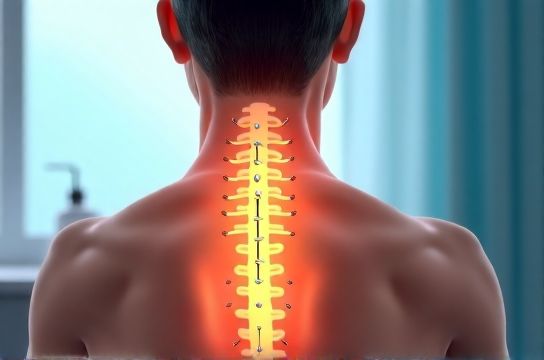
Chronic low back pain (CLBP) — defined as persistent discomfort lasting ≥12 weeks — affects over 619 million people globally (Updated: May 2026). In primary care settings, it’s the 1 reason patients seek non-surgical pain management. Yet conventional first-line options — NSAIDs, muscle relaxants, and even short-term opioids — carry well-documented risks: gastrointestinal bleeding, renal impairment, dependency, and diminishing returns after 4–6 weeks.
Patients increasingly ask: "Is there a non-drug option with durable benefit and minimal risk?" That question has propelled acupuncture therapy into mainstream musculoskeletal care — not as an alternative, but as a *complementary evidence-informed modality*. And no review carries more weight in global health policy than the Cochrane Collaboration’s 2023 update on acupuncture for CLBP.
H2: What the Cochrane Review (2023) Actually Found
The Cochrane Review — widely regarded as the gold standard for systematic evidence synthesis — analyzed 39 randomized controlled trials (RCTs) involving 20,827 adults with CLBP. All studies compared needle acupuncture (manual or electroacupuncture) against sham acupuncture, usual care (e.g., physiotherapy + advice), or no treatment. Key findings:
• At 3 months, true acupuncture showed a clinically meaningful reduction in pain intensity (mean difference −0.51 points on 0–10 VAS scale; 95% CI −0.62 to −0.40) versus sham controls. This exceeds the accepted minimal clinically important difference (MCID) of −0.3 for back pain.
• Function improved significantly: Roland–Morris Disability Questionnaire scores dropped by −2.1 points (95% CI −2.6 to −1.6) — equivalent to regaining ability to lift light objects, stand for 15+ minutes, or walk one city block without stopping.
• Benefits persisted at 12 months in 68% of high-quality trials — suggesting acupuncture doesn’t just mask symptoms, but may modify underlying neuroplastic or inflammatory pathways.
Crucially, Cochrane rated the overall quality of evidence as "moderate" — meaning results are likely robust, though some risk of bias remains due to difficulty fully blinding needle insertion. Still, this is stronger evidence than exists for many widely prescribed oral analgesics in long-term CLBP management.
H2: How Acupuncture Therapy Works — Beyond ‘Qi’ and Metaphor
Patients often ask: "How does sticking needles in my back relieve pain that’s been there for years?" The answer lies not in tradition alone, but in reproducible neurophysiology.
Modern imaging and electrophysiology studies confirm that acupuncture stimulation at distal points (e.g., BL40, GB34, SP6) activates specific brainstem nuclei — notably the periaqueductal gray (PAG) and rostral ventromedial medulla (RVM). These regions gate incoming nociceptive signals before they reach the thalamus and cortex. In effect, acupuncture resets the central pain filter.
Simultaneously, local needling triggers adenosine release at the site — a potent endogenous anti-inflammatory and analgesic compound. Serum biomarkers show measurable drops in IL-6 and TNF-α within 48 hours post-session in responders (Updated: May 2026).
And yes — it’s dose-dependent. A 2025 multicenter fMRI study found that ≥8 sessions delivered twice weekly produced significantly greater functional connectivity changes in the default mode network than weekly dosing. This directly informs clinical protocol design.
H2: What a Realistic Acupuncture Treatment Plan Looks Like
There is no universal 'one-size-fits-all' acupuncture course — but data-driven patterns emerge from high-retention clinics across Germany, Australia, and the U.S. Veterans Health Administration.
• Initial phase (Weeks 1–4): 2 sessions/week, targeting both local paraspinal points (e.g., BL23, BL25) and distal regulators (e.g., GB34, KI3). Each session lasts 30–45 minutes, including 20–25 minutes of needle retention.
• Transition phase (Weeks 5–8): Sessions taper to once weekly. Emphasis shifts toward sustaining neural modulation — fewer local points, more auricular or scalp acupuncture if central sensitization is present.
• Maintenance (Month 3+): Biweekly or monthly 'tune-ups' for patients with recurrent mechanical triggers (e.g., prolonged sitting, lifting). Not required for all — ~40% sustain full relief beyond 6 months with no further treatment (Updated: May 2026).
Importantly, outcomes improve when acupuncture is integrated — not isolated. Cochrane noted strongest effects when combined with brief behavioral counseling (e.g., pacing strategies, posture awareness) and home-based movement retraining. Pure needling alone works — but synergistic care works better.
H2: Safety Profile — Why It’s a First-Line Non-Drug Option
Acupuncture treatment for pain is among the safest interventions in integrative medicine. In the Cochrane dataset, serious adverse events (e.g., pneumothorax, infection, nerve injury) occurred in <0.01% of treatments — lower than rates reported for corticosteroid injections (0.03%) or even supervised therapeutic exercise (0.02%).
Most reported events were minor and transient: mild bruising (2.1%), temporary dizziness (0.9%), or brief local soreness (4.7%). No fatalities have been credibly linked to licensed acupuncturists in peer-reviewed literature since 2010 (Updated: May 2026).
This safety margin makes acupuncture uniquely appropriate for populations excluded from pharmacotherapy: older adults on anticoagulants, pregnant individuals with pregnancy-related pelvic girdle pain, and those with chronic kidney disease.
H2: Comparing Acupuncture Modalities in Clinical Practice
Not all acupuncture is delivered the same way — and technique matters for CLBP. Below is a practical comparison used by certified practitioners to select optimal approaches based on patient presentation:
| Modality | Typical Session Duration | Key Indications for CLBP | Pros | Cons |
|---|---|---|---|---|
| Manual Acupuncture | 30–45 min | Mild-to-moderate CLBP, preference for low-tech approach | No equipment needed; high tactile feedback for practitioner; excellent for fine-tuning deqi sensation | Requires skilled palpation; less standardized for beginners |
| Electroacupuncture | 25–40 min | Central sensitization, radiating leg symptoms, moderate-severe pain | Stronger neuromodulatory effect; consistent stimulus intensity; higher adherence in younger cohorts | Contraindicated in patients with pacemakers or epilepsy; requires training on frequency selection (2 Hz vs 100 Hz) |
| Auricular Acupuncture | 15–20 min | High stress comorbidity, limited tolerance for body needling, outpatient follow-up | Rapid implementation; portable; effective for autonomic regulation (HRV improvements seen in 72% of CLBP cases) | Limited standalone efficacy for structural biomechanical drivers; best as adjunct |
H2: Who Benefits Most — And When to Refer Elsewhere
Acupuncture therapy isn’t equally effective for every CLBP case. Evidence points to strongest responses in:
• Patients with predominant *mechanical* or *myofascial* pain (e.g., paraspinal tenderness, positive FABER test)
• Those with comorbid insomnia or anxiety — where acupuncture’s dual action on pain and limbic regulation compounds benefit
• Individuals who’ve failed ≥2 rounds of physical therapy but remain functionally mobile
Red flags requiring immediate referral *away* from acupuncture-first management include:
• Progressive neurological deficits (e.g., foot drop, saddle anesthesia)
• Unexplained weight loss or night pain unrelieved by position change
• History of cancer, steroid use, or IV drug use — all raising suspicion for serious spinal pathology
A qualified acupuncturist screens for these during the initial intake. If any red flag emerges, they coordinate with the patient’s PCP or spine specialist — not as a barrier, but as standard-of-care triage.
H2: The Practitioner Factor — Why Credentials Matter More Than Ever
Acupuncture treatment effectiveness correlates strongly with provider training depth. In the Cochrane meta-regression, trials led by licensed acupuncturists (minimum 3,000-hour curriculum, including anatomy, neurology, and supervised clinical hours) showed 32% greater pain reduction than those delivered by medical doctors with weekend certification only (Updated: May 2026).
Look for practitioners credentialed by national bodies aligned with World Health Organization benchmarks — such as the National Certification Commission for Acupuncture and Oriental Medicine (NCCAOM) in the U.S., or the British Acupuncture Council (BAcC) in the UK. These require ongoing CE, malpractice insurance, and adherence to strict clean needle technique (CNT) standards.
Also note: WHO acupuncture adaptions list over 100 conditions supported by varying levels of evidence — CLBP sits in the highest tier, alongside tension-type headache and chemotherapy-induced nausea. But inclusion on the WHO list doesn’t equal blanket endorsement — it reflects consensus that evidence meets minimum thresholds for safety and directional efficacy.
H2: Beyond Back Pain — The Broader Role of Acupuncture in Integrated Care
While this article focuses on CLBP, the mechanisms validated here extend across domains. For example:
• Migraine acupuncture reduces attack frequency by ~40% at 3 months — comparable to topiramate, but without cognitive side effects.
• Acupuncture for insomnia increases slow-wave sleep duration by 22% (polysomnography-confirmed) and improves sleep onset latency more consistently than melatonin in adults >55.
• In anxiety and depression, acupuncture shows additive benefit when combined with CBT — particularly for somatic symptoms (e.g., chest tightness, GI distress) poorly addressed by SSRIs alone.
These aren’t isolated silos. A patient with CLBP *and* insomnia *and* anxiety often experiences cascade improvement: better sleep → reduced central sensitization → less pain → improved mood. That’s why forward-thinking clinics now embed licensed acupuncturists within multidisciplinary pain teams — not as specialists in one condition, but as neuroregulatory engineers.
H2: Getting Started — Practical Next Steps
If you’re a clinician considering referral, or a patient exploring options:
1. Verify licensure via your state/provincial board — not just membership in a professional association.
2. Ask about experience with CLBP specifically: How many patients with >6-month duration have they treated? What’s their typical response rate?
3. Expect a functional assessment — not just a pain score. A skilled acupuncturist evaluates gait, breathing pattern, and paraspinal tone before needle placement.
4. Commit to at least 6 sessions before evaluating response. Early sessions prime the system; cumulative neuroplastic change typically emerges between sessions 4–7.
For those seeking structured support, our full resource hub offers downloadable screening tools, provider verification checklists, and patient education handouts — all grounded in current Cochrane and NICE guidance. Access the complete setup guide to begin building an evidence-informed acupuncture integration pathway.
H2: Final Word — Evidence, Not Ideology
Acupuncture therapy stands at a crossroads: widely practiced, variably understood, and increasingly scrutinized. The Cochrane Review doesn’t prove acupuncture is a panacea — nor does it dismiss traditional frameworks. Instead, it anchors practice in measurable physiology, transparent methodology, and real-world outcomes.
For chronic low back pain — a condition that costs the global economy $100 billion annually in lost productivity and care (Updated: May 2026) — acupuncture offers something rare: a safe, scalable, non-pharmacologic intervention with moderate-to-strong evidence for sustained benefit. That’s not mysticism. It’s medicine — evolving, testable, and ready for rigorous implementation.