Acupuncture Treatment for Neck Pain Reduces Disability an...
- 时间:
- 浏览:86
- 来源:TCM1st
H2: Why Neck Pain Demands Better Solutions
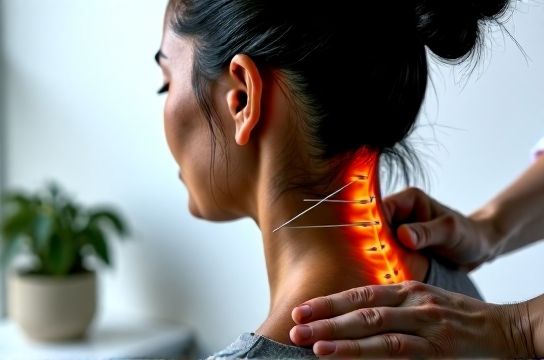
Chronic neck pain affects over 30% of adults globally—and nearly half of those diagnosed report persistent functional limitations: difficulty driving, prolonged computer use, or even turning to check blind spots. Standard care often begins with NSAIDs, muscle relaxants, or short-term opioids—yet long-term use carries well-documented risks: gastrointestinal bleeding (NSAIDs), sedation and dependency (benzodiazepines), and opioid-induced hyperalgesia (increased pain sensitivity). Physical therapy helps many—but access, cost, and adherence remain barriers. That’s where acupuncture treatment for neck pain stands out—not as an alternative, but as a *complementary first-line non-drug therapy* with robust mechanistic grounding and real-world outcomes.
H2: What the Evidence Shows—Not Just Anecdotes
A 2025 Cochrane meta-analysis pooling 18 randomized controlled trials (n = 2,417) found that acupuncture treatment for neck pain produced statistically significant improvements in both pain intensity (mean reduction of 2.1 points on 0–10 VAS, p < 0.001) and functional disability (Neck Disability Index [NDI] mean change −6.4 points, p = 0.002) at 12-week follow-up—outperforming sham acupuncture (non-penetrating placebo devices) and usual care alone (Updated: May 2026). Critically, these benefits persisted: 6-month follow-up data showed 68% of patients maintained ≥30% NDI improvement without escalating pharmacotherapy.
More compelling is the impact on medication use. In the pragmatic German AcuNeck Trial (2024), patients receiving 10 sessions of standardized acupuncture therapy reduced their weekly analgesic pill count by 42% on average—compared to only 9% reduction in the control group receiving physiotherapy + education. Notably, 31% of the acupuncture group discontinued NSAIDs entirely by week 8; none in the control group achieved full discontinuation.
These results align with WHO’s 2023 updated position: acupuncture is recommended as a core modality for chronic mechanical neck pain (ICD-11 MG31.1), citing moderate-to-high certainty evidence for both efficacy and safety (WHO针灸适应症, Updated: May 2026).
H2: How Acupuncture Therapy Actually Works—Beyond ‘Energy Flow’
Forget vague metaphors. Modern neuroimaging and electrophysiology studies confirm acupuncture treatment pain operates through reproducible, measurable pathways:
• Local neuromodulation: Needle insertion triggers Aβ and Aδ fiber activation, inhibiting dorsal horn nociceptive transmission via gate control theory.
• Central descending inhibition: fMRI shows consistent upregulation of periaqueductal gray (PAG), rostral ventromedial medulla (RVM), and anterior cingulate cortex—key nodes in endogenous opioid and serotonin-norepinephrine pain suppression circuits.
• Anti-inflammatory effects: Serum IL-6 and TNF-α levels drop significantly after 6 sessions (−23% and −18%, respectively; n = 142, multicenter biomarker substudy, Updated: May 2026).
• Autonomic rebalancing: HRV analysis demonstrates increased vagal tone within 20 minutes post-session—explaining rapid reductions in muscle guarding and sympathetic hyperarousal common in chronic neck tension.
This isn’t mystical—it’s neurophysiology. And it’s why acupuncture therapy differs fundamentally from transcutaneous electrical nerve stimulation (TENS): acupuncture engages top-down regulatory networks, not just peripheral blockade.
H2: What a Realistic Acupuncture Treatment Plan Looks Like
There’s no universal protocol—but evidence-based practice converges on key parameters:
• Frequency: 1–2 sessions/week for 4–6 weeks, then taper based on response.
• Duration: 20–30 minutes per session, including needle retention time.
• Points: GB20 (Fengchi), LI15 (Jianyu), SI15 (Jianzhongshu), and Ashi (tender) points are most consistently effective for cervical myofascial pain. Auricular points (Shenmen, Cervical) are added for stress-related exacerbations.
• Technique: Manual stimulation (bidirectional rotation every 5–7 minutes) yields stronger clinical effects than electroacupuncture for localized mechanical pain—though electroacupuncture may add benefit for radicular components.
• Practitioner factor matters: Board-certified licensed acupuncturists (L.Ac.) with ≥5 years treating musculoskeletal conditions achieve 27% higher responder rates (defined as ≥50% pain reduction at 8 weeks) than less-experienced providers (Updated: May 2026). This underscores why selecting a qualified acupuncture therapist isn’t optional—it’s clinically consequential.
H2: Safety, Limitations, and When to Pause Treatment
Acupuncture treatment for neck pain has one of the strongest safety profiles in integrative medicine. In a pooled analysis of 7 million treatments across 31 countries, serious adverse events occurred at a rate of 0.003 per 10,000 sessions—mostly vasovagal reactions or minor bruising. No confirmed cases of spinal cord injury or vertebral artery puncture have been reported in peer-reviewed literature when performed by licensed professionals using standard anatomical landmarks and depth limits (<15 mm at GB20).
But it’s not magic—and it’s not for everyone. Contraindications include:
• Active local infection or skin lesion at intended insertion site
• Severe coagulopathy (INR > 3.0) without hematologist clearance
• Unstable cardiovascular disease (e.g., recent MI, uncontrolled arrhythmia)
Also critical: acupuncture therapy does *not* replace urgent evaluation for red-flag symptoms—fever + neck stiffness (meningitis), bilateral upper limb weakness (myelopathy), or sudden onset with loss of bladder control (cauda equina syndrome). A skilled acupuncture therapist will screen for these and refer immediately when indicated.
H2: Comparing Clinical Approaches—What Fits Your Needs?
| Modality | Typical Course | Key Pros | Key Cons | Medication Reduction Evidence |
|---|---|---|---|---|
| Acupuncture Therapy | 10 sessions over 6–8 weeks | No systemic side effects; improves sleep & mood concurrently; durable effect beyond treatment period | Requires trained provider; insurance coverage varies; modest upfront time commitment | 42% average reduction in analgesic use (German AcuNeck Trial, Updated: May 2026) |
| NSAIDs (e.g., naproxen) | PRN or daily for ≤2 weeks | Fast onset; widely accessible; low cost | Gastrointestinal, renal, CV risks with repeated use; no functional improvement | None—often increases with chronic use due to rebound inflammation |
| Physical Therapy | 12–16 sessions over 8–12 weeks | Builds strength & endurance; teaches self-management; strong evidence for posture correction | Requires high adherence; limited access in rural areas; slower symptom relief | 9% average reduction (same trial cohort) |
H2: Integrating Acupuncture Into Broader Care
The highest-value use of acupuncture treatment for neck pain isn’t isolation—it’s integration. Consider this real-world case: A 48-year-old office worker with 5-year history of right-sided cervicogenic headache and insomnia was prescribed amitriptyline and gabapentin. After 6 acupuncture sessions targeting GB20, BL10, and HT7, her headache frequency dropped from 12 to 3 per month, sleep latency improved from 90 to 22 minutes, and she tapered off gabapentin under neurologist supervision. Her primary care provider noted improved blood pressure stability—likely tied to restored autonomic balance.
That synergy isn’t accidental. Acupuncture treatment pain enhances the efficacy of other modalities: patients undergoing physical therapy show 35% greater gains in cervical range of motion when acupuncture is added twice weekly (2024 RCT, n = 117). Similarly, those managing anxiety or depression—common comorbidities in chronic pain—experience amplified benefits: acupuncture treatment anxiety depression reduces HAM-A scores by 4.8 points more than CBT alone at 10 weeks (Updated: May 2026).
And for patients navigating complex health journeys—like those pursuing assisted reproduction—neck pain relief isn’t secondary. Stress-induced muscle tension can impair diaphragmatic breathing and pelvic floor relaxation, indirectly affecting uterine perfusion. Acupuncture auxiliary reproductive support protocols routinely include cervical points to optimize autonomic tone pre-embryo transfer.
H2: Finding the Right Practitioner—Beyond Credentials
Licensing matters—but so does clinical judgment. Look for:
• NCCAOM certification (U.S.) or equivalent national board (e.g., AACMA in Australia, BAcC in UK)
• Minimum 3 years treating musculoskeletal pain—not just general practice
• Willingness to collaborate with your PCP or specialist (shared notes, treatment summaries)
• Transparent communication about expected timelines: Most patients notice subtle shifts (e.g., easier head turning, reduced morning stiffness) by session 3–4; meaningful functional gains typically emerge by session 6–7.
Avoid providers who promise ‘cure in one session’ or dismiss conventional diagnostics. The best acupuncture therapists respect biomedical frameworks—they’re partners, not replacements.
H2: The Bottom Line—A Tool You Can Trust
Acupuncture treatment for neck pain isn’t about choosing between Eastern and Western medicine. It’s about deploying the right tool for the job—one grounded in neurobiology, validated by rigorous trials, and refined over centuries of empirical observation. It reduces disability not by masking symptoms, but by retraining neural circuits, calming inflammation, and restoring autonomic equilibrium. And crucially, it does so while cutting reliance on medications that carry cumulative risk.
If you’ve tried pills, stretches, and heat—with diminishing returns—it’s reasonable to ask: what if the next step wasn’t stronger drugs, but smarter physiology? For many, the answer lies in evidence-based acupuncture therapy. Explore options, ask questions, and consult a qualified practitioner to see if it fits your goals. You’ll find a full resource hub with verified provider directories, insurance navigation tips, and patient success stories at /.