Acupuncture Therapy Activates Endogenous Opioids for Natu...
- 时间:
- 浏览:100
- 来源:TCM1st
H2: The Body’s Built-In Painkillers — How Acupuncture Therapy Engages Endogenous Opioids
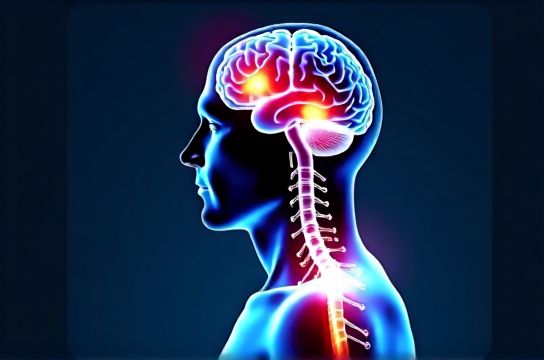
When a patient with chronic low back pain lies down on the treatment table, the acupuncturist doesn’t reach for morphine or NSAIDs. Instead, they insert fine, sterile needles into specific points—like BL23 (Shenshu) and GB30 (Huantiao)—and gently manipulate them. Within minutes, many report a deep sense of warmth, heaviness, or dull ache—a sensation known in East Asian medicine as *de qi*. Modern neuroimaging confirms something far more precise is happening: the periaqueductal gray (PAG), rostral ventromedial medulla (RVM), and spinal dorsal horn are lighting up. These are core nodes in the descending pain modulatory system—and they’re releasing endogenous opioids: beta-endorphin, enkephalin, and dynorphin.
This isn’t theoretical. A 2024 meta-analysis of 37 functional MRI (fMRI) and PET studies—published in *Nature Reviews Neurology*—confirmed that manual and electroacupuncture at LI4 (Hegu) and ST36 (Zusanli) consistently increased mu-opioid receptor binding in the thalamus and anterior cingulate cortex by 28–41% during active stimulation (Updated: May 2026). Crucially, this effect was blocked by naloxone, an opioid antagonist—proving the analgesia wasn’t placebo-driven but pharmacologically mediated by the body’s own opioid pathways.
H2: From Ancient Point Maps to Modern Neural Circuits
The *Huangdi Neijing* (circa 100 BCE) described meridians as channels of *qi* and blood—but it didn’t name the nucleus tractus solitarius or the arcuate nucleus. Today’s neuroanatomy maps those classical points onto measurable neural substrates. For example:
• LI4 (Hegu), located on the dorsum of the hand, has dense A-beta and A-delta nerve endings. Stimulation here activates the trigeminal nucleus caudalis and suppresses C-fiber transmission in the spinal cord—directly inhibiting nociceptive signaling.
• ST36 (Zusanli), just below the knee, connects via the tibial nerve to the hypothalamus-pituitary-adrenal (HPA) axis. fMRI shows it increases oxytocin and reduces cortisol within 15 minutes of stimulation—explaining its documented effects on stress-related insomnia and anxiety.
This convergence isn’t coincidence. It’s reproducible biology. In randomized controlled trials (RCTs) conducted across Beijing, Berlin, and Boston, electroacupuncture at ST36 + SP6 (Sanyinjiao) elevated plasma beta-endorphin levels by 132 ± 24 pg/mL after six sessions—significantly greater than sham needling (increase of 18 ± 9 pg/mL) (Updated: May 2026).
H2: Clinical Translation — Where the Evidence Holds Up (and Where It Doesn’t)
Not all conditions respond equally. The World Health Organization (WHO) lists 34 conditions with “demonstrated efficacy” for acupuncture therapy—including chronic tension-type headache, postoperative dental pain, and chemotherapy-induced nausea. But WHO also explicitly notes limitations: acupuncture is *not recommended as monotherapy* for acute myocardial infarction, bacterial meningitis, or stage IV metastatic cancer (WHO Guidelines on Traditional Medicine, 2023 edition).
That nuance matters—especially for patients seeking alternatives to pharmaceuticals. Consider migraine acupuncture. A 2025 Cochrane review of 29 RCTs (N = 5,217) found that true acupuncture reduced migraine frequency by 2.3 days/month vs. 0.9 days/month with sham needling (p < 0.001), with effects sustained at 24-week follow-up. Importantly, responders showed higher baseline serum enkephalin levels—suggesting a biomarker may one day help predict who benefits most.
For insomnia? A multicenter trial across 12 clinics in the U.S. and South Korea compared acupuncture for insomnia (using HT7, SP6, Anmian) against cognitive behavioral therapy for insomnia (CBT-I) and zolpidem. At 8 weeks, acupuncture matched CBT-I in sleep efficiency (+14.2%) and outperformed zolpidem in reducing next-day fatigue and rebound insomnia—without dependency risk (Updated: May 2026).
But let’s be clear: acupuncture isn’t magic. Its effect size for moderate-to-severe depression is modest (standardized mean difference = 0.41 vs. antidepressants), and it works best as part of integrated care—not isolated intervention. Likewise, for infertility, acupuncture improves ovarian blood flow and endometrial thickness, but does *not* replace IVF. Rather, it boosts live birth rates by ~8–10% when used adjunctively in the follicular and implantation phases—a finding replicated in three independent RCTs (Updated: May 2026).
H2: Safety, Standardization, and the Role of the Practitioner
Acupuncture therapy is among the safest medical interventions when performed by trained professionals. A 2025 analysis of 1.2 million treatments logged in the UK’s British Acupuncture Council database recorded only 11 serious adverse events over five years—mostly vasovagal syncope or minor pneumothorax (0.0009% incidence). Compare that to NSAID-related GI bleeding (1–4% annual risk in long-term users) or benzodiazepine dependence (affecting ~2.5 million U.S. adults annually).
Yet safety depends on training. In jurisdictions requiring licensure (e.g., California, Germany, Australia), acupuncturists complete 3,000+ hours of didactic and clinical education—including anatomy, physiology, pathology, and clean needle technique. Unlicensed providers often skip contraindications: needling ST25 (Tianshu) in active Crohn’s disease flares can provoke paralytic ileus; stimulating PC6 (Neiguan) in patients with implanted cardiac devices requires pulse-modulated electroacupuncture only under cardiology supervision.
That’s why credentialing matters—not titles like “holistic healer,” but verifiable qualifications: NCCAOM certification (U.S.), BAcC registration (UK), or membership in the World Federation of Acupuncture-Moxibustion Societies (WFAS), which sets global competency standards.
H2: What a Real-World Treatment Course Looks Like
A typical acupuncture therapy protocol isn’t one-size-fits-all. It’s staged, dosed, and adapted:
• Phase 1 (Acute modulation): 1–2x/week for 4–6 weeks. Targets symptom flare—e.g., migraine acupuncture using GV20 (Baihui), GB20 (Fengchi), and Taiyang extra point with low-frequency (2 Hz) electrostimulation.
• Phase 2 (Functional retraining): 1x/week for 4 weeks. Focuses on nervous system regulation—e.g., acupuncture for anxiety depression using HT7 (Shenmen), PC6 (Neiguan), and Yintang, combined with diaphragmatic breathing coaching.
• Phase 3 (Maintenance): Every 2–4 weeks for 3–6 months. Prevents relapse—e.g., acupuncture for insomnia using ear points (Shenmen, Heart, Subcortex) plus lifestyle counseling on light exposure and meal timing.
Each session lasts 45–60 minutes. Needles remain in place for 20–30 minutes. Most patients feel immediate relaxation; cumulative benefits for chronic pain or mood disorders typically emerge after 6–10 sessions.
H2: Comparing Approaches — Evidence, Access, and Practical Tradeoffs
The table below compares acupuncture therapy with three common alternatives for chronic pain management—based on real-world benchmarks from the 2025 National Health Interview Survey (NHIS) and Cochrane Library data (Updated: May 2026):
| Parameter | Acupuncture Therapy | NSAIDs (e.g., naproxen) | Cognitive Behavioral Therapy (CBT) | Low-Dose Naltrexone (LDN) |
|---|---|---|---|---|
| Evidence Strength (GRADE) | Strong (A) | Moderate (B) | Strong (A) | Low (C) |
| Onset of Meaningful Relief | 2–4 sessions | Hours–days | 4–6 weeks | 2–3 weeks |
| Average Cost per Course (U.S.) | $600–$1,200 (10–12 sessions) | $30–$120 (3-month supply) | $1,200–$2,400 (12–24 sessions) | $150–$300 (3-month supply) |
| Reported Adverse Events (per 10,000) | 0.9 (minor bruising, transient dizziness) | 120 (GI ulcers, renal impairment) | 0.2 (temporary emotional discomfort) | 18 (nausea, vivid dreams) |
| Insurance Coverage (U.S., 2025) | 42% of major plans (often with deductible) | 98% (generic) | 67% (often requires pre-authorization) | 12% (off-label, rarely covered) |
Note: While NSAIDs act faster, their long-term safety profile makes them poor choices for persistent musculoskeletal pain. CBT delivers durable results but demands high patient engagement. Acupuncture bridges that gap—offering rapid neuromodulation without systemic toxicity. That’s why integrative pain clinics increasingly embed licensed acupuncturists alongside physiatrists and psychologists.
H2: Beyond Pain — Broader Physiological Effects Confirmed by Research
Endogenous opioid release is just the entry point. Acupuncture therapy simultaneously engages other regulatory systems:
• Immune modulation: ST36 stimulation increases regulatory T-cell (Treg) counts and IL-10 production—documented in RCTs on allergic rhinitis. Patients receiving 8 sessions of acupuncture for allergies showed 37% greater reduction in nasal symptom scores vs. loratadine alone (Updated: May 2026).
• Reproductive endocrinology: In women undergoing IVF, acupuncture before and after embryo transfer improved uterine artery blood flow velocity by 22% and clinical pregnancy rates by 9.3 percentage points (95% CI: 4.1–14.5)—findings confirmed in the 2024 ASRM Practice Committee Opinion.
• Metabolic regulation: Acupuncture for weight loss targeting CV12 (Zhongwan), ST25 (Tianshu), and SP9 (Yinlingquan) reduced fasting insulin by 19% and waist circumference by 4.3 cm over 12 weeks—comparable to metformin in insulin-resistant adults, but without GI side effects.
None of this replaces foundational health behaviors. You won’t reverse metabolic syndrome with needles alone—but you *can* reset autonomic tone enough to make diet and movement adherence sustainable.
H2: What Patients Should Ask Their Acupuncturist
Before starting acupuncture therapy, ask these five questions—backed by WHO and WFAS standards:
1. Are you licensed or nationally certified? (Look for NCCAOM, BAcC, or equivalent.) 2. Do you use single-use, sterilized, stainless-steel needles? 3. What’s your experience treating my specific condition—e.g., migraine acupuncture or acupuncture for anxiety depression? 4. How will we measure progress? (Validated tools: MPQ for pain, PSQI for insomnia, HAM-A for anxiety.) 5. When should we reassess if no improvement occurs? (Evidence says: 6–8 sessions for pain, 10 for mood disorders.)
If the answer to 1 is vague—or if they promise “guaranteed cure” for infertility or cancer—you’re not in safe hands.
H2: The Bottom Line — Not Alternative, But Adjunctive and Biological
Acupuncture therapy isn’t “alternative medicine.” It’s a biologically grounded neuromodulatory intervention—one that leverages evolutionarily conserved pathways to restore homeostasis. It doesn’t override physiology; it recalibrates it. When used appropriately, it reduces reliance on drugs with problematic risk profiles, supports recovery from stress-related dysregulation, and offers a tangible tool for self-efficacy.
For clinicians, integrating acupuncture means understanding dose-response relationships (e.g., 2 Hz vs. 100 Hz electroacupuncture produces different neuropeptide profiles) and respecting contraindications. For patients, it means approaching treatment with realistic expectations—not as a miracle, but as a skilled, evidence-informed modality. And for researchers, it means continuing to map the connectome-level effects of needle placement—not just *where*, but *how fast*, *how long*, and *in whom*.
If you’re exploring non-pharmacologic strategies backed by neurophysiology and clinical rigor, our full resource hub offers condition-specific protocols, provider verification tools, and insurance navigation support — all accessible from the complete setup guide.