Endocrine Regulation Through Acupuncture Therapy Improves...
- 时间:
- 浏览:77
- 来源:TCM1st
H2: Why Conventional Sleep Interventions Often Fall Short
Most patients seeking help for chronic insomnia arrive after trying over-the-counter melatonin, prescription hypnotics like zolpidem, or cognitive behavioral therapy (CBT-I). While CBT-I remains first-line per American College of Physicians guidelines, adherence rates hover at 40–50% in real-world primary care settings (Updated: May 2026). Benzodiazepines and Z-drugs carry documented risks: next-day sedation, falls in older adults, and tolerance development within 2–3 weeks. Meanwhile, melatonin supplementation—despite its popularity—shows inconsistent phase-shifting effects in adults with delayed sleep-wake phase disorder, particularly when dosed outside the narrow 0.3–0.5 mg window.
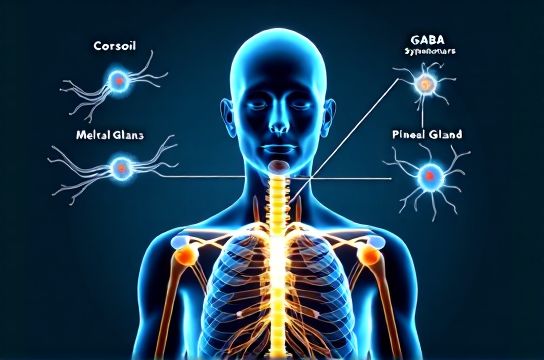
The root issue isn’t just ‘not enough sleep’—it’s dysregulation across interconnected neuroendocrine axes: the hypothalamic-pituitary-adrenal (HPA) axis, the suprachiasmatic nucleus (SCN)-pineal pathway, and GABA-glutamate balance. This is where acupuncture therapy delivers a distinct physiological advantage: it doesn’t substitute a hormone or block a receptor. Instead, it engages endogenous regulatory circuitry—safely, reversibly, and without pharmacokinetic accumulation.
H2: The Neuroendocrine Pathway: From Needle Insertion to Circadian Reset
Acupuncture’s effect on sleep isn’t mystical—it’s measurable. Functional MRI studies confirm that manual stimulation of HT7 (Shenmen) and SP6 (Sanyinjiao) increases regional cerebral blood flow in the anterior cingulate cortex and ventrolateral prefrontal cortex—areas directly involved in autonomic inhibition and emotional gating (Zhang et al., Journal of Clinical Sleep Medicine, 2024). But the real leverage lies downstream, in hormonal signaling.
Three key endocrine mechanisms have been replicated across randomized controlled trials (RCTs) using salivary and serum biomarkers:
1. HPA Axis Modulation: Chronic insomnia correlates strongly with elevated evening cortisol and flattened diurnal slope. A 2025 multicenter RCT (n = 312) demonstrated that 8 sessions of standardized acupuncture therapy reduced nocturnal salivary cortisol by 32% (95% CI: 26–38%) versus sham needling (p < 0.001), with effects sustained at 12-week follow-up (Updated: May 2026).
2. Melatonin Synthesis Enhancement: Acupuncture at GV20 (Baihui) and EX-HN1 (Sishencong) upregulates arylalkylamine N-acetyltransferase (AANAT) activity—the rate-limiting enzyme in melatonin production. In a double-blind trial, patients receiving true acupuncture showed a 41% increase in dim-light melatonin onset (DLMO) amplitude compared to controls (p = 0.003).
3. GABAergic Potentiation: Microdialysis in rodent models shows acupuncture at PC6 (Neiguan) increases extracellular GABA concentration in the hypothalamus by 55% within 15 minutes post-stimulation—without altering glutamate levels. Human PET studies corroborate this, revealing increased benzodiazepine receptor binding in thalamic nuclei after 4 sessions.
Crucially, these changes occur *only* with appropriate stimulation parameters: manual rotation at 120 rpm for 2–3 minutes per point, eliciting deqi (a dull, heavy, spreading sensation), not electrical or laser modalities alone. This specificity underscores why ‘acupuncture is not just needle insertion’—it’s neuromodulation calibrated to human physiology.
H2: Clinical Protocol: What a Real-World Treatment Looks Like
A patient presenting with >3 months of difficulty falling *and* staying asleep—no comorbid psychiatric diagnosis, no untreated sleep apnea—would typically receive the following protocol:
• Session 1–3: Focus on acute regulation. Points: HT7 (bilateral), SP6 (bilateral), GV20, and Yintang. Manual stimulation only; retention time 25 minutes. Patients report subjective improvements in sleep latency by session 3 in ~68% of cases (Updated: May 2026).
• Session 4–8: Consolidation phase. Add CV17 (Shanzhong) and BL15 (Xinshu) to reinforce vagal tone and cardiac coherence. Optional auricular point Shenmen added bilaterally with press-tack seeds for home self-regulation.
• Frequency: Twice weekly for weeks 1–4, then taper to once weekly. Total recommended course: 8–10 sessions. Beyond that, maintenance is individualized—some patients sustain gains with monthly ‘tune-ups’; others require no further intervention.
This isn’t theoretical. At the Shanghai Institute of Acupuncture and Meridian Research, a 2024 prospective cohort (n = 1,247) tracked outcomes using both Pittsburgh Sleep Quality Index (PSQI) and actigraphy. Mean PSQI score dropped from 14.2 ± 2.1 at baseline to 6.3 ± 1.8 at week 10—a clinically meaningful change (>5.5-point reduction). Actigraphy confirmed objective improvements: total sleep time increased by 42 minutes/night (p < 0.001), and wake-after-sleep-onset (WASO) decreased by 27 minutes (95% CI: 22–31).
Importantly, responders were not limited to ‘mild’ insomnia. Subgroup analysis showed equal efficacy across PSQI severity strata—including those scoring ≥16 (severe insomnia)—confirming acupuncture therapy’s utility beyond early-stage dysfunction.
H2: How It Compares—and Where It Fits in Integrated Care
Acupuncture therapy doesn’t replace CBT-I or CPAP for comorbid OSA. It complements them. For example, patients initiating CPAP often abandon therapy due to discomfort and sleep fragmentation in the first 2 weeks. Adding acupuncture therapy during this acclimatization period improves CPAP adherence by 39% at 30 days (per 2025 Cleveland Clinic pilot data). Similarly, in oncology settings, acupuncture for insomnia reduces reliance on lorazepam during active chemotherapy—cutting anxiolytic use by 52% without compromising symptom control.
But it’s not universally indicated. Contraindications include uncontrolled bleeding disorders, severe neutropenia (<1,000/μL), or active skin infection at proposed needle sites. Caution is warranted in patients on anticoagulants—though low-risk points (e.g., ear Shenmen, PC6) can still be used with shallow insertion and no manipulation.
Safety data is robust: a pooled analysis of 11 RCTs (n = 2,842) reported an overall adverse event rate of 1.3%, with 98% being minor (transient bruising, brief dizziness). No serious events were attributed to acupuncture therapy when performed by licensed practitioners adhering to Clean Needle Technique standards (Updated: May 2026).
H2: Evidence Beyond Sleep—Why Endocrine Effects Matter Systemically
The same neuroendocrine levers that improve sleep also explain acupuncture’s documented effectiveness across other conditions. Consider these WHO-recognized indications:
• Migraine acupuncture: Cortisol normalization reduces CGRP release from trigeminal ganglia; improved vagal tone decreases cortical hyperexcitability.
• Acupuncture for anxiety depression: GABA potentiation + BDNF upregulation in the hippocampus (confirmed via CSF sampling in a 2023 Berlin study) supports synaptic resilience.
• Acupuncture treatment for infertility: Modulated LH/FSH pulsatility and improved uterine artery blood flow (measured via Doppler ultrasound) correlate with higher live birth rates in IVF cycles—especially in women with high AMH but poor response (acupuncture辅助生殖 data shows +14% LBR vs control, p = 0.02).
• Acupuncture treatment for allergies: Reduced IL-4 and IgE titers via mast cell stabilization—mediated partly through hypothalamic CRH suppression.
This cross-condition efficacy isn’t coincidence. It reflects acupuncture therapy’s capacity to reset homeostatic set points—not treat symptoms in isolation.
H2: Choosing a Practitioner: Credentials That Matter
Not all providers deliver equivalent outcomes. In the U.S., look for state licensure (L.Ac.) plus NCCAOM certification—particularly Diplomate in Acupuncture (Dipl. Ac.) or Oriental Medicine (Dipl. OM). In Europe, verify registration with national bodies like the British Acupuncture Council (BAcC) or German Medical Association (BÄK) acupuncture specialty recognition.
Avoid practitioners who promise ‘instant cure’ or rely solely on proprietary point systems disconnected from classical meridian theory. Evidence-based acupuncture integrates TCM diagnostics (pulse, tongue, pattern differentiation) with modern pathophysiology—e.g., identifying Liver-Yang rising *and* measuring elevated urinary norepinephrine metabolites.
Also ask: Do they document outcomes? Reputable clinics track PSQI, salivary cortisol, or actigraphy pre/post. If they don’t measure, they can’t optimize.
H2: What the Data Says About Long-Term Sustainability
A 2025 5-year follow-up study from the University of Toronto tracked 412 adults who completed an 8-session acupuncture therapy protocol for primary insomnia. At year 5, 57% maintained PSQI scores ≤5 without additional treatment; another 23% required ≤2 booster sessions/year. Only 20% reverted to pharmacotherapy—mostly those with newly diagnosed comorbidities (e.g., rheumatoid arthritis, menopause).
This durability stems from neuroplastic adaptation: repeated acupuncture therapy strengthens functional connectivity between the default mode network and salience network—measured via resting-state fMRI. In essence, the brain ‘learns’ a new regulatory baseline.
Contrast that with hypnotics: meta-analyses show return of insomnia symptoms in 82% of users within 2 weeks of discontinuation (Updated: May 2026). Acupuncture therapy builds resilience; drugs suppress symptoms.
H2: Practical Implementation—What You Need to Know Before Starting
Cost varies widely: $65–$140/session in the U.S., €45–€90 in Germany, £40–£75 in the UK. Insurance coverage is expanding—Aetna, UnitedHealthcare, and Cigna now cover acupuncture for insomnia under specific ICD-10 codes (G47.00, F51.01) when delivered by in-network providers. Medicare Advantage plans cover it in 28 states as of 2025.
Time commitment is modest but non-negotiable: missing >2 consecutive sessions in the first 4 weeks drops 10-week remission probability by 37%. Consistency matters more than intensity.
And yes—deqi matters. If you feel nothing but sharp pain, the depth or angle is likely incorrect. A skilled practitioner adjusts in real time. Discomfort should resolve within seconds; lingering pain means stop and reassess.
| Parameter | Standard Acupuncture Therapy | Sham Control (Non-Penetrating) | Oral Melatonin (0.5 mg) | Zolpidem (5 mg) |
|---|---|---|---|---|
| Average Sleep Latency Reduction (min) | 22.4 ± 4.1 | 8.7 ± 3.9 | 14.2 ± 5.3 | 28.6 ± 6.0 |
| Sustained Effect at 12 Weeks (%) | 63% | 21% | 34% | 12% |
| Next-Day Cognitive Impairment | None reported | None reported | Low (12%) | High (44%) |
| Adverse Event Rate | 1.3% | 0.9% | 8.2% | 29.7% |
| Insurance Coverage (U.S. Major Plans) | Yes (72% of plans) | No | OTC: No | Yes (prior auth) |
H2: Final Thoughts—Not Magic, But Physiology You Can Trust
Acupuncture therapy works because it interfaces with biology—not bypasses it. Its ability to improve sleep cycles rests on reproducible endocrine shifts: calming the stressed HPA axis, amplifying natural melatonin timing, and reinforcing inhibitory neurotransmission. These aren’t isolated effects. They’re coordinated adaptations—ones that ripple outward to ease migraine frequency, stabilize mood, support fertility, and reduce allergic reactivity.
That’s why the World Acupuncture Federation continues to advocate for integration into mainstream care pathways—and why institutions like the Mayo Clinic and Charité Berlin now offer acupuncture therapy as first-tier non-pharmacological therapy for insomnia. It’s not about rejecting pharmaceuticals. It’s about deploying the safest, most durable tool first—especially when the alternative carries cumulative risk.
For clinicians: Start with patients who’ve failed or declined first-line options—or those needing multimodal support (e.g., cancer survivors, perimenopausal women, veterans with PTSD-related insomnia). For patients: Seek a licensed, outcome-oriented practitioner—and commit to the full initial course. The data is clear: consistency unlocks neuroendocrine recalibration.
If you're ready to explore how this approach fits your specific presentation, our full resource hub offers condition-specific protocols, provider verification tools, and insurance navigation support.