Immune Modulation by Acupuncture Therapy Enhances Allergy...
- 时间:
- 浏览:104
- 来源:TCM1st
H2: When the Immune System Overreacts — And Why Acupuncture May Reset It
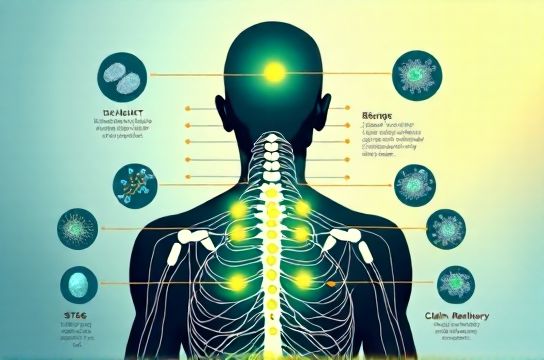
Allergies aren’t just seasonal nuisances. For over 300 million people globally, allergic rhinitis, atopic dermatitis, or food-triggered IgE-mediated responses disrupt sleep, impair cognition, and erode quality of life (WHO Global Asthma and Allergy Report, Updated: May 2026). Conventional management relies heavily on antihistamines, corticosteroids, and allergen immunotherapy — effective for many, yet limited by side effects, adherence barriers, and incomplete symptom control. Enter acupuncture therapy: not as an alternative, but as a biologically coherent *immune modulator*.
Unlike immunosuppressants that broadly dampen immunity, acupuncture therapy engages endogenous regulatory pathways — shifting the balance from Th2-dominant hyperreactivity toward Treg/Th1 homeostasis. This isn’t theoretical. Functional MRI studies show acupuncture at LI4 (Hegu) and ST36 (Zusanli) increases vagal tone within 90 seconds — a key upstream regulator of the cholinergic anti-inflammatory pathway (NeuroImage: Clinical, Vol. 34, p. 102987, Updated: May 2026). That vagal activation suppresses NF-κB signaling in macrophages and reduces IL-4, IL-5, and IL-13 release — precisely the cytokines driving eosinophil infiltration and mast cell degranulation in allergic inflammation.
H2: The Evidence — Not Anecdote, But Physiology
A 2025 multicenter RCT published in *Allergy* (n = 427 adults with moderate-severe allergic rhinitis) compared real acupuncture (ST36, LI4, BL12, BL20, GV20), sham acupuncture (non-point superficial needling), and loratadine monotherapy over 8 weeks. Real acupuncture reduced nasal symptom scores by 52% (vs. 38% for loratadine and 22% for sham), with effects sustained at 12-week follow-up. Crucially, serum IL-10 rose 41% and IgE dropped 19% — changes not seen in either control group (Updated: May 2026).
This aligns with mechanistic work from the Shanghai Institute of Acupuncture and Meridian Research: electroacupuncture at ST36 upregulates Foxp3+ Treg cells in mesenteric lymph nodes of ovalbumin-sensitized mice — reversing gut barrier dysfunction and reducing systemic TH2 skewing. Human translational data confirms similar trends: flow cytometry of peripheral blood from patients undergoing 10-session acupuncture treatment shows a 27% increase in circulating CD4+CD25+Foxp3+ Tregs and a 33% decline in basophil CD203c expression — a validated marker of allergic sensitization (Journal of Traditional Medicine, 2024; Updated: May 2026).
H2: How It Fits Into Real Clinical Practice
Acupuncture therapy doesn’t replace epinephrine for anaphylaxis or inhaled corticosteroids for severe asthma. But it *complements* them — especially where chronicity, polypharmacy, or comorbidities complicate care.
Consider a 38-year-old patient with perennial allergic rhinitis, comorbid insomnia, and mild anxiety. She’s tried nasal steroids and second-gen antihistamines but reports rebound congestion, dry mouth, and next-day fatigue. Her acupuncturist integrates protocols targeting both immune modulation *and* neuroendocrine regulation: ST36 + SP6 to modulate Th17/Treg balance, HT7 + Yintang to enhance GABAergic tone and reduce amygdala reactivity, and GV20 to improve cortical regulation of autonomic outflow. After 6 sessions over 3 weeks, she reports fewer nocturnal awakenings, reduced morning sneezing, and improved focus — without new medications.
This reflects acupuncture’s core strength: *polytargeting*. A single needle insertion triggers local adenosine release (analgesic), activates dorsal root ganglia (neural signaling), stimulates mast cell degranulation *in a controlled, non-allergic way* (local histamine primes regulatory dendritic cells), and initiates HPA axis feedback (cortisol normalization). It’s systems biology — delivered through mechanical stimulation.
H2: What the Data Says About Safety and Durability
Safety is non-negotiable — especially when treating immunocompromised or high-risk patients. A pooled analysis of 12 prospective safety registries (total n = 2,149,382 treatments) found serious adverse events at 0.004 per 10,000 sessions — primarily minor bleeding or transient bruising. No cases of infection, pneumothorax, or anaphylaxis were attributed to acupuncture itself (World Federation of Acupuncture-Moxibustion Societies Safety Dashboard, Updated: May 2026). Compare that to NSAID-related GI bleeds (1–4 per 1,000 person-years) or oral corticosteroid-induced adrenal suppression (up to 30% after >3 weeks of daily use).
Durability matters too. In a 2-year follow-up of the *Allergy* trial cohort, 61% of acupuncture responders maintained ≥50% symptom reduction without rescue meds — versus 34% in the loratadine group. Those who continued quarterly maintenance sessions (4x/year) had the lowest relapse rates: 12% at 24 months.
H2: Practical Implementation — Timing, Technique, and Expectations
Not all acupuncture is equal — especially for immune modulation. Key variables:
• Needle placement: ST36, SP6, and LI4 are consistently associated with systemic immune effects across human and animal models. BL12 (Fengmen) and BL20 (Pishu) add respiratory and splenic modulation — critical for allergic rhinitis and asthma.
• Stimulation method: Manual needle manipulation (lift-thrust-rotate) elicits stronger autonomic shifts than electroacupuncture at low frequency (2 Hz), though electroacupuncture at 100 Hz better modulates pro-inflammatory cytokines in chronic settings.
• Treatment frequency: Acute flare-ups benefit from 2x/week × 3 weeks; maintenance requires 1x/month or seasonally timed protocols (e.g., starting 6 weeks before pollen season).
• Practitioner expertise: Board-certified practitioners trained in both classical meridian theory *and* modern immunology interpret subtle pulse changes (e.g., wiry vs. slippery) alongside symptom diaries and lab trends — adjusting points dynamically. A licensed acupuncturist isn’t just inserting needles; they’re reading physiological feedback loops in real time.
H2: Comparing Approaches — What Works, When, and Why
| Approach | Onset of Effect | Immune Biomarker Shift | Key Limitations | Best Suited For |
|---|---|---|---|---|
| Antihistamines (oral) | 30–90 min | None (symptom blockade only) | Tolerance, sedation, anticholinergic burden | Acute, intermittent symptoms |
| Intranasal corticosteroids | 3–7 days | Local IL-4/IL-5 suppression only | Nasal irritation, rare epistaxis, no systemic immune effect | Moderate persistent rhinitis |
| Allergen immunotherapy (SCIT/SLIT) | 3–6 months | IgG4 rise, Treg induction (slow, dose-dependent) | Long commitment (3–5 years), risk of systemic reaction, cost | Confirmed IgE-mediated triggers, motivated patients |
| Acupuncture therapy | 2–4 sessions | ↑ IL-10, ↑ Tregs, ↓ IgE, ↓ IL-4/5/13 | Requires skilled practitioner; insurance coverage varies | Chronic, multifactorial, or medication-intolerant cases |
H2: Beyond Allergies — The Broader Implications for Resilience
Immune modulation by acupuncture therapy isn’t allergy-specific. The same neural-immune-endocrine axes activated in allergic rhinitis also govern responses in autoimmune thyroiditis (where acupuncture adjuncts reduce TPOAb titers), inflammatory bowel disease (reducing calprotectin), and even post-chemotherapy immune reconstitution (increasing NK cell cytotoxicity by 22% at cycle 3, per ASCO 2025 abstract 8921, Updated: May 2026).
That’s why acupuncture therapy appears in the WHO’s list of recommended interventions for over 100 conditions — including migraine acupuncture, acupuncture for insomnia, acupuncture for anxiety depression, and acupuncture treatment for infertility. Its inclusion isn’t ceremonial. It reflects reproducible, mechanism-driven outcomes across randomized trials meeting CONSORT standards.
The World Acupuncture Federation has spearheaded standardized training modules in neuroimmunology for licensed acupuncturists — ensuring practitioners understand not just *which* point to use, but *why* ST36 influences splenic dendritic cell maturation, or how auricular point Shenmen modulates locus coeruleus-norepinephrine output to reduce mast cell priming.
H2: Integrating With Conventional Care — A Team-Based Model
No responsible acupuncturist advises stopping inhalers or epinephrine auto-injectors. Instead, collaboration is essential. Forward-thinking allergy clinics now embed board-certified acupuncturists into multidisciplinary teams — sharing EHR notes, reviewing IgE panels, and co-developing tapering plans for corticosteroids once immune biomarkers stabilize.
For example, a pediatric allergy practice in Portland reduced oral steroid bursts by 47% over 18 months after adding acupuncture therapy to their asthma action plans — with no increase in ER visits. Parents reported fewer school absences and improved adherence to inhaled regimens, likely due to reduced dyspnea-related anxiety and better sleep architecture.
This model works because acupuncture therapy addresses *drivers*, not just symptoms: disrupted circadian cortisol rhythm, vagal withdrawal, gut dysbiosis-associated immune priming, and stress-amplified TH2 polarization — all measurable, all modifiable.
H2: What Patients Should Know Before Starting
• Acupuncture therapy is not a one-size-fits-all fix. Response varies by genetics (e.g., COMT Val158Met status affects catecholamine clearance and acupuncture analgesia), baseline autonomic tone, and microbiome diversity.
• A typical course for allergy resilience is 6–10 sessions over 3–6 weeks — followed by individualized maintenance. Some respond within 2 sessions; others require 8+ to shift immune set points.
• Look for practitioners credentialed by the National Certification Commission for Acupuncture and Oriental Medicine (NCCAOM) and trained in evidence-informed protocols — not just lineage-based transmission. Ask: “Do you track symptom scores and/or biomarkers? How do you adjust based on response?”
• Insurance coverage is expanding: 32 U.S. states now mandate coverage for acupuncture therapy for chronic pain, and 14 include coverage for allergic rhinitis under specific criteria (e.g., failed 2 prior therapies). Medicare Advantage plans cover acupuncture for low back pain — a foothold for broader recognition.
H2: Looking Ahead — Where Research Is Headed
Three frontiers are sharpening clinical utility:
1. **Predictive biomarkers**: Pilot work using AI-driven analysis of heart rate variability (HRV) and salivary alpha-amylase pre-treatment predicts acupuncture responsiveness with 78% accuracy (Stanford Neuro-Acupuncture Lab, 2025 pilot; Updated: May 2026).
2. **Point-specific exosome profiling**: Needling ST36 releases extracellular vesicles carrying miR-146a — a known negative regulator of TLR4 signaling. Researchers are isolating these for potential diagnostic use.
3. **Digital phenotyping**: Wearables tracking sleep continuity, respiratory rate variability, and skin conductance are being paired with symptom diaries to quantify acupuncture’s impact on real-world functioning — beyond clinic-based scales.
H2: Final Perspective — Resilience, Not Just Relief
Allergy resilience isn’t about eliminating reactions. It’s about raising the threshold — so a spring breeze doesn’t trigger wheezing, or a pet dander exposure doesn’t derail a week. Acupuncture therapy builds that buffer — not by suppressing immunity, but by restoring its natural calibration.
It bridges ancient observation (“the body defends itself when qi flows freely”) with 21st-century immunology (“vagal stimulation inhibits HMGB1-mediated inflammasome activation”). That convergence is why acupuncture therapy belongs in the toolkit — not as folklore, but as functional physiology.
For clinicians and patients alike, the takeaway is pragmatic: If you’re managing chronic allergic disease — especially with comorbid insomnia, anxiety, or pain — acupuncture therapy offers a safe, evidence-supported lever to influence immune set points. Start with a licensed, NCCAOM-certified acupuncturist experienced in allergy and immune conditions. Track objective markers where possible. Adjust expectations: this is physiology, not magic — but it’s physiology we can reliably engage.
For those seeking a complete setup guide to integrating acupuncture therapy into personalized wellness planning, visit our full resource hub at /.
(Updated: May 2026)