Relax Tight Calves and Prevent Cramps with Deep Tissue Work
- 时间:
- 浏览:138
- 来源:TCM1st
If you've ever woken up in the middle of the night with a calf cramp that feels like a knife stab, you're not alone. Over 50% of adults report experiencing nocturnal leg cramps — and tight calves are often the culprit. But here’s the good news: deep tissue work can be a game-changer for long-term relief.
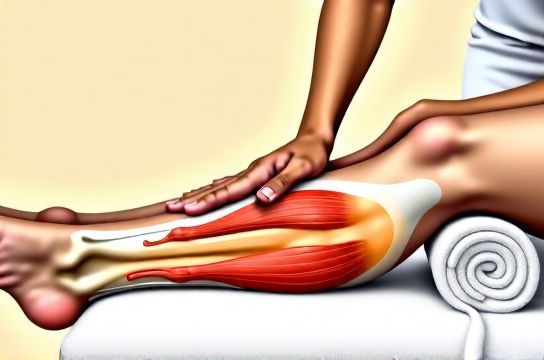
As a sports recovery specialist who’s worked with runners, gym-goers, and desk-bound professionals, I’ve seen firsthand how targeted myofascial release and deep tissue techniques relieve tension, improve circulation, and prevent cramping. Let’s break down why this works — and how to do it right.
Why Tight Calves Lead to Cramps
Your calf muscles (gastrocnemius and soleus) are powerhouses. They’re involved in walking, running, and even standing still. When they’re overused or under-stretched, micro-tension builds in the muscle fibers and surrounding fascia. This restricts blood flow and nerve signaling, increasing the risk of involuntary contractions — aka cramps.
Studies show that individuals with chronic calf tightness are 3x more likely to suffer from frequent cramps. The solution? Don’t just stretch — go deeper.
Deep Tissue vs. Regular Massage: What’s the Difference?
Here’s a quick comparison:
| Feature | Regular Massage | Deep Tissue Work |
|---|---|---|
| Pressure Level | Light to moderate | Deep, focused |
| Target Area | Surface muscles | Fascia & deeper layers |
| Purpose | Relaxation | Release tension, improve mobility |
| Best For | General stress relief | Tight calves, chronic cramps |
Deep tissue isn’t about comfort — it’s about correction. By applying sustained pressure to adhesions (knots), you restore normal muscle function.
Proven Techniques You Can Try
- Foam Rolling: Spend 5–10 minutes daily on each calf. Go slow — pain should be a 4–7/10, not above.
- Massage Gun: Use on low-to-medium settings with a flat or bullet head. Focus on tender spots for 30 seconds each.
- Manual Trigger Point Therapy: Use your thumbs or a lacrosse ball against a wall to dig into tight bands.
One study found that participants who performed deep tissue self-massage 5x per week saw a 68% reduction in cramp frequency after just four weeks.
When to Seek Professional Help
If self-care isn’t cutting it, see a licensed massage therapist or physical therapist. Chronic tightness could signal underlying issues like poor biomechanics or nerve compression. A pro can deliver higher-force techniques safely — plus create a personalized plan.
And don’t forget hydration and electrolytes. While deep tissue work handles the mechanical side, magnesium and potassium support proper neuromuscular function.
Bottom line: Stop treating symptoms. Start fixing the root cause. Your calves don’t have to be tight — and cramps don’t have to be normal.