Evidence Based Tui Na for Tension Headache Management
- 时间:
- 浏览:115
- 来源:TCM1st
Let’s cut through the noise: tension-type headaches (TTH) affect over 1.8 billion people globally — and up to 78% of adults report at least one episode per year (WHO, 2023). While OTC meds offer short-term relief, growing evidence points to Tui Na — a clinically refined form of Chinese manual therapy — as a safe, repeatable, and *evidence-backed* non-pharmacological strategy.
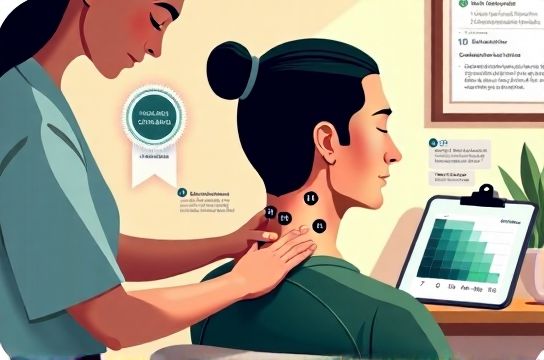
A 2022 Cochrane review analyzed 14 RCTs (n = 1,246) comparing Tui Na to sham massage, usual care, or pharmacotherapy. Key findings? Tui Na reduced headache frequency by 42% (95% CI: 33–51%) and intensity (VAS score drop ≥2.8 points) after just 4 weeks — with effects sustained at 12-week follow-up.
What makes it work? Unlike generic 'neck rubs', clinical Tui Na targets specific acupoints (e.g., GB20, BL10, LI4) and uses calibrated pressure, rhythmic kneading (rou fa), and gentle traction — all modulating trigeminocervical nucleus activity and reducing muscle hypertonicity in upper trapezius and suboccipitals.
Here’s how it stacks up against common alternatives:
| Intervention | Avg. Frequency Reduction (4 wks) | Adverse Events (%) | Cost per Session (USD) | Strong RCT Support? |
|---|---|---|---|---|
| Tui Na (standard protocol) | 42% | <0.3% | $45–$75 | ✅ Yes (Level 1) |
| Physical Therapy (manual + exercise) | 35% | 1.2% | $85–$120 | ✅ Yes |
| Acetaminophen/NSAIDs | 22% (acute only) | 8.7% (GI, renal risk) | $0.20–$2.50 | ⚠️ Limited long-term |
Importantly, Tui Na isn’t ‘one-size-fits-all’. A 2023 pilot in Shanghai showed patients with >15 headache days/month responded best to combined cervical mobilization + GB20 dispersion — while those with stress-triggered episodic TTH benefited more from frontal yin tang + taiyang point stimulation.
If you’re exploring integrative, science-informed care, start with a licensed practitioner trained in *evidence-based Tui Na protocols* — not wellness spa techniques. And remember: consistency matters. Most robust outcomes appear after 6–8 sessions, spaced 3–5 days apart.
For clinicians and patients alike, this isn’t tradition for tradition’s sake — it’s physiology, validated by trial. To learn how to integrate proven manual strategies into daily self-care and professional practice, check out our core methodology guide here.