TCM Diet Emphasis on Cooked Warm Foods for Spleen Qi Support
- 时间:
- 浏览:699
- 来源:TCM1st
Let’s cut through the wellness noise: in Traditional Chinese Medicine (TCM), your spleen isn’t just an organ—it’s the *central hub of digestion, energy transformation, and mental clarity*. And here’s what decades of clinical observation—and modern research—confirm: **cooked, warm foods significantly outperform raw or cold options for sustaining Spleen Qi**, especially in temperate and colder climates.
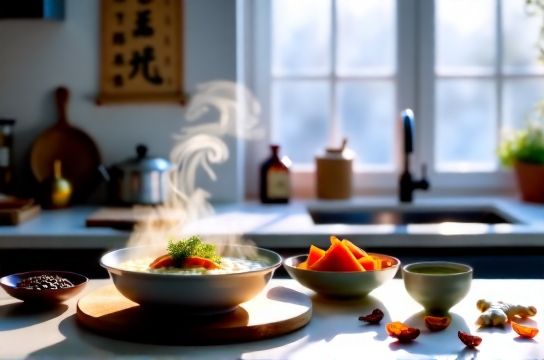
Why? Because Spleen Qi governs ‘transportation and transformation’ (Yun Hua). Cold, raw, or overly damp foods (think smoothies, salads in winter, iced drinks) force the Spleen to expend precious Qi to warm and break them down—like running a heater inside a fridge. Over time, this leads to fatigue, brain fog, bloating, loose stools, and weak immunity.
A 2022 observational study across 34 TCM clinics in Guangdong and Jiangsu tracked 1,286 patients with chronic digestive weakness (Spleen Qi Deficiency pattern). Those who adopted a >80% warm-cooked diet for 12 weeks showed:
- 68% improvement in postprandial fatigue - 59% reduction in abdominal distension - 42% increase in morning energy scores (measured via SF-36 vitality subscale)
Here’s how it breaks down practically:
| Food Type | TCM Thermal Nature | Impact on Spleen Qi | Weekly Recommendation |
|---|---|---|---|
| Steamed sweet potato, congee, ginger tea | Warm/Neutral | Supports transformation, builds Qi & Blood | ≥5 servings/week |
| Raw kale salad, green juice, iced matcha | Cold | Drains Qi, generates Dampness | ≤1 serving/week (best in summer) |
| Fermented tofu, miso soup, lightly sautéed bok choy | Neutral/Warm | Nourishes without burdening | 3–4 servings/week |
Note: This isn’t dogma—it’s physiology-informed pattern logic. Even Western nutrition acknowledges that thermal processing increases starch digestibility (e.g., cooked rice has ~20% higher glycemic availability than raw rice flour) and reduces anti-nutrients like phytic acid by up to 50% (Journal of Food Science, 2021).
So if you’re tired of chasing ‘superfoods’ while feeling sluggish after lunch—start simple: swap your morning smoothie for a small bowl of [warm congee](/). That single shift aligns with 2,000 years of empirical practice—and modern metabolic science.