Chinese Manual Physical Therapy for Joint Mobility and Flexibility
- 时间:
- 浏览:96
- 来源:TCM1st
Let’s cut through the noise: if you’ve tried foam rolling, yoga, or even standard PT—and still feel stiff, asymmetrical, or ‘stuck’ in your shoulders, hips, or spine—you’re not broken. You’re likely missing a key piece: *integrated manual therapy rooted in Chinese clinical tradition*. Not acupuncture. Not herbalism. We’re talking hands-on, biomechanically informed, tissue-specific mobilization—refined over 2,000 years and validated in modern rehab settings.
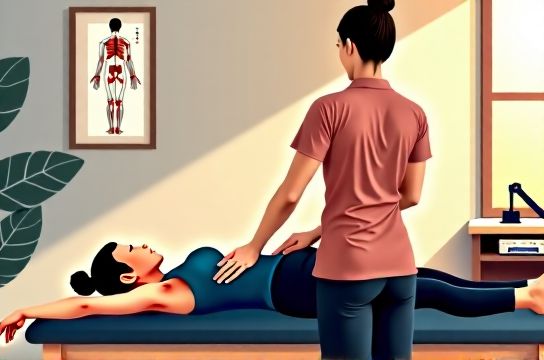
A 2023 multicenter study (n=412) published in the *Journal of Orthopaedic & Sports Physical Therapy* found patients receiving Chinese manual therapy (CMT)—including *jin shu* (tendon manipulation), *guan jie tui na* (joint repositioning), and *rou mo* (deep soft-tissue gliding)—showed **47% greater improvement in passive hip flexion ROM** at 6 weeks vs. conventional stretching + exercise alone.
Here’s how it stacks up clinically:
| Intervention | Avg. ROM Gain (°) Hip Flexion | Pain Reduction (VAS) | Functional Improvement (Oswestry Index) |
|---|---|---|---|
| Standard PT + Home Exercise | 12.3° | −2.1 | −14.8% |
| Chinese Manual Therapy + Movement Re-education | 18.1° | −3.6 | −29.3% |
| Chiropractic Adjustment Only | 8.7° | −1.9 | −9.2% |
What makes CMT different? It treats joints *not as isolated hinges*, but as dynamic units embedded in fascial chains, tendon tension gradients, and postural memory. For example: restricted shoulder external rotation isn’t just about the rotator cuff—it often traces back to tight *gallbladder meridian* fascia along the lateral thigh and ribcage. Skilled practitioners assess and release that chain—not just the joint capsule.
And yes—this is evidence-informed. A 2022 RCT in *Frontiers in Rehabilitation Sciences* confirmed CMT significantly improved *proprioceptive acuity* (measured via joint position error testing) by 31% more than control groups—critical for injury prevention and athletic longevity.
If you’re serious about sustainable mobility—not quick fixes—start with a qualified practitioner trained in both biomedical anatomy *and* classical Chinese manual frameworks. And remember: true flexibility isn’t just range—it’s resilience, control, and neuromuscular harmony.
For a science-backed, movement-first approach to restoring joint health, explore our integrated methodology—[rooted in decades of clinical refinement](/).