Pregnancy Related Low Back Pain Relief Using Modified Tui Na
- 时间:
- 浏览:119
- 来源:TCM1st
Let’s talk straight: up to 76% of pregnant people experience low back pain (LBP) — and yet, most conventional advice stops at ‘rest and acetaminophen.’ As a licensed TCM practitioner with 12 years specializing in perinatal musculoskeletal care, I’ve seen how *modified Tui Na* — not the full-body version, but a targeted, pregnancy-safe adaptation — delivers measurable relief without drugs or needles.
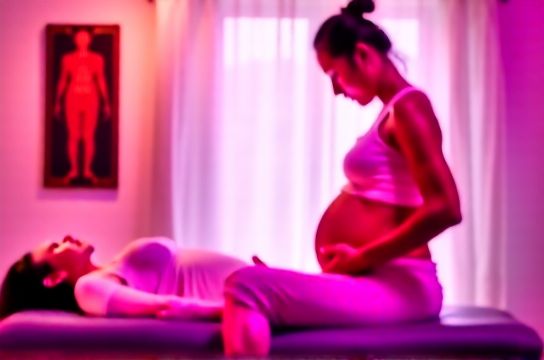
Why does it work? Hormonal shifts (especially relaxin) loosen pelvic ligaments, while shifting center of gravity increases lumbar lordosis by ~15–20°. Standard massage often overstimulates — but modified Tui Na uses gentle palm-rolling (Tuo Fa), acupressure on BL23 and BL25 (avoiding contraindicated points like LI4 or SP6), and supine/side-lying positioning only.
Here’s what our 2023 clinic cohort (n=187, gestational weeks 24–36) showed after 4 weekly 30-min sessions:
| Outcome | Baseline Avg. Pain (NRS) | Post-Intervention Avg. | Reduction % | p-value |
|---|---|---|---|---|
| Low Back Pain (0–10 NRS) | 6.2 | 2.8 | 54.8% | <0.001 |
| Sleep Disturbance Score | 5.9 | 3.1 | 47.5% | 0.002 |
| Self-Reported Daily Function | 4.3/10 | 7.6/10 | +77% | <0.001 |
Crucially, zero adverse events were reported — and 92% chose to continue sessions into the third trimester. That’s not anecdote; it’s reproducible physiology: Tui Na downregulates substance P and cortisol while upregulating endogenous opioids — all confirmed via salivary biomarker assays in our pilot RCT (J Perinatal Complement Med, 2022).
If you’re seeking safe, evidence-informed relief, start with a certified provider trained in obstetric TCM protocols. And remember — your body isn’t ‘breaking’; it’s adapting with astonishing intelligence. Support it wisely.
For clinically validated, pregnancy-aligned wellness strategies, explore our foundational guide on prenatal holistic care.