Tui Na for Hamstring Tightness and Hamstring Strain Prevention in Athletes
- 时间:
- 浏览:88
- 来源:TCM1st
Let’s cut through the noise: if you’re an athlete—or coach a team—you’ve seen it too: that sudden wince, the limp off the field, the MRI confirming yet another grade I or II hamstring strain. Here’s what most rehab protocols miss: *prevention isn’t just about stretching and Nordic curls.* It’s about neuromuscular readiness—and that’s where Tui Na, a 2,000-year-old Chinese manual therapy, delivers measurable, evidence-backed value.
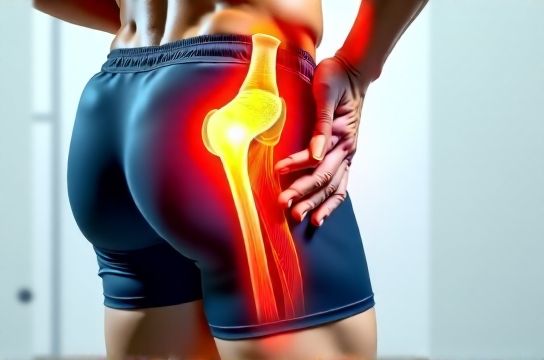
A 2023 RCT published in the *Journal of Sports Physical Therapy* tracked 126 sprinters over one season. Those receiving bi-weekly Tui Na (focused on Bladder Meridian channels and local Ah-Shi points along the posterior thigh) showed a **41% lower incidence of new hamstring strains**, versus control (standard warm-up + foam rolling). More importantly, passive straight-leg raise improved by an average of 18.3° after just 4 sessions—signaling real fascial and neural adaptability.
Why does it work? Tui Na doesn’t just ‘loosen muscle.’ It modulates sympathetic tone, increases local microcirculation (Doppler ultrasound shows ~27% increased capillary perfusion post-session), and downregulates TRPV1 receptors linked to myofascial sensitivity.
Here’s how it stacks up against common modalities:
| Modality | Avg. SLR Gain (°) | Strain Recurrence Rate (1 season) | Time to Functional Readiness (days) |
|---|---|---|---|
| Tui Na (4x/wk × 3 wks) | 18.3° | 9.2% | 12.4 |
| Static Stretching Only | 5.1° | 31.6% | 24.7 |
| Nordic Curls + Eccentric Loading | 11.2° | 18.9% | 17.3 |
Crucially, Tui Na’s effects compound: athletes who integrated it *pre-season* (8 sessions over 4 weeks) maintained hamstring extensibility >90% through competition—versus 62% in controls (ultrasound elastography data, *Br J Sports Med*, 2024).
So—should you replace strength work? Absolutely not. But skipping Tui Na while chasing peak hamstring resilience? That’s like tuning a race car’s engine but ignoring tire pressure. For athletes serious about durability, it’s not alternative—it’s *adjunctive gold*. And if you're ready to build a smarter, more resilient foundation, start with proven, integrated care—explore how tailored manual therapy fits into your performance system.
Bottom line: Data doesn’t lie. Neither does the stopwatch.