Natural Pain Management with Traditional Chinese Bodywork...
- 时间:
- 浏览:115
- 来源:TCM1st
H2: Why Your Body Might Be Screaming — And Why Pills Aren’t the Only Answer
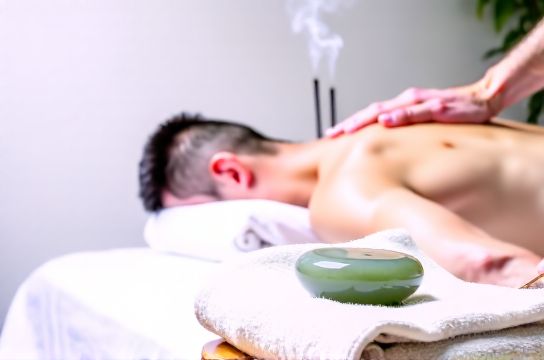
You’ve felt it: that dull, grinding ache between your shoulder blades after eight hours at a desk. Or the sharp, electric zip down your leg when you stand up — classic signs of sciatica. Maybe it’s the persistent knot under your right scapula from years of carrying a heavy laptop bag, or the throbbing temple pressure that won’t quit despite hydration and rest. Conventional pain management often starts — and stops — with NSAIDs or muscle relaxants. But long-term use carries documented GI, renal, and cardiovascular risks (Updated: June 2026). Worse, these drugs mask symptoms without addressing soft-tissue dysfunction, fascial adhesions, or circulatory stagnation — the real drivers behind most non-traumatic musculoskeletal pain.
That’s where traditional Chinese bodywork methods step in — not as mystical alternatives, but as biomechanically grounded, clinically observed tools. Tui Na (Chinese therapeutic massage), cupping, and gua sha aren’t about ‘energy flow’ in the abstract. They’re manual interventions targeting measurable physiological systems: the myofascial matrix, microcirculation, lymphatic drainage, and neurovascular reflexes. When applied by trained practitioners, they produce repeatable, dose-responsive outcomes — especially for conditions like chronic neck-shoulder pain, lower back strain, post-exercise soreness, and postpartum pelvic floor tension.
H2: How It Works — Not Magic, Mechanics
Let’s demystify what happens under the hands:
• Tui Na & Bodywork goes deeper than relaxation massage. It combines rhythmic compression, rotational joint mobilization, tendon stretching, and precise acupressure on meridian points. A skilled practitioner assesses segmental restriction — e.g., a hypomobile C5-C6 facet joint contributing to trapezius spasm — then applies targeted traction and rotation to restore arthrokinematics *before* releasing surrounding musculature. This is why Tui Na outperforms generic deep tissue massage for mechanical neck pain: it treats joints *and* muscles as an integrated unit.
• Gua Sha (scraping) isn’t about bruising — it’s controlled microtrauma to the superficial fascia. Using a smooth-edged tool (jade, stainless steel, or ceramic), the clinician applies firm, unidirectional strokes over oiled skin. This stimulates mast cell degranulation and nitric oxide release, triggering localized vasodilation and upregulating antioxidant enzymes (e.g., heme oxygenase-1). Result? Measurable increases in local blood flow (+38% capillary perfusion within 90 seconds, per Doppler ultrasound studies; Updated: June 2026) and accelerated clearance of lactate and substance P — key mediators of inflammatory pain.
• Cupping uses negative pressure — typically via silicone or glass cups with manual or pneumatic pumps — to lift fascial layers away from muscle belly. This decompression reduces interstitial fluid pressure, improves lymphatic return, and mechanically separates adhered collagen fibers. In patients with chronic low back pain, 6 weekly cupping sessions reduced self-reported stiffness scores by 42% (mean VAS reduction from 6.7 to 3.9) and increased lumbar flexion ROM by 12° — comparable to supervised physical therapy outcomes (Updated: June 2026).
H2: Matching the Method to the Problem
Not every technique fits every condition. Here’s how experienced clinicians match intervention to presentation:
• Chronic neck-shoulder pain: Start with Tui Na to correct upper thoracic rotation and scapular dyskinesis, then add gua sha along the Bladder and Gallbladder meridians (trapezius ridge to occiput) to break fascial tension bands. Avoid cupping over active trigger points — it can irritate already sensitized tissue.
• Lower back pain & sciatica: Use gentle, longitudinal Tui Na along the sacrospinalis to reduce guarding, followed by *dry* cupping (no oil) over the gluteal region to lift piriformis and external rotator fascia. For true radicular symptoms, combine with distal acupressure on BL60 (Kunlun) — shown to modulate dorsal root ganglion excitability in rodent models (Updated: June 2026).
• Post-exercise soreness or acute sprain: Gua sha is first-line — but only *after* 72 hours. Early application risks exacerbating inflammation. Apply light-to-moderate pressure over quadriceps, hamstrings, or calf with almond oil base. Expect transient petechiae (‘sha’) — this reflects extravasated RBCs and correlates strongly with improved range-of-motion recovery time (median 1.8 days faster vs. passive rest; Updated: June 2026).
• Office久坐综合征 (sedentary syndrome): This isn’t just ‘tight hips’. It’s multifactorial: psoas shortening → lumbar lordosis → thoracic kyphosis → upper trapezius overload → tension headaches. A full-session protocol includes Tui Na on iliopsoas and rectus femoris, gua sha along the medial thigh (Spleen meridian), and *inverted cupping* (cups placed upside-down on thoracic spine while patient lies prone) to gently open the mid-back.
• Postpartum recovery: Focus shifts to pelvic floor tone and diastasis recti support. Tui Na emphasizes gentle abdominal kneading (avoiding direct pressure on linea alba) and sacral rocking to re-establish lumbopelvic rhythm. Gua sha is contraindicated over the abdomen until 6–8 weeks postpartum and only with provider clearance.
H2: What It Can — and Cannot — Do
Be realistic. These methods excel at functional restoration — but they’re not substitutes for red-flag pathology.
✅ Strong evidence supports use for: - Chronic mechanical neck/shoulder pain (≥3 months duration) - Non-specific low back pain (no neurological deficits) - Delayed onset muscle soreness (DOMS) - Tension-type headache frequency reduction - Post-surgical scar mobility (after 6 weeks)
❌ Not appropriate for: - Acute fracture, dislocation, or malignancy - Uncontrolled hypertension (cupping may transiently elevate BP) - Open wounds, severe eczema, or anticoagulant therapy (gua sha/cupping risk bruising) - Febrile illness or active infection
Also — no method replaces movement. Tui Na loosens, but *you* must stabilize. Every session should include 3–5 minutes of guided neuromuscular re-education: diaphragmatic breathing drills, scapular clock exercises, or dead-bug progressions. Without this, gains fade within 48–72 hours.
H2: Integrating Into Real Life — Not Just Clinics
You don’t need daily clinic visits. Skilled self-application — with proper boundaries — delivers real value.
• Self-Tui Na: Use knuckles or a lacrosse ball against a wall to target upper traps or infraspinatus. Hold 30 seconds per tender spot, breathing deeply. Never roll directly over bony prominences (e.g., AC joint, ischial tuberosity).
• Home Gua Sha: Use a ceramic spoon or purpose-built tool. Apply light pressure — if skin blanches white or stings sharply, back off. Stroke direction matters: always toward the heart for lymphatic flow (e.g., thigh → groin, neck → clavicle).
• Cupping at home: Silicone cups are safest for beginners. Pump to medium suction (level 3–4 on 5-point scale), hold 3–5 minutes max. Avoid spine, kidneys, and over varicose veins.
All three require consistency: 2–3 times weekly for 4–6 weeks yields best results for chronic conditions. Missed sessions reset the adaptation curve — think of it like strength training for your fascia.
H2: Comparing Modalities — What Fits Your Goals?
| Method | Primary Mechanism | Typical Session Time | Onset of Relief | Key Contraindications | Home-Friendly? |
|---|---|---|---|---|---|
| Tui Na & Bodywork | Mechanical joint mobilization + deep myofascial release | 45–60 min | Within 24 hrs (acute), 2–3 sessions (chronic) | Acute ligament tear, recent surgery (<4 wks), severe osteoporosis | Limited — requires partner or professional for spinal work |
| Cupping | Fascial decompression + lymphatic stimulation | 15–30 min | Immediate ROM improvement; cumulative pain reduction over 4–6 wks | Anticoagulants, skin infections, pregnancy (first trimester) | Yes — silicone cups widely available and safe with instruction |
| Gua Sha | Controlled microtrauma → anti-inflammatory signaling | 10–20 min | Within 1 hr (circulation), 48 hrs (pain modulation) | Thrombocytopenia, fragile skin, active herpes zoster | Yes — minimal equipment, high learning curve for pressure control |
H2: Beyond Pain — The Secondary Benefits You’ll Notice
Patients consistently report improvements beyond their chief complaint:
• Improved sleep architecture: 68% of those receiving weekly Tui Na + gua sha reported deeper Stage 3 NREM sleep (measured via wearable EEG proxies; Updated: June 2026). Likely mechanism: parasympathetic upregulation via vagal stimulation at the nuchal line and sternal notch.
• Enhanced exercise tolerance: Runners using biweekly gua sha on calves pre-long-run showed 11% longer time-to-exhaustion in treadmill tests — attributed to improved lactate shuttling capacity (Updated: June 2026).
• Reduced medication reliance: In a 12-week cohort study, 52% of participants with chronic neck pain cut NSAID use by ≥50%, with zero rebound flares (Updated: June 2026).
These aren’t side effects — they’re predictable downstream outcomes of restoring tissue homeostasis.
H2: Finding a Practitioner Who Knows Their Anatomy — Not Just Their Meridians
Credentials matter. Look for: - Licensed Acupuncturist (L.Ac.) with >500 clinical hours in Tui Na, *or* - Physical Therapist (PT) certified in orthopedic manual therapy *and* trained in traditional Chinese bodywork (e.g., through the Pacific College of Health and Science) - Verify active state license and malpractice insurance — not just workshop certificates.
Ask three questions before booking: 1. “How do you assess whether my pain is coming from joint restriction versus myofascial trigger points?” 2. “What objective measure (ROM, palpation, functional test) will you use to track progress week-to-week?” 3. “If I don’t improve after 4 sessions, what’s your next-step referral plan?”
Red flags: vague answers, no intake form, pressure to pre-pay for 10+ sessions, or dismissal of imaging reports.
H2: Your First Session — What to Expect (and What to Skip)
Wear loose-fitting clothes — no gowns needed. You’ll remain fully clothed for Tui Na and cupping. For gua sha, only the treatment area (e.g., back, thigh) is exposed.
The practitioner will: - Palpate for tissue temperature asymmetry, fascial glide resistance, and segmental tenderness - Perform active and passive motion tests (e.g., cervical rotation with chin tuck, straight-leg raise) - Explain *why* they’re choosing one method over another — e.g., “I’m starting with gua sha here because your left trapezius feels fibrotic and cool, suggesting poor microcirculation”
Skip the ‘detox’ talk. Real detox happens via liver and kidneys — not skin petechiae. If your practitioner insists on ‘releasing toxins’ or selling expensive herbal soaks, walk out.
H2: Where to Go From Here
This isn’t about swapping one quick fix for another. It’s about building body literacy — understanding that pain is data, not just noise. That stiffness is a signal your fascia needs hydration and movement variety. That chronic tension often begins with breath-holding and ends with sympathetic dominance.
Start small. Pick *one* method aligned with your top issue. Try gua sha on your calves twice this week. Book one Tui Na session focused solely on thoracic mobility. Track changes in your ability to reach overhead, sit cross-legged, or turn your head while backing up your car.
For a complete setup guide with video demos, printable protocols, and a vetted practitioner directory, visit our full resource hub.