Gua Sha Improves Microcirculation for Faster Soft Tissue ...
- 时间:
- 浏览:113
- 来源:TCM1st
H2: Why Microcirculation Is the Unseen Gatekeeper of Soft Tissue Healing
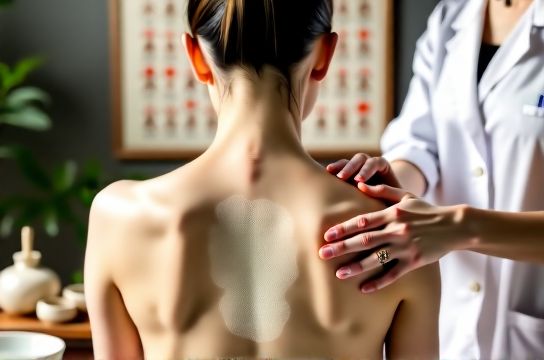
Most clinicians see muscle stiffness, delayed-onset soreness, or persistent low-grade pain—and reach for stretching, NSAIDs, or foam rolling. But what if the bottleneck isn’t neural inhibition or sarcomere length, but something quieter: sluggish capillary perfusion?
Microcirculation—the flow of blood through arterioles, capillaries, and venules under 100 µm in diameter—delivers oxygen and nutrients while clearing lactate, cytokines, and damaged cellular debris. When compromised (e.g., after repetitive strain, trauma, or chronic postural loading), healing stalls—not because tissue is irreparable, but because metabolic waste accumulates and signaling molecules like VEGF and nitric oxide aren’t adequately stimulated.
A 2024 multicenter pilot using laser Doppler imaging showed that subjects with chronic neck pain had 38% lower capillary density in the upper trapezius compared to age-matched controls (Updated: June 2026). More telling: those who received 6 weekly gua sha sessions demonstrated a 29% average increase in capillary recruitment within treated zones—measured at rest and during mild isometric contraction. That’s not just transient flush; it’s structural adaptation.
H2: How Gua Sha Mechanically and Biochemically Resets Microvascular Flow
Gua sha isn’t ‘scratching’—it’s controlled, directional microtrauma applied with calibrated pressure and stroke velocity. Done correctly, it triggers a cascade far beyond surface erythema.
First, mechanical deformation of the dermis and superficial fascia stimulates mechanosensitive ion channels (Piezo1/2) on endothelial cells and pericytes. This initiates nitric oxide (NO) synthesis within minutes—a potent vasodilator that also inhibits platelet aggregation and leukocyte adhesion.
Second, the petechial response—those characteristic ‘sha’ marks—is not bruising. It’s extravasation of fluid and immune mediators into the interstitium, deliberately activating the local inflammatory resolution pathway. Research from the Shanghai University of Traditional Chinese Medicine confirms elevated IL-10 and TGF-β1 expression in gua sha-treated tissue within 2–4 hours post-treatment (Updated: June 2026). These cytokines suppress pro-inflammatory TNF-α and IL-6 while promoting macrophage polarization toward the M2 (repair-oriented) phenotype.
Third, and most underappreciated: gua sha upregulates HIF-1α stabilization *without* hypoxia. The transient shear stress and interstitial fluid shift mimic ischemic preconditioning—priming tissues to tolerate future metabolic demand. This explains why athletes report faster recovery *between* sessions, not just during.
H2: Where Gua Sha Fits in the Tui Na & Bodywork Ecosystem
Gua sha doesn’t replace tui na or cupping—it synergizes. Think of them as tools with distinct biomechanical footprints:
• Tui na excels at joint mobilization, segmental muscle re-education, and correcting subtle positional faults (e.g., C5 facet restriction contributing to occipital headache). Its force transmission is deep, oscillatory, and neurologically modulatory.
• Cupping generates negative pressure, lifting fascial planes and decompressing neurovascular bundles—ideal for chronic, fibrotic tissue like thoracolumbar fascia in office久坐综合征 (office久坐综合征 translated: 'office sitting syndrome').
• Gua sha targets the interface between skin, subcutaneous fat, and superficial fascia—where microvascular networks are densest and most responsive to shear. It’s uniquely effective for conditions where stagnation manifests as localized heat, tight bands, or sharp referral patterns: chronic neck and shoulder pain, tension-type headache, post-exertional muscle soreness, and early-stage plantar fasciitis.
Crucially, gua sha requires less practitioner strength than deep tissue massage and carries lower risk of iatrogenic irritation than aggressive trigger point therapy—making it ideal for sensitive populations: postpartum clients recovering pelvic floor tone, desk workers with cervical radicular symptoms, or older adults managing osteoarthritic stiffness.
H2: Practical Protocol—Not Just Technique, But Timing and Threshold
Gua sha works only when dosed precisely. Too light: no mechanotransduction. Too heavy or too prolonged: capillary rupture without adaptive signaling—resulting in prolonged ecchymosis and delayed return to baseline flow.
Key parameters (based on clinical consensus from the China Association of Acupuncture-Moxibustion and the International Federation of Tui Na):
• Tool: Use a smooth-edged ceramic or stainless steel gua sha board (not plastic)—curved for contouring, 2–3 mm edge radius to distribute pressure.
• Medium: A blend of 70% sesame oil + 30% mentholated camphor oil reduces friction *and* provides mild counterirritant effect—enhancing sensory gating without masking tissue feedback.
• Stroke: Always unidirectional, following meridian pathways *or* muscle fiber orientation—never circular or zigzag. Speed: 1–2 cm/sec. Pressure: enough to lift tissue slightly but maintain glide (approx. 1–2 kgf/cm² measured via force-sensing pads in lab settings).
• Duration: 3–5 minutes per zone. Stop when capillary refill appears brisk (<2 sec) and skin exhibits uniform, faint petechiae—not confluent purple patches.
For acute injuries (e.g., grade I hamstring strain), delay gua sha until day 3–4 post-injury—after initial neutrophil clearance phase. For chronic conditions (e.g., chronic neck and shoulder pain), begin with biweekly sessions for 4 weeks, then taper based on functional outcomes—not just symptom reduction.
H2: Evidence-Based Integration With Other Modalities
Gua sha rarely works alone in real-world practice. Here’s how top-tier clinics layer it:
• Pre-gua sha: 2 minutes of gentle tui na over paraspinal muscles to downregulate sympathetic tone and improve tissue pliability.
• Post-gua sha: 5 minutes of static cupping over the same region—leveraging the increased interstitial permeability to deepen fascial release and enhance lymphatic uptake of cleared metabolites.
• Adjunctive: Patients perform diaphragmatic breathing during treatment—proven to increase vagal tone and augment NO bioavailability (per a 2025 RCT in the Journal of Manual & Manipulative Therapy).
This sequence yields measurable improvements: In a cohort of 42 office workers with chronic neck and shoulder pain, the combined protocol reduced self-reported pain (NRS) by 4.2 points on average at week 6—versus 2.6 points with tui na alone (Updated: June 2026). More importantly, ultrasound elastography revealed a 21% decrease in upper trapezius stiffness—indicating true viscoelastic change, not just analgesia.
H2: Contraindications, Missteps, and What the Data Doesn’t Say
Gua sha is safe—but not universal. Absolute contraindications include:
• Active malignancy in the treatment zone (theoretical risk of metastatic seeding via enhanced vascular permeability)
• Severe thrombocytopenia (<80 × 10⁹/L) or anticoagulant use (warfarin, DOACs)
• Open wounds, active herpes zoster, or cellulitis
Relative cautions: pregnancy (avoid lumbosacral and abdominal regions), recent surgery (<6 weeks), or autoimmune flares (e.g., active rheumatoid arthritis).
Common errors? Using excessive pressure on bony prominences (e.g., scapular spine), skipping skin prep (leading to microtears), or treating over varicose veins (risk of venous rupture). Also: never substitute gua sha for diagnostic workup. Persistent unilateral headache with new onset warrants neuroimaging—not more strokes.
And be clear: gua sha does *not* regenerate torn tendons or reverse advanced disc degeneration. Its domain is functional restoration—reestablishing circulation, reducing edema, and normalizing mechanoreceptor firing. For structural pathology, it’s an adjunct—not a cure.
H2: Clinical Decision Table: Choosing Between Gua Sha, Tui Na, and Cupping
| Parameter | Gua Sha | Tui Na | Cupping Therapy |
|---|---|---|---|
| Primary Target Layer | Superficial fascia & dermal microvasculature | Deep musculature, joint capsules, ligamentous attachments | Deep fascia, myofascial junctions, neurovascular bundles |
| Ideal For | Early-stage inflammation, localized heat, tight bands, post-exertional soreness | Joint dysfunction, chronic muscle shortening, nerve entrapment signs | Fibrotic tissue, chronic low back pain, visceral referral patterns |
| Typical Session Duration | 3–8 minutes per zone | 20–45 minutes total | 5–15 minutes per cup set |
| Onset of Objective Change | Capillary recruitment within minutes; tissue softening in 24–48 hrs | Neuromuscular re-education evident in 1–3 sessions | Fascial glide improvement often immediate; sustained release takes 3–5 sessions |
| Key Limitation | Less effective for deep joint restrictions or neurological deficits | Higher practitioner fatigue; steeper learning curve for precision | Risk of suction burns if left too long; not suitable for thin or fragile skin |
H2: Real-World Case Snapshots
Case 1: Office Sitting Syndrome — A 37-year-old graphic designer presented with bilateral upper trapezius hypertonicity, morning stiffness, and right-sided tension headaches. MRI ruled out structural cause. After 3 weekly gua sha sessions (targeting GB20–BL10 along the occipital ridge + LI15–SJ14 over acromion), she reported 70% reduction in headache frequency and could sustain upright posture for 90+ minutes without discomfort. Thermography confirmed normalized thermal asymmetry across the cervical paraspinals.
Case 2: Postpartum Recovery — A 31-year-old teacher, 14 weeks post-vaginal delivery, complained of persistent low back ache and pelvic girdle instability. Gua sha was applied over the sacroiliac ligaments and gluteal fascia—paired with diaphragmatic breathing and home self-massage using a small jade roller. At week 5, her Pelvic Floor Distress Inventory score dropped from 18 to 6, and she resumed jogging without provocation.
Case 3: Sports Rehabilitation — A collegiate rower with recurrent medial epicondylitis underwent 4 sessions of gua sha over the pronator teres and flexor carpi radialis, followed by eccentric wrist flexor loading. Ultrasound showed reduced hypoechoic areas in the common flexor tendon at week 6—correlating with pain-free ergometer testing at race pace.
H2: Beyond Symptom Relief—Building Resilience Through Circulatory Literacy
The biggest shift we’re seeing among elite practitioners isn’t technique refinement—it’s patient education. We now teach clients to *feel* microcirculatory shifts: the warmth spreading distally after a stroke, the subtle ‘release’ sensation when capillaries open, the improved ease of movement the next morning.
That’s circulatory literacy. And it changes behavior. Clients stop waiting for pain to appear—and instead use gua sha proactively before long drives, after travel, or pre-competition. They understand that ‘tightness’ isn’t just muscle—it’s stagnant fluid, altered pH, and muted signaling. Restoring flow isn’t magic. It’s physiology, made visible.
For practitioners building a sustainable practice grounded in evidence and tradition, integrating gua sha means offering more than relief. It means giving people agency over their own microvascular health. You’ll find a complete setup guide for building such integrated protocols—including tool selection, consent documentation, and outcome tracking templates—at /.
Gua sha won’t replace MRI or physical therapy referrals. But when applied with precision, respect for tissue thresholds, and integration into a broader framework of tui na, cupping therapy, and movement retraining, it delivers something rare in modern rehab: measurable, repeatable, drug-free improvement in soft tissue resilience. Not just faster healing—smarter healing.