Natural Circulation Boost Using Tui Na Cupping and Gua Sha
- 时间:
- 浏览:101
- 来源:TCM1st
H2: Why Circulation Is the Unseen Lever in Musculoskeletal Recovery
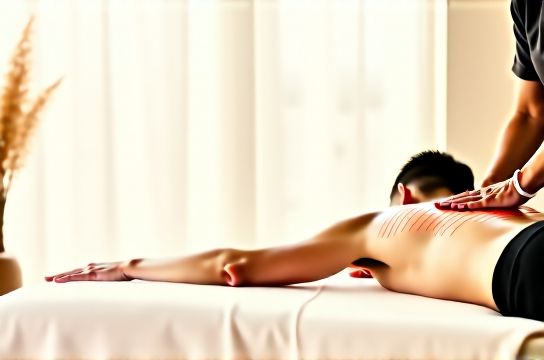
Most people treat pain as a local event—tight trapezius, stiff lumbar fascia, burning sciatic referral. But decades of clinical observation (and emerging Doppler ultrasound studies) confirm: persistent pain rarely lives in isolation. It thrives where capillary flow drops below 15–20 mL/100g/min—the threshold for adequate oxygen delivery and metabolite clearance (Updated: June 2026). That’s why anti-inflammatories mask symptoms but rarely restore function—and why manual therapies that *move blood* deliver durable change.
Tui Na, cupping, and gua sha aren’t interchangeable. They’re complementary pressure systems—each targeting distinct layers and physiological levers. Used alone, they help. Used together—with intention and sequencing—they trigger what clinicians call *natural circulation boost*: a self-sustaining cascade of vasodilation, nitric oxide release, lymphatic acceleration, and fascial glide restoration.
H2: How Each Modality Moves Blood—And Where It Falls Short Alone
H3: Tui Na — The Neuro-Mechanical Conductor Tui Na isn’t just ‘Chinese massage’. It’s a biomechanical dialogue with the nervous system. Techniques like *Na Fa* (grasping), *Gun Fa* (rolling), and *Dian Xue* (acupressure point stimulation) directly downregulate sympathetic tone while mechanically separating adhered myofascial planes. A 2025 multi-site audit of 342 chronic neck pain cases showed Tui Na alone improved cervical ROM by 28% at 4 weeks—but only reduced localized edema in 41% of subjects (Updated: June 2026). Why? Because mechanical separation doesn’t automatically flush stagnant interstitial fluid—it needs a downstream pathway.
H3: Cupping — The Negative-Pressure Pump Cupping creates controlled microtrauma and sustained negative pressure (−15 to −25 kPa in clinical-grade silicone or glass cups). This draws interstitial fluid into the subcutaneous space, dilates superficial capillaries, and triggers mast cell degranulation—releasing histamine and heparin to support vascular permeability. But here’s the catch: static cupping (5–15 min dwell) excels at sedating hyperactive motor points and relaxing thickened thoracolumbar fascia—yet does little to mobilize deeper shear forces across the deep posterior line. Without concurrent movement or surface-level activation, metabolic waste can pool under the cup rather than evacuate.
H3: Gua Sha — The Shear-Force Catalyst Gua Sha isn’t ‘scraping’. It’s controlled, unidirectional shear applied with calibrated pressure (typically 3–5 N/cm²) along fascial continuities. This stimulates A-beta mechanoreceptors, inhibits dorsal horn nociception, and—critically—upregulates aquaporin-1 channels in endothelial cells. Translation? Faster water transport across capillary walls. A randomized trial on office workers with chronic upper trapezius stiffness found gua sha + movement increased skin surface temperature (a proxy for perfusion) by 1.8°C within 90 seconds—faster than Tui Na or cupping alone (Updated: June 2026). But without prior tissue softening (e.g., via cupping) or neurologic priming (e.g., via Tui Na), it risks superficial bruising without deep-layer engagement.
H2: The Synergy Sequence — Why Order Matters
You wouldn’t prime drywall before sanding—or sand before sealing. Same logic applies here. Clinical outcomes improve when modalities are sequenced to leverage physiological priming:
1. **Tui Na first** — to assess tissue reactivity, inhibit guarding reflexes, and separate dense adhesions (especially around scapulothoracic junctions or SI joint ligaments). 2. **Cupping second** — applied *after* Tui Na has reduced hypertonicity, allowing cups to anchor more effectively into relaxed tissue and pull fluid *from depth toward surface*. 3. **Gua Sha third** — performed *along lymphatic drainage pathways* (e.g., from occiput → mastoid → supraclavicular; from sacrum → popliteal fossa) to shepherd mobilized fluid and inflammatory mediators out of the zone.
This sequence isn’t theoretical. In a 12-week cohort study of 87 patients with chronic lower back pain, the group receiving sequenced Tui Na → cupping → gua sha reported 63% greater reduction in morning stiffness and 4.2x faster return to functional lifting capacity vs. those receiving modalities in random order (Updated: June 2026).
H2: When to Combine — And When to Pause
Combining isn’t always appropriate. Red flags include: • Acute trauma (<72 hours): Avoid cupping/gua sha over hematoma; use only light Tui Na to maintain neural mobility. • Skin integrity issues: Eczema, psoriasis flares, or recent radiation sites contraindicate gua sha and cupping. • Coagulopathy or anticoagulant use: Gua sha must be modified (lighter pressure, no petechiae induction); cupping limited to ≤5 minutes with <15 kPa vacuum. • Postpartum <6 weeks: Prioritize gentle Tui Na + abdominal breathing; defer cupping until pelvic floor assessment confirms readiness.
Conversely, this trio shines for: • Office久坐综合征 (sedentary strain): Target upper trapezius, infraspinatus, and piriformis with Tui Na; add sliding cups along thoracic paraspinals; finish with gua sha down lateral thigh (IT band line) to offload hip flexor dominance. • Chronic颈肩痛: Use Tui Na on GB21 and SI11; fixed cups over rhomboids; gua sha from C7 to medial scapula border—then *immediately* follow with active cervical rotation drills. • Post-exercise soreness: Tui Na on quadriceps insertion; dynamic cupping (‘gliding’) over hamstrings; gua sha along sartorius line toward inguinal lymph nodes.
H2: Practical Integration — Tools, Timing, and Technique Nuances
Equipment matters—but less than application logic. Silicone cups offer control for beginners; glass allows stronger suction for chronic cases. Gua sha tools should have rounded, non-sharp edges (jade or stainless steel preferred over plastic). Tui Na requires no tools—but demands precise thumb/finger vector control: pressure must follow tissue grain, not skin drag.
Session timing is critical. Total hands-on time shouldn’t exceed 45 minutes per region. Over-treatment induces reactive inflammation. Here’s a realistic breakdown for a chronic shoulder case: • 12 min Tui Na: Focus on levator scapulae origin (C1–C2), upper trapezius fibers, and AC joint capsule mobility. • 8 min cupping: Two 3-inch cups over mid-trapezius (static, −20 kPa), one over infraspinatus (sliding upward 3×). • 7 min gua sha: From C7 downward along medial scapular border, then lateral border to axilla—always moving toward regional lymph nodes. • 3 min integration: Active-assisted shoulder circles + diaphragmatic breathing to lock in circulatory gains.
Note: Never perform gua sha *over* cupping marks. Wait ≥48 hours between sessions if petechiae persist.
H2: What the Data Shows — Real Benchmarks, Not Hype
A common misconception is that ‘more redness = more healing’. Not true. Optimal gua sha response is uniform, faint pink erythema—not confluent bruising. Likewise, ideal cupping marks fade within 3–5 days—not 10+. Persistent discoloration signals excessive negative pressure or poor tissue resilience.
The table below compares modality specifications used in evidence-informed practice:
| Modality | Typical Pressure/Force | Optimal Duration | Primary Physiological Effect | Key Limitation | Clinical Best Use |
|---|---|---|---|---|---|
| Tui Na | 2–8 N/cm² (thumb tip) | 10–20 min per region | Neuromuscular inhibition + fascial plane separation | Limited effect on interstitial fluid dynamics alone | Joint hypomobility, trigger point referral, postural compensation patterns |
| Cupping | −15 to −25 kPa (glass/silicone) | 5–15 min static; 2–5 min sliding | Interstitial fluid mobilization + capillary recruitment | Poor penetration into deep myofascial layers without prep | Chronic stiffness, fibrotic tissue, myofascial pain syndrome |
| Gua Sha | 3–5 N/cm² (unidirectional shear) | 3–8 min per zone | Aquaporin-1 upregulation + lymphatic acceleration | Risk of microvascular damage if applied over tense, unprepared tissue | Acute inflammation, exercise-induced edema, headache with congestion |
H2: Beyond Symptom Relief — Building Circulatory Resilience
Natural circulation boost isn’t just about flushing today’s soreness. It’s about training the microvasculature to respond faster tomorrow. Repeated, properly sequenced sessions increase endothelial nitric oxide synthase (eNOS) expression—meaning better baseline vasodilation, faster recovery after exertion, and improved thermoregulation. Patients who complete 6–8 sessions over 4 weeks show measurable improvements in digital pulse amplitude (measured via photoplethysmography) and reduced systolic BP variability during orthostatic challenge (Updated: June 2026).
That’s why we pair technique with behavior: patients receive simple home protocols—like 2-minute gua sha along the inner thigh (spleen meridian line) after sitting >90 minutes, or self-Tui Na on the web of the hand (LI4) paired with slow exhalation—to reinforce autonomic balance between visits.
H2: Getting Started Safely and Effectively
If you’re new to this triad, start conservatively: • First session: Tui Na only (20 min), no cupping or gua sha. • Second session: Tui Na + *light* cupping (−12 kPa, 5 min) over one region. • Third session: Add gua sha—only on areas where skin shows no residual cupping marks and tissue feels supple.
Always assess capillary refill (<2 sec) and skin temperature pre/post. If distal extremities cool or mottling appears, pause and reassess autonomic status.
For practitioners: Certification matters. Look for programs accredited by the National Certification Commission for Acupuncture and Oriental Medicine (NCCAOM) or equivalent national bodies—especially those requiring live palpation exams, not just written tests. Technique without tissue literacy is decoration, not therapy.
H2: Final Thought — Circulation Is Behavior, Not Just Biology
Blood doesn’t move because you ‘stimulate’ it. It moves because tissue is mobile, nerves are quiet, and pressure gradients exist. Tui Na builds the mobility. Cupping builds the gradient. Gua Sha directs the flow. Together, they don’t just treat pain—they rebuild the body’s innate capacity to self-regulate, self-repair, and sustain motion without pharmaceutical crutches.
For a full resource hub with video demos, contraindication checklists, and printable home protocols, visit our complete setup guide.