Acupuncture Guide to Understanding Meridians and Qi Flow
- 时间:
- 浏览:149
- 来源:TCM1st
If you’ve ever wondered how acupuncture actually works—beyond the needles and Zen vibes—you’re not alone. As a holistic health blogger who’s spent years diving into traditional Chinese medicine (TCM), I’m breaking down one of its core concepts: meridians and Qi flow. Forget the fluff—this is your no-nonsense, science-backed guide to understanding how energy moves in the body and why it matters for pain relief, stress, and overall wellness.
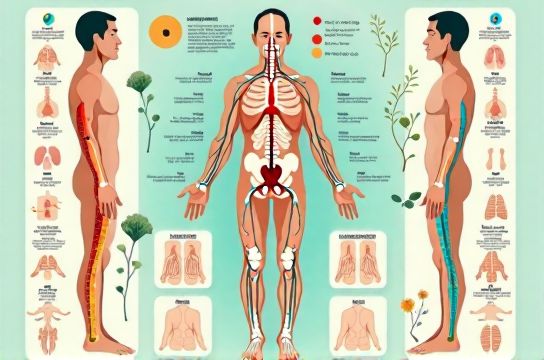
What Are Meridians? (Hint: They’re Not Blood Vessels)
In Western medicine, we think in terms of nerves, veins, and muscles. But in TCM, the body runs on a network of invisible pathways called meridians—think of them like energetic highways. There are 12 primary meridians, each linked to a major organ system. When Qi (pronounced “chee”), your vital life force, flows smoothly through these channels, you feel balanced and healthy. Blockages? That’s when things like chronic pain, fatigue, or anxiety creep in.
Still skeptical? A 2021 meta-analysis published in the Journal of Acupuncture and Meridian Studies found that patients receiving acupuncture showed measurable changes in autonomic nervous system activity—especially along meridian pathways. Translation: your body really does respond to these points.
The Big 12: Main Meridians and Their Roles
To make this practical, here’s a quick-reference table of the primary meridians, their associated organs, and common issues tied to imbalances:
| Meridian | Organ System | Common Imbalance Symptoms |
|---|---|---|
| Lung | Respiratory | Asthma, allergies, grief |
| Large Intestine | Digestive | Constipation, emotional rigidity |
| Stomach | Digestive | Acid reflux, overthinking |
| Spleen | Immune/Metabolic | Low energy, bloating |
| Heart | Circulatory/Emotional | Insomnia, anxiety |
| Small Intestine | Digestive | Nutrient malabsorption |
(Yes, emotions are part of the equation—TCM sees mind and body as deeply connected.)
How Qi Flow Impacts Real-World Health
Let’s get real: acupuncture for pain relief isn’t just placebo. A 2023 NIH review of 39 trials concluded that acupuncture significantly reduces chronic lower back pain compared to sham treatments. Why? It’s believed to stimulate nerve fibers along meridians, triggering endorphin release and reducing inflammation.
But it’s not just about pain. Ever feel wired but tired? That could be Qi stagnation in the Liver meridian—super common in high-stress lifestyles. Acupuncturists often target points like LV3 (on the foot) to help move stuck energy.
Debunking Myths: Is There Scientific Proof?
Here’s the tea: modern imaging techniques like fMRI and infrared thermography have detected increased blood flow and temperature changes along meridian lines during acupuncture. While we can’t “see” Qi like we see blood, the physiological responses are very real.
And if you're looking for results, consistency matters. Most practitioners recommend 6–8 sessions to notice lasting shifts in Qi flow and well-being.
Final Tips for First-Timers
- Find a licensed acupuncturist—credentials matter. Look for NCCAOM certification in the U.S.
- Wear loose clothes and avoid caffeine before treatment.
- Track symptoms in a journal. You might be surprised what shifts after week three.
Bottom line: whether you’re chasing pain relief or better sleep, understanding meridians gives you power over your health—in an ancient, yet totally relevant way.