How Chinese Herbal Medicine Differs from Western Herbs
- 时间:
- 浏览:140
- 来源:TCM1st
If you've ever stood in a health store staring at two shelves—one labeled 'Chinese herbal blends' and the other 'Western herbal supplements'—and wondered, Wait, aren’t they all just plants?… you’re not alone. But here’s the tea (literally): Chinese herbal medicine and Western herbs may both come from nature, but they grow from totally different philosophies, systems, and science.
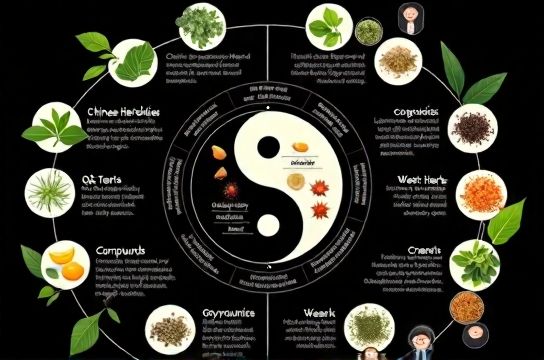
The Core Difference: Philosophy vs. Symptom
Let’s cut to the chase: Western herbalism often targets specific symptoms. Got a headache? Try feverfew. Insomnia? Reach for valerian root. It’s largely symptom-based, influenced by modern pharmacology—even if it's 'natural.'
Chinese herbal medicine? Totally different ballgame. It’s rooted in Traditional Chinese Medicine (TCM), a 2,000+ year-old system that sees your body as an ecosystem. Instead of fighting symptoms, TCM aims to restore balance—think yin and yang, or qi (energy) flow. So while Western herbs might say 'treats inflammation,' a Chinese formula could be prescribed for 'clears damp-heat from the spleen.' Sounds mystical? Maybe. But it’s a structured diagnostic model.
Formulas vs. Single Herbs: The Power of Teamwork
Here’s where it gets juicy. Western herbal products often spotlight one star ingredient—like echinacea for immunity. Simple. Marketable. But Chinese herbal formulas? They’re like orchestras. A single prescription can include 6–18 herbs, each playing a role:
- Emperor herb – Main therapeutic action
- Minister herbs – Support the emperor
- Auxiliary herbs – Reduce side effects or boost absorption
- Messenger herb – Directs the formula to the right organ
This synergy isn’t guesswork—it’s centuries of clinical observation. And studies back it up. For example, the famous Xiao Yao San formula (used for stress and liver qi stagnation) works better as a full blend than its individual components alone (research shows).
Science Meets Tradition: What Does the Data Say?
Let’s talk numbers. According to a 2023 report by Grand View Research, the global herbal supplements market hit $152 billion—with TCM accounting for over 40% of that, especially in Asia-Pacific.
| Aspect | Chinese Herbal Medicine | Western Herbs |
|---|---|---|
| Primary Approach | Balance & pattern diagnosis | Symptom relief |
| Common Format | Multi-herb formulas | Single-ingredient extracts |
| Regulation (US) | FDA-regulated as supplements | FDA-regulated as supplements |
| Clinical Use | Integrated in hospitals (China) | Complementary only |
| Research Backing | Growing (e.g., Artemisinin Nobel Prize) | Well-established for some herbs |
Notice something? Both are regulated similarly in the U.S.—but in China, TCM is part of mainstream healthcare, with dedicated hospitals and insurance coverage.
Which Should You Choose?
It’s not about which is 'better'—it’s about what fits your needs. If you want fast, targeted relief (like peppermint oil for IBS), Western herbs rock. But if you’re dealing with chronic fatigue, hormonal swings, or stress-related digestion? Chinese herbal medicine’s holistic lens might finally give you answers.
Just remember: quality matters. Adulteration and contamination can happen in both worlds. Always choose brands with third-party testing and transparent sourcing.
Bottom line? Whether you're team ashwagandha capsule or goji berry decoction, understanding the roots—literally—helps you make smarter choices.