Key Differences Between Western and Chinese Herbal Medicine
- 时间:
- 浏览:131
- 来源:TCM1st
If you've ever stood in a health store staring at two totally different herbal sections—one with sleek bottles labeled by compound, the other filled with roots, barks, and mysterious blends—you’ve already sensed it: Western and Chinese herbal medicine don’t just look different—they think differently. As a holistic health blogger who’s spent over a decade comparing traditional systems, I’m breaking down what actually sets them apart, why it matters, and how to choose what’s right for YOU.
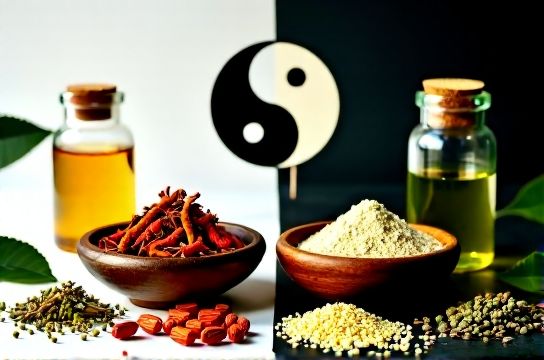
The Core Philosophy: Science vs. Balance
Western herbalism leans on biomedical science. It isolates active ingredients—like hypericin in St. John’s Wort—and tests them like pharmaceuticals. Think clinical trials, dosage precision, and symptom targeting. In contrast, Chinese herbal medicine operates on Qi (energy flow), Yin-Yang balance, and organ system harmony. It’s not about killing inflammation—it’s about correcting the internal environment that allowed it to grow.
Treatment Approach: One Herb vs. Formulas
Here’s a big one: Western practice often uses single herbs for specific issues. Got anxiety? Try passionflower. Meanwhile, Traditional Chinese Medicine (TCM) almost always prescribes complex formulas—sometimes 10+ herbs working together. For example, Xiao Yao San (Free and Easy Wanderer) combines 8 herbs to ease liver Qi stagnation linked to stress and PMS.
Scientific Backing & Regulation
Let’s talk data. According to the World Health Organization (2022), over 80% of people globally use some form of herbal medicine—but regulation varies wildly.
| Aspect | Western Herbal Medicine | Chinese Herbal Medicine |
|---|---|---|
| Regulatory Body | EMA (Europe), FDA (USA) - Dietary Supplements | China NMPA, TGA (Australia) |
| Clinical Studies | ~65% have RCT support (NIH, 2021) | ~40% of major formulas clinically studied |
| Average Herbs per Formula | 1–3 | 4–20 |
| Common Delivery | Capsules, tinctures | Decoctions, granules |
Notice something? Western herbs win in standardization; TCM wins in systemic thinking. But here’s the kicker: a 2023 meta-analysis in Frontiers in Pharmacology found that multi-herb TCM formulas showed higher efficacy in chronic digestive and hormonal disorders—likely due to synergistic effects.
Which Should You Choose?
Short-term issue? Acute infection? Go Western herbal remedies. They’re faster, easier to dose, and better studied for isolated conditions. Dealing with long-term fatigue, autoimmune issues, or recurring imbalances? TCM’s holistic lens might uncover root causes Western tests miss.
My advice? Don’t treat this like an either/or. The smartest patients I know blend both: using echinacea during cold season *and* cycling through a TCM formula to support spleen Qi in winter. Synergy isn’t just for herb combinations—it’s for healing systems too.