Using a Chinese Herbs Guide to Support Digestive Health
- 时间:
- 浏览:130
- 来源:TCM1st
If you've been struggling with bloating, indigestion, or just an off-kilter gut, you're not alone. Over 70 million people in the U.S. deal with digestive issues annually, according to the NIH. While Western medicine offers solutions, many are turning to traditional systems like Chinese herbs for long-term balance and natural support. As someone who’s spent years reviewing herbal protocols and working with holistic practitioners, I can tell you: not all remedies are created equal — but the right ones? They work wonders.
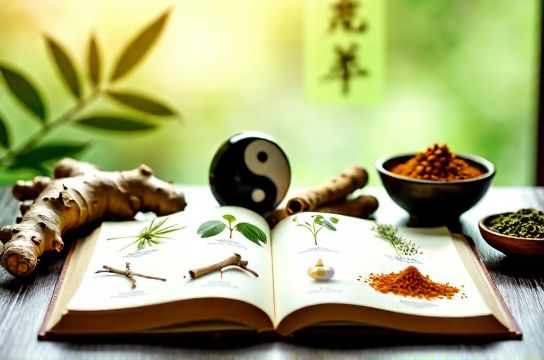
Why Chinese Herbs?
Unlike quick-fix antacids, Chinese herbal medicine focuses on root causes — whether it's spleen Qi deficiency, dampness accumulation, or liver Qi stagnation (yes, those are real diagnoses). The system treats digestion as central to overall health, which modern science is now backing up. For example, studies published in the Journal of Ethnopharmacology show that formulas like Si Jun Zi Tang improve gastric emptying and reduce inflammation.
But here’s the catch: self-prescribing can backfire. Some herbs interact with medications; others need to be combined precisely. That’s why using a reliable Chinese herbs guide is essential before diving in.
Top 5 Herbs for Digestive Wellness
Based on clinical use and research, these herbs consistently deliver results when used correctly:
| Herb (Pinyin) | Traditional Use | Scientific Backing | Common Form |
|---|---|---|---|
| Gan Cao (Licorice Root) | Harmonizes formulas, soothes stomach lining | Shown to heal ulcers (Phytomedicine, 2020) | Decoction, capsule |
| Bai Zhu (Atractylodes) | Strengthens Spleen Qi, reduces bloating | Improves intestinal motility (JEP, 2019) | Tea, granules |
| Huo Xiang (Patchouli) | Resolves Dampness, eases nausea | Antimicrobial & anti-nausea effects (Front. Pharmacol, 2021) | Tincture, inhalant |
| Chen Pi (Tangerine Peel) | Promotes Qi flow, aids digestion | Enhances enzyme secretion (Evid-Based Complement Alt Med, 2018) | Tea, soup additive |
| Mu Xiang (Costus Root) | Relieves gas, bloating, abdominal pain | Spasmolytic effect on smooth muscle (J. Tradit Chin Med, 2017) | Powder, formula component |
How to Use Them Safely
You wouldn’t pop random supplements without checking labels — same goes for herbs. Here’s my go-to advice:
- Start low, go slow: Try one herb at a time in tea or granule form.
- Check sourcing: Look for third-party tested products (heavy metals and pesticides are no joke).
- Consult a pro: A licensed TCM practitioner can tailor a blend to your constitution.
Also, keep in mind that some herbs like Gan Cao shouldn’t be used long-term by people with hypertension. Again — knowledge is power, and a solid Chinese herbs guide keeps you safe.
The Bottom Line
Digestive health isn’t just about what you eat — it’s about how your body processes it. Integrating time-tested Chinese herbs into your routine, with proper guidance, can offer sustainable relief where other methods fall short. Do your homework, respect the tradition, and let nature do the heavy lifting.