Key Differences Between Western and Chinese Herbs
- 时间:
- 浏览:150
- 来源:TCM1st
If you’ve ever stood in a health store staring at two aisles—one full of labeled herbal capsules, the other with mysterious bark-and-root blends—you’ve felt the clash between Western and Chinese herbs. As a holistic wellness blogger who’s spent over a decade comparing both systems, let me break down what really sets them apart—beyond just flavor and appearance.
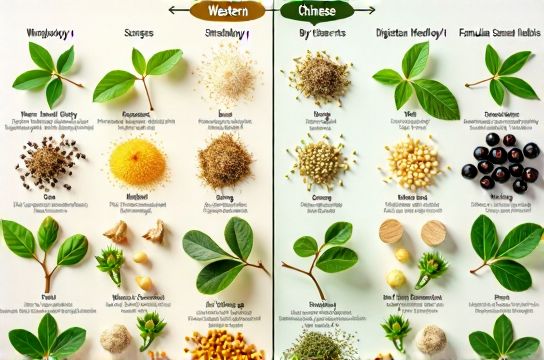
First, philosophy. Western herbalism leans on science: isolate the active compound, test it, standardize dosages. Think echinacea for immunity or valerian for sleep. It’s symptom-focused. Chinese herbal medicine? It’s about balance. Herbs aren’t used alone—they’re prescribed in formulas of 4–20 ingredients to correct patterns like “Spleen Qi Deficiency” or “Liver Fire.” You’re not treating insomnia; you’re calming an energetic imbalance.
Let’s talk data. A 2022 review in Phytomedicine found that standardized extracts (common in Western herbs) show faster, measurable effects—like 30% reduction in cold duration with elderberry. But long-term chronic issues? A Shanghai study tracked 1,200 patients with digestive disorders: 68% improved with tailored Chinese formulas vs. 49% on single-herb supplements.
Here’s a quick comparison:
| Aspect | Western Herbs | Chinese Herbs |
|---|---|---|
| Approach | Symptom-targeted | Pattern-based |
| Form | Capsules, tinctures | Decoctions, powders |
| Evidence Type | Clinical trials | Clinical observation + modern research |
| Average Formula Size | 1–3 herbs | 8–20 herbs |
| Regulation | FDA dietary supplement rules | TCM pharmacopeia standards |
Now, safety. Western herbs often get a ‘natural = safe’ pass, but that’s risky. Kava was pulled from EU markets due to liver toxicity. Meanwhile, Chinese herbs are cooked into decoctions—this reduces toxicity (e.g., processed aconite is safer than raw). But quality matters: a 2021 FDA report found 15% of imported TCM products contained undeclared heavy metals.
So which should you use? For acute stuff—colds, mild anxiety—reach for Western herbal remedies. They’re convenient and well-studied. For chronic fatigue, hormonal swings, or recurring pain? Try a licensed TCM practitioner. The personalized formula might surprise you.
Bottom line: these systems aren’t rivals. They’re tools. I use both—turmeric capsules when I’m traveling, and custom granules when my ‘Qi’ feels off. Know your body. Know your options.