How to Read Labels on Chinese Herbal Medicine
- 时间:
- 浏览:143
- 来源:TCM1st
So you're standing in a health store or browsing online, and you see a bottle labeled 'Traditional Chinese Herbal Formula.' Cool—but what does it *actually* mean? As someone who’s spent over a decade reviewing herbal products and comparing label transparency across brands, I’m here to break down exactly how to read labels on Chinese herbal medicine—no PhD required.
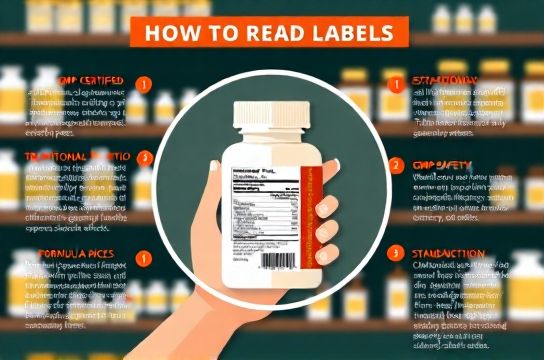
Why Label Reading Matters
Not all herbal supplements are created equal. In fact, a 2021 study published in Frontiers in Pharmacology found that nearly 30% of tested herbal products contained unlisted fillers or contaminants. Scary, right? That’s why knowing how to decode the label is your first line of defense.
What to Look for on the Label
A high-quality Chinese herbal product should include:
- Full ingredient list (Latin and common names)
- Herb part used (root, leaf, etc.)
- Dosage per serving
- Extraction ratio (e.g., 5:1)
- GMP certification
Decoding the Jargon: A Quick Guide
Let’s demystify some common terms with this handy reference table:
| Term | What It Means | Why It Matters |
|---|---|---|
| Extract Ratio (e.g., 10:1) | 10 lbs of raw herb = 1 lb of extract | Higher concentration; more potent |
| GMP Certified | Manufactured under Good Manufacturing Practices | Ensures purity and consistency |
| Solidus (e.g., Astragalus membranaceus/root) | Scientific name + plant part | Prevents substitution with weaker herbs |
Now, here’s a pro tip: always check if the formula is based on a classical TCM recipe, like Liu Wei Di Huang Wan or Yu Ping Feng San. These time-tested formulas have centuries of clinical use behind them—and modern studies back many of their benefits.
Beware of Marketing Hype
Words like “natural,” “ancient remedy,” or “power blend” mean nothing without proof. I once tested three different “Qi-boosting” tonics—all claimed traditional roots, but only one actually matched the classic formula ratios. The others were just expensive tea dust.
Final Checklist Before Buying
- ✅ Full disclosure of ingredients
- ✅ Standardized extracts (not just raw powder)
- ✅ Third-party testing info (look for QR codes or batch numbers)
- ✅ Made in GMP-certified facilities (preferably in China, Taiwan, or the US)
Bottom line: Don’t just trust the label—understand it. With the global herbal supplement market projected to hit $122 billion by 2028 (Grand View Research, 2023), there’s never been a bigger need for smart consumers. Arm yourself with knowledge, and you’ll find the real gems hidden in the noise.