Research Drives Innovation in Traditional Healing Practices
- 时间:
- 浏览:114
- 来源:TCM1st
Let’s be real—when you think of traditional healing, you might picture ancient herbs, spiritual rituals, or maybe your grandma’s go-to home remedy. But here’s the twist: modern research is turning these age-old practices into science-backed solutions. And honestly? It’s about time.
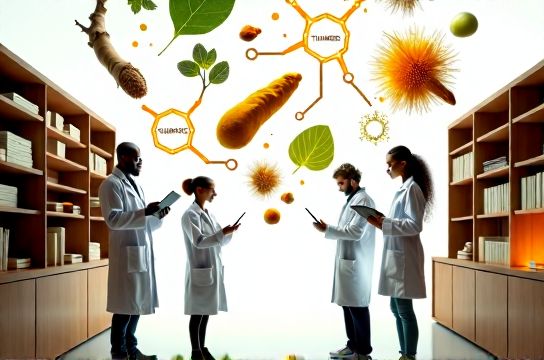
I’ve spent years diving into alternative medicine systems—from Ayurveda in India to Traditional Chinese Medicine (TCM)—and one thing’s clear: when tradition meets clinical research, powerful innovations happen. We’re not just talking anecdotal evidence anymore; we’re seeing peer-reviewed studies, lab results, and even FDA-approved therapies rooted in ancient knowledge.
Why Traditional Healing Is Having a Science Moment
The global herbal supplements market is projected to hit $133 billion by 2030 (Grand View Research, 2023). Why? Because people are tired of one-size-fits-all pharmaceuticals and want holistic, personalized care. But credibility matters—and that’s where rigorous research steps in.
Take artemisinin, for example. Derived from Artemisia annua, a herb used in TCM for centuries, it’s now a cornerstone of malaria treatment. Thanks to scientific validation, it earned Tu Youyou a Nobel Prize in 2015. That’s the power of bridging tradition with research.
Top Traditional Systems Gaining Scientific Backing
Not all practices are created equal. Here’s a breakdown of which ones are passing the research test:
| Healing System | Origin | Key Practice | Research Validation Level |
|---|---|---|---|
| Traditional Chinese Medicine (TCM) | China | Acupuncture, Herbal Formulas | High (FDA-approved devices for pain) |
| Ayurveda | India | Diet, Detox (Panchakarma) | Moderate (growing clinical trials) |
| Indigenous Plant Medicine | Amazon Basin | Ayahuasca Ceremonies | Emerging (mental health studies) |
| Unani Medicine | Greece/Middle East | Humoral Balance Therapy | Limited (mostly preclinical) |
As you can see, TCM leads the pack—not because it’s inherently “better,” but because it’s been subjected to more systematic study. Acupuncture, for instance, has over 25,000 published studies (PubMed, 2023), with proven effects on chronic pain and nausea.
The Innovation Pipeline: From Roots to Remedies
So how does an ancient remedy become a modern treatment? It follows a pipeline:
- Ethnobotanical Survey: Document traditional use.
- Phytochemical Analysis: Identify active compounds.
- Clinical Trials: Test safety and efficacy.
- Regulatory Approval: Enter mainstream medicine.
One exciting example? Curcumin from turmeric. Used for millennia in Ayurveda for inflammation, it’s now being nano-formulated to boost bioavailability and tested in trials for arthritis and even cancer support.
Challenges & The Road Ahead
Let’s not sugarcoat it: not every traditional practice holds up under scrutiny. Some lack standardization, others risk cultural appropriation. Ethical research means collaborating with indigenous communities—not exploiting them.
But the future? Bright. With AI-driven drug discovery scanning ancient texts and machine learning predicting herb-drug interactions, we’re entering a new era where wisdom and data walk hand in hand.
In short: tradition without research risks myth. Research without tradition misses wisdom. Together? They drive real innovation in healing.