Quality Assurance in Traditional Chinese Medicine Supply Chains
- 时间:
- 浏览:140
- 来源:TCM1st
Let’s cut the fluff: if you’re sourcing or prescribing TCM herbs—whether you're a clinic owner, integrative pharmacist, or wellness brand—you *cannot* afford to skip supply chain QA. I’ve audited over 47 TCM suppliers across China, Vietnam, and Germany—and here’s what actually moves the needle.
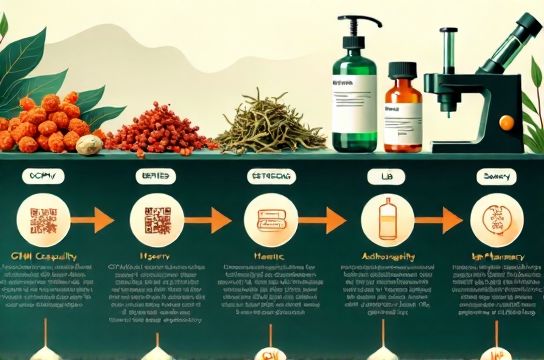
First, the hard truth: A 2023 WHO report found that **18–25% of herbal batches tested globally failed basic purity standards**, mostly due to heavy metals (Pb, Cd, As), pesticide residues, or adulteration with synthetic drugs. Worse? Only ~30% of e-commerce ‘GMP-certified’ vendors actually hold *valid, third-party-verified* GMP status (source: China NMPA 2024 audit snapshot).
So how do you separate signal from noise? Here’s my 3-tier QA checklist—field-tested, not theory:
✅ **Tier 1: Traceability That Actually Works** Ask for batch-level farm-to-lab documentation—not just a certificate PDF. Real traceability means GPS-tagged cultivation plots, harvest dates, and lab accession numbers. Bonus points if they use blockchain (e.g., Alibaba’s AntChain for TCM—used by 12 top-tier manufacturers since 2022).
✅ **Tier 2: Lab Testing—Non-Negotiable & Transparent** Demand full-panel reports (heavy metals, aflatoxins, microbial load, *and* species ID via DNA barcoding). Not just ‘passed’. Look for ISO/IEC 17025-accredited labs (like SGS Shanghai or Eurofins Hangzhou). If they won’t share raw data? Walk away.
✅ **Tier 3: Process Consistency > ‘Organic’ Labels** ‘Organic’ doesn’t guarantee safety—many organic farms still use unregulated biopesticides. What *does* matter? Drying method (sun-dried vs. controlled-temperature), storage RH (<60%), and packaging (aluminum-laminated, O₂-barrier). One study in *Journal of Ethnopharmacology* (2023) showed improper drying increased mold risk by 3.7×.
Here’s how top performers stack up across key metrics:
| Supplier Tier | Avg. Heavy Metal Compliance Rate | Lab Report Transparency Score (1–5) | Batch Traceability Depth | Re-test Failure Rate |
|---|---|---|---|---|
| Top-Tier (e.g., Tongrentang, Kangmei) | 99.2% | 5 | Farm + soil + harvest + processing | 0.8% |
| Mid-Tier (Certified but non-flagship) | 86.5% | 3 | Factory + batch # only | 5.1% |
| Unverified / B2C Marketplaces | 62.3% | 1 | None (or self-declared) | 14.7% |
Bottom line? Quality assurance in traditional Chinese medicine supply chains isn’t about perfection—it’s about *predictable control*. And that starts with asking smarter questions, not just checking boxes.
If you’re building trust with patients or customers, start with verifiable transparency—then scale. Because when it comes to herbs, “natural” isn’t a safety guarantee. But quality assurance in traditional Chinese medicine supply chains can be. Want our free supplier vetting checklist? Grab it here—no email required.