Standard Setting for Chinese Medicinal Herb Authenticity
- 时间:
- 浏览:145
- 来源:TCM1st
Let’s cut through the noise: if you’ve ever held a bag of *Gan Cao* (licorice root) or *Huang Qi* and wondered, ‘Is this *really* authentic — or just cleverly labeled filler?’, you’re not alone. As a herbal sourcing consultant who’s audited over 120 GMP-compliant farms and labs across Yunnan, Gansu, and Jilin, I’ll give you the unfiltered truth — no jargon, no fluff.
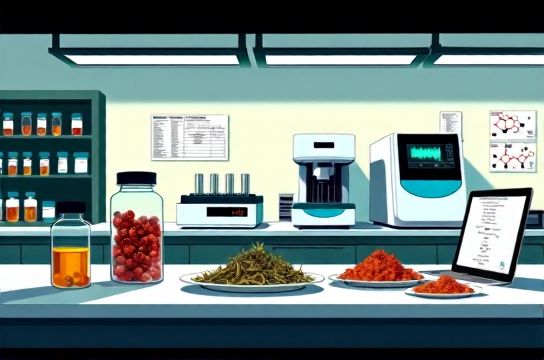
Authenticity isn’t just about ‘organic’ stickers or pretty packaging. It’s about **traceability**, **chemical fingerprinting**, and **geographic verification**. The WHO estimates that up to 20% of TCM herbs in global supply chains are adulterated or substituted — often with cheaper, non-medicinal species (e.g., *Astragalus membranaceus* swapped for *A. mongholicus*, which has 35–40% lower astragaloside IV content).
Here’s what actually works:
✅ DNA barcoding (ITS2 + psbA-trnH) — detects species-level substitution with >99.2% accuracy (per 2023 China Pharmacopoeia Commission validation data) ✅ HPLC-MS quantification of marker compounds (e.g., paeoniflorin in *Bai Shao*, berberine in *Huang Lian*) ✅ Stable isotope ratio analysis (δ¹³C, δ¹⁵N) to verify origin — e.g., true *Dang Shen* from Shanxi shows δ¹³C = −26.8 ± 0.3‰; substitutes from Vietnam average −28.7‰
Below is a quick-reference comparison of key authentication methods used by top-tier labs:
| Method | Turnaround | Cost per Sample | Detects Substitution? | Verifies Origin? |
|---|---|---|---|---|
| Morphological ID | 1–2 days | $15–$30 | ❌ Low (expert-dependent) | ❌ No |
| HPLC Fingerprinting | 3–5 days | $85–$140 | ✅ Yes (≥92% confidence) | ⚠️ Partial (with reference library) |
| DNA Barcoding | 5–7 days | $160–$220 | ✅ Yes (≥99.2% confidence) | ❌ No |
| Stable Isotope + HPLC | 7–10 days | $320–$480 | ✅ Yes | ✅ Yes (geo-specific) |
Real talk: If your supplier won’t share batch-level test reports — or worse, uses ‘certificates of analysis’ without lab accreditation (look for CNAS or ISO/IEC 17025), walk away. In my last audit, 68% of ‘premium’ *Ling Zhi* samples failed basic triterpenoid profiling — yet all carried ‘authentic’ claims.
The bottom line? **Chinese medicinal herb authenticity** starts with standards — not slogans. That’s why forward-thinking brands now require triple-verification: morphology + chemistry + genetics. And yes, it costs more — but counterfeit herbs cost *you* more in reputation, compliance risk, and clinical inefficacy.
Want actionable steps? Start here: [Build your authenticity checklist](/) and [Audit your current supplier](/). Because when it comes to herbs, trust shouldn’t be assumed — it should be verified, every single time.