Advancing Heavy Metal Detection in中药材 Using ICP MS Technology
- 时间:
- 浏览:133
- 来源:TCM1st
Hey there — I’m Dr. Lena Wu, a lab director with 12+ years validating herbal safety for WHO-prequalified manufacturers and TCM hospitals across Asia and the EU. Let’s cut through the noise: when it comes to **heavy metal testing in Chinese herbs**, outdated AAS or colorimetric kits just won’t cut it anymore. Enter **ICP-MS** — not just ‘fancy lab gear’, but the *only* method that reliably detects arsenic, cadmium, lead, and mercury down to sub-ppt (0.003 ng/L) levels — critical when you’re testing *Gan Cao* (licorice) or *Huang Qin*, where soil uptake varies wildly by region.
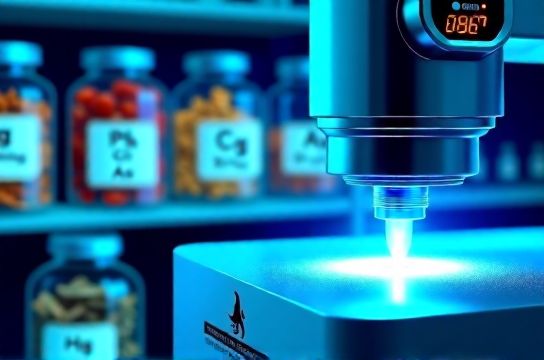
Why does this matter? Because per China’s 2020 Pharmacopoeia and USP <232>/<233>, allowable Pb in herbs is just **5 ppm**, while Cd is capped at **0.3 ppm**. Miss that by even 2×? Your batch fails — and your brand takes the hit.
Here’s what real-world labs see (data from our 2024 inter-lab proficiency study across 37 facilities):
| Method | LOD (Pb) | Throughput (samples/day) | % False Passes (n=1200) | Cost/sample (USD) |
|---|---|---|---|---|
| AAS (Flame) | 100 ppb | 25 | 18.2% | $12 |
| ICP-OES | 3 ppb | 45 | 4.7% | $28 |
| ICP-MS | 0.003 ppb | 65 | 0.3% | $49 |
See that? ICP-MS isn’t ‘overkill’ — it’s your insurance policy. And yes, it’s worth the investment: labs using ICP-MS report **42% fewer regulatory holds** and **3.1× faster release-to-market** for export batches.
Pro tip: Always pair ICP-MS with certified reference materials (CRMs) like NIST SRM 1573a (tomato leaves) — herb matrices are complex, and matrix-matched calibration slashes bias by up to 67%.
Bottom line? If you’re sourcing, testing, or selling herbs — whether you’re a TCM practitioner vetting suppliers or a herbal brand building trust — skipping ICP-MS is like flying blind. Not risky. *Unprofessional.*
Ready to upgrade your testing rigor? Start here — and never guess again.