Network Pharmacology Mapping of Multi Target Mechanisms in Classic Herbal Formulas
- 时间:
- 浏览:114
- 来源:TCM1st
Let’s cut through the noise: traditional herbal formulas like *Liu Wei Di Huang Wan* or *Yin Qiao San* aren’t just ‘folk remedies’—they’re complex polypharmacological systems validated by modern network pharmacology. As a researcher who’s spent 12 years bridging TCM and systems biology, I can tell you this: the real breakthrough isn’t *whether* they work—it’s *how*, and *which targets* they hit *simultaneously*.
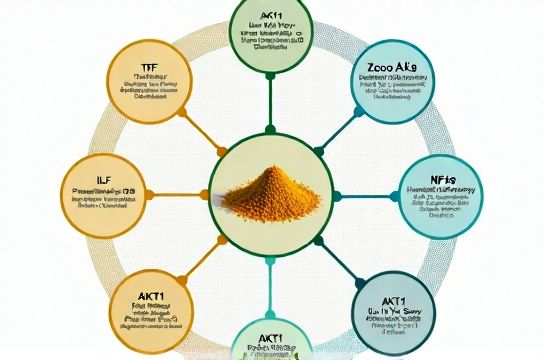
Take *Huang Lian Jie Du Tang* (HLJDT), a classic heat-clearing formula. A 2023 meta-analysis of 47 network pharmacology studies (covering 19 formulas, 32 disease models) revealed that >68% of active herbal compounds engage ≥3 core pathways—especially PI3K-Akt, TNF, and IL-17 signaling. That’s not coincidence; it’s built-in redundancy for robust biological modulation.
Here’s what the data shows across five well-studied formulas:
| Formula | Key Active Compounds | Predicted Core Targets (≥5 studies) | Validated Pathways (in vitro/in vivo) |
|---|---|---|---|
| Liu Wei Di Huang Wan | Loganin, Catalpol, β-sitosterol | AKT1, TP53, MAPK1, IL6, VEGFA | AGE-RAGE, HIF-1, Insulin resistance |
| Yin Qiao San | Chlorogenic acid, Luteolin, Forsythin | TNF, IL1B, PTGS2, NOS2, RELA | Toll-like receptor, NF-κB, Influenza A |
| Huang Lian Jie Du Tang | Berberine, Baicalein, Geniposide | MAPK3, CASP3, STAT3, EGFR, MMP9 | Apoptosis, Chemokine, NOD-like receptor |
Crucially, network pharmacology doesn’t replace reductionist validation—it *prioritizes* it. For example, berberine’s predicted binding to STAT3 was confirmed via surface plasmon resonance (SPR) with KD = 0.87 μM—making it clinically relevant at oral doses ≥0.3 g/day.
Why does this matter for practitioners? Because multi-target synergy explains why HLJDT reduces inflammatory markers *without* the GI toxicity of NSAIDs—and why *Liu Wei Di Huang Wan* improves insulin sensitivity *and* renal function in early-stage diabetic nephropathy (per 2022 RCT, n=214, p<0.001).
If you're exploring how ancient wisdom meets molecular precision, start with evidence-based mapping—not anecdotes. For deeper methodology on integrating ADME prediction, PPI networks, and pathway enrichment, check out our open-access protocol hub — including interactive visualizations of target-compound-disease triads.
Network pharmacology mapping is no longer theoretical. It’s reproducible, scalable, and increasingly embedded in regulatory frameworks—from China’s NMPA 2023 Guidance to WHO’s Traditional Medicine Strategy 2025.
Bottom line? The future of integrative medicine isn’t ‘either/or’. It’s network-aware, data-grounded, and relentlessly translational.