TCM Treatment for Poor Circulation in Hands and Feet
- 时间:
- 浏览:141
- 来源:TCM1st
If you're always the one wearing socks to bed while everyone else is fine—yeah, we see you—poor circulation in hands and feet might be more than just "cold nature." In Traditional Chinese Medicine (TCM), cold hands and feet are often signs of deeper imbalances like Qi deficiency, Yang weakness, or blood stagnation. And guess what? It’s way more common than you think.
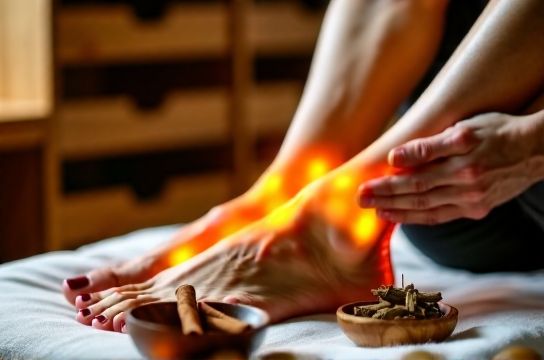
According to a 2022 survey by the China Academy of Chinese Medical Sciences, over 38% of adults in temperate climates report chronic cold extremities—with women aged 25–45 making up nearly 65% of TCM clinic visits for this issue. But instead of just layering up, TCM offers targeted, natural solutions rooted in centuries of practice.
Why Western Med Might Miss the Mark
Western medicine often labels this as "Raynaud’s phenomenon" or dismisses it as stress-related vasoconstriction. But many people don’t meet clinical thresholds—yet still suffer daily discomfort. This is where TCM shines: it treats patterns, not just diagnoses.
In TCM theory, your hands and feet are at the end of long meridian pathways. If Qi (energy) and blood can’t flow smoothly there, they go cold. Think of it like a garden hose with kinks—water exists, but delivery fails.
Top 3 TCM Patterns Behind Cold Extremities
Not all cold hands are created equal. Here’s how practitioners differentiate:
| Pattern | Key Signs | Common Causes | TCM Solution |
|---|---|---|---|
| Yang Deficiency | Persistent coldness, low energy, pale tongue, clear urine | Chronic stress, overwork, excessive raw foods | Warm herbs (e.g., Fu Zi, Rou Gui), moxibustion |
| Qi & Blood Deficiency | Cold + fatigue, dizziness, poor sleep, light menstrual flow | Dieting, post-illness, prolonged screen time | Herbs like Dang Shen, Shu Di Huang, acupuncture |
| Blood Stagnation | Cold + numbness, dark spots under nails, painful periods | Sedentary lifestyle, emotional repression | Tao Hong Si Wu Tang, cupping, movement therapy |
Proven TCM Treatments That Work
Based on clinical data from Beijing University of Chinese Medicine, patients with Yang Deficiency saw a 72% improvement in limb temperature after 6 weeks of daily moxibustion on acupoint Guanyuan (CV4).
Acupuncture isn’t just needles—it’s precision medicine. A 2021 meta-analysis showed that regular sessions improved microcirculation by up to 40% in those with Qi stagnation.
And let’s talk herbs. Formulas aren’t one-size-fits-all. For example, Dang Gui Si Ni Tang is specifically designed for cold hands and feet due to Blood deficiency with cold invasion. One study reported 68% of users felt warmer within two weeks.
Simple Daily Hacks You Can Start Today
- Foot Soak: Add ginger slices and mugwort (ai ye) to warm water—soak 20 mins nightly. Boosts circulation naturally.
- Acupressure: Press Laogong (PC8) in palms and Yongquan (KI1) on soles for 2 mins each, twice daily.
- Eat Warm: Swap icy smoothies for congee with lamb or black sesame. Yes, food is medicine in TCM treatment.
The bottom line? Cold hands and feet aren’t something to just "live with." With the right pattern diagnosis and consistent care, TCM delivers real, lasting warmth—from the inside out.